Amit Shah Chairs Historic Bastar Meeting With Four CMs
Digital Desk
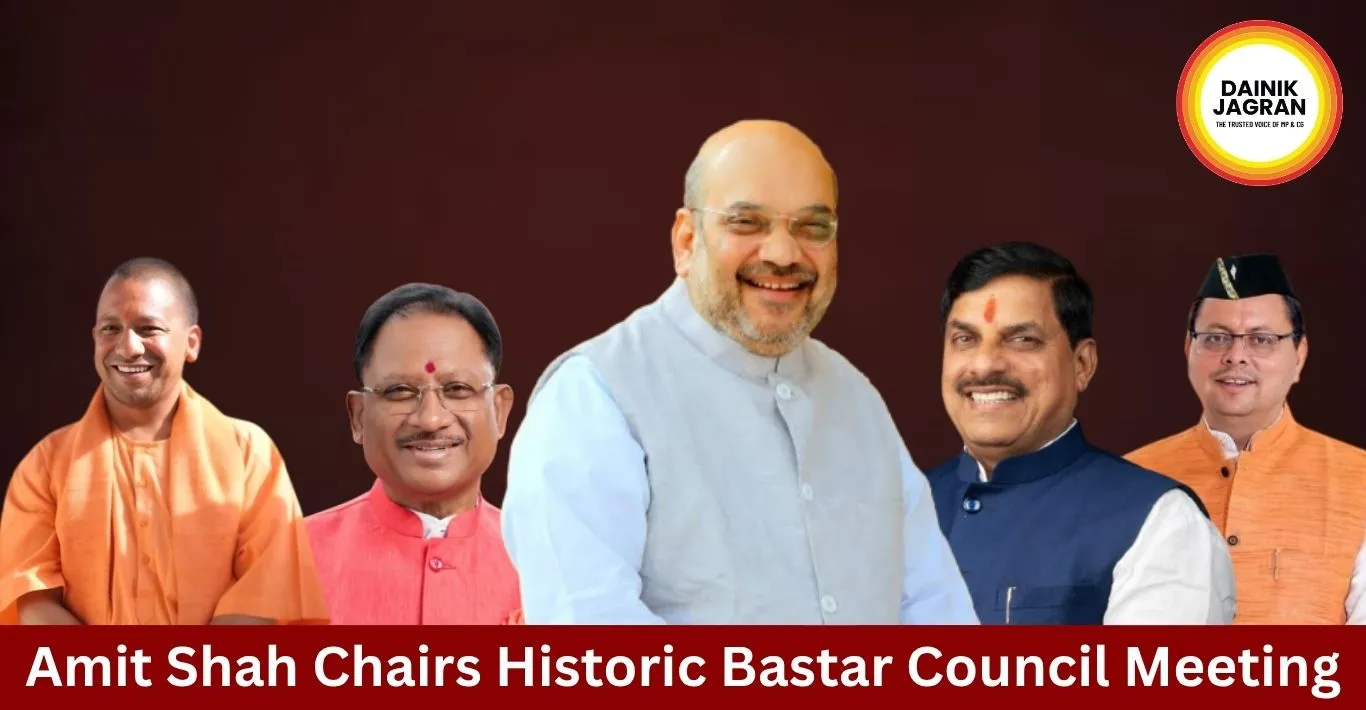
UP Chief Minister Yogi Adityanath joins Central Zonal Council meeting in Jagdalpur as Centre projects Bastar’s transformation from conflict zone to development hub.
Union Home Minister Amit Shah on Tuesday chaired the 26th meeting of the Central Zonal Council in Jagdalpur during the second day of his Bastar visit. The high-level meeting marked the first time such a major regional council gathering was held in Bastar, a region that remained affected by Maoist violence for decades.
Chief Ministers of Chhattisgarh, Madhya Pradesh, Uttar Pradesh and Uttarakhand participated in the meeting along with senior officials from the Centre and state governments. Uttar Pradesh Chief Minister Yogi Adityanath arrived in Jagdalpur on Tuesday morning, while the Chief Ministers of Chhattisgarh, Madhya Pradesh and Uttarakhand had reached the city on Monday night. Security arrangements across Jagdalpur were significantly intensified ahead of the meeting as senior leaders and administrative officials gathered in the Bastar region. The event quickly became part of the Latest News Today developments because of its political and strategic significance.
Bastar Gets Spotlight
The Centre’s decision to organise the Central Zonal Council meeting in Bastar is being viewed as an attempt to project the region’s changing image. Bastar had long remained in national headlines due to Maoist violence, security operations and administrative challenges. Government officials indicated that the meeting was intended to send a strong message that Bastar is now moving towards development, governance and stability. The presence of four Chief Ministers and senior Union ministers in the region is being projected as proof of improving security conditions. Officials said areas that once witnessed restricted political movement due to security threats are now hosting high-profile administrative gatherings. According to government representatives, sustained anti-Maoist operations and development initiatives have contributed to changes on the ground.
Focus On Security
The Home Ministry has repeatedly stated that the Centre is committed to eliminating Maoist influence from affected regions. Over the past several months, security operations in Bastar division have intensified, leading to the arrest and killing of several Maoist commanders. Government sources claimed that Bastar was declared free from Maoist influence on March 31, 2026, following coordinated operations by central and state security agencies. Officials said the meeting would also review internal security cooperation and inter-state coordination in previously affected districts. The Centre is expected to focus on strengthening intelligence sharing, road connectivity and administrative expansion in tribal areas. Security cooperation between neighbouring states remained one of the key agenda points discussed during the council meeting.
Key Issues Discussed
Apart from security, the Central Zonal Council meeting also focused on law and order, transport connectivity, electricity distribution, water resources and border-related coordination between states. Sources indicated that special attention was given to improving coordination among states on issues affecting tribal and remote regions. Officials also discussed infrastructure projects and welfare schemes aimed at accelerating economic development in central India.
Government representatives believe that stronger administrative coordination can help improve public services in districts that previously faced governance challenges due to insurgency-related activities. The meeting is also being seen as part of broader Government Updates linked to internal security and tribal development policies.
Shah’s Strong Remarks
During the first day of his Bastar visit on Monday, Amit Shah addressed local gatherings and praised security personnel for their role in reducing Maoist influence in the region. He said the losses suffered by Bastar over the last 50 years would be compensated through accelerated development over the next four to five years.
The Home Minister stated that the Centre’s commitment to Bastar’s development would remain incomplete until the region witnessed full economic and social transformation. He also referred to tribal freedom fighter Gundadhur and highlighted Bastar’s contribution to the freedom struggle against British rule. Shah recalled earlier periods when Maoist violence disrupted education, welfare schemes and normal life in tribal districts. According to him, strong action by security agencies has weakened Maoist networks and improved public confidence in the administration. He further announced plans to develop the land associated with Gundadhur as an important cultural and historical destination.
Development Narrative Ahead
Political observers believe the Jagdalpur meeting holds significance beyond routine administrative coordination. The Centre appears keen to position Bastar as a symbol of development and governance success after years of insurgency-related challenges. Officials said future plans for Bastar include infrastructure expansion, tourism development, improved connectivity and increased investment in tribal welfare schemes. The government is also expected to continue highlighting security gains in the region as part of its broader political narrative.

--------
🚨 Beat the News Rush – Join Now!
Get breaking alerts, hot exclusives, and game-changing stories instantly on your phone. No delays, no fluff – just the edge you need. ⚡
Tap to join:
🟢 WhatsApp Channel: Dainik Jagran MP CG
Crave more?
🅕 Facebook: Dainik Jagran MP CG English
🅧 Twitter (X): Dainik Jagran MP CG
🅘 Instagram: Dainik Jagran MP CG
Share the fire – keep your crew ahead! 🗞️🔥
Amit Shah Chairs Historic Bastar Meeting With Four CMs
Digital Desk
Union Home Minister Amit Shah on Tuesday chaired the 26th meeting of the Central Zonal Council in Jagdalpur during the second day of his Bastar visit. The high-level meeting marked the first time such a major regional council gathering was held in Bastar, a region that remained affected by Maoist violence for decades.
Chief Ministers of Chhattisgarh, Madhya Pradesh, Uttar Pradesh and Uttarakhand participated in the meeting along with senior officials from the Centre and state governments. Uttar Pradesh Chief Minister Yogi Adityanath arrived in Jagdalpur on Tuesday morning, while the Chief Ministers of Chhattisgarh, Madhya Pradesh and Uttarakhand had reached the city on Monday night. Security arrangements across Jagdalpur were significantly intensified ahead of the meeting as senior leaders and administrative officials gathered in the Bastar region. The event quickly became part of the Latest News Today developments because of its political and strategic significance.
Bastar Gets Spotlight
The Centre’s decision to organise the Central Zonal Council meeting in Bastar is being viewed as an attempt to project the region’s changing image. Bastar had long remained in national headlines due to Maoist violence, security operations and administrative challenges. Government officials indicated that the meeting was intended to send a strong message that Bastar is now moving towards development, governance and stability. The presence of four Chief Ministers and senior Union ministers in the region is being projected as proof of improving security conditions. Officials said areas that once witnessed restricted political movement due to security threats are now hosting high-profile administrative gatherings. According to government representatives, sustained anti-Maoist operations and development initiatives have contributed to changes on the ground.
Focus On Security
The Home Ministry has repeatedly stated that the Centre is committed to eliminating Maoist influence from affected regions. Over the past several months, security operations in Bastar division have intensified, leading to the arrest and killing of several Maoist commanders. Government sources claimed that Bastar was declared free from Maoist influence on March 31, 2026, following coordinated operations by central and state security agencies. Officials said the meeting would also review internal security cooperation and inter-state coordination in previously affected districts. The Centre is expected to focus on strengthening intelligence sharing, road connectivity and administrative expansion in tribal areas. Security cooperation between neighbouring states remained one of the key agenda points discussed during the council meeting.
Key Issues Discussed
Apart from security, the Central Zonal Council meeting also focused on law and order, transport connectivity, electricity distribution, water resources and border-related coordination between states. Sources indicated that special attention was given to improving coordination among states on issues affecting tribal and remote regions. Officials also discussed infrastructure projects and welfare schemes aimed at accelerating economic development in central India.
Government representatives believe that stronger administrative coordination can help improve public services in districts that previously faced governance challenges due to insurgency-related activities. The meeting is also being seen as part of broader Government Updates linked to internal security and tribal development policies.
Shah’s Strong Remarks
During the first day of his Bastar visit on Monday, Amit Shah addressed local gatherings and praised security personnel for their role in reducing Maoist influence in the region. He said the losses suffered by Bastar over the last 50 years would be compensated through accelerated development over the next four to five years.
The Home Minister stated that the Centre’s commitment to Bastar’s development would remain incomplete until the region witnessed full economic and social transformation. He also referred to tribal freedom fighter Gundadhur and highlighted Bastar’s contribution to the freedom struggle against British rule. Shah recalled earlier periods when Maoist violence disrupted education, welfare schemes and normal life in tribal districts. According to him, strong action by security agencies has weakened Maoist networks and improved public confidence in the administration. He further announced plans to develop the land associated with Gundadhur as an important cultural and historical destination.
Development Narrative Ahead
Political observers believe the Jagdalpur meeting holds significance beyond routine administrative coordination. The Centre appears keen to position Bastar as a symbol of development and governance success after years of insurgency-related challenges. Officials said future plans for Bastar include infrastructure expansion, tourism development, improved connectivity and increased investment in tribal welfare schemes. The government is also expected to continue highlighting security gains in the region as part of its broader political narrative.