

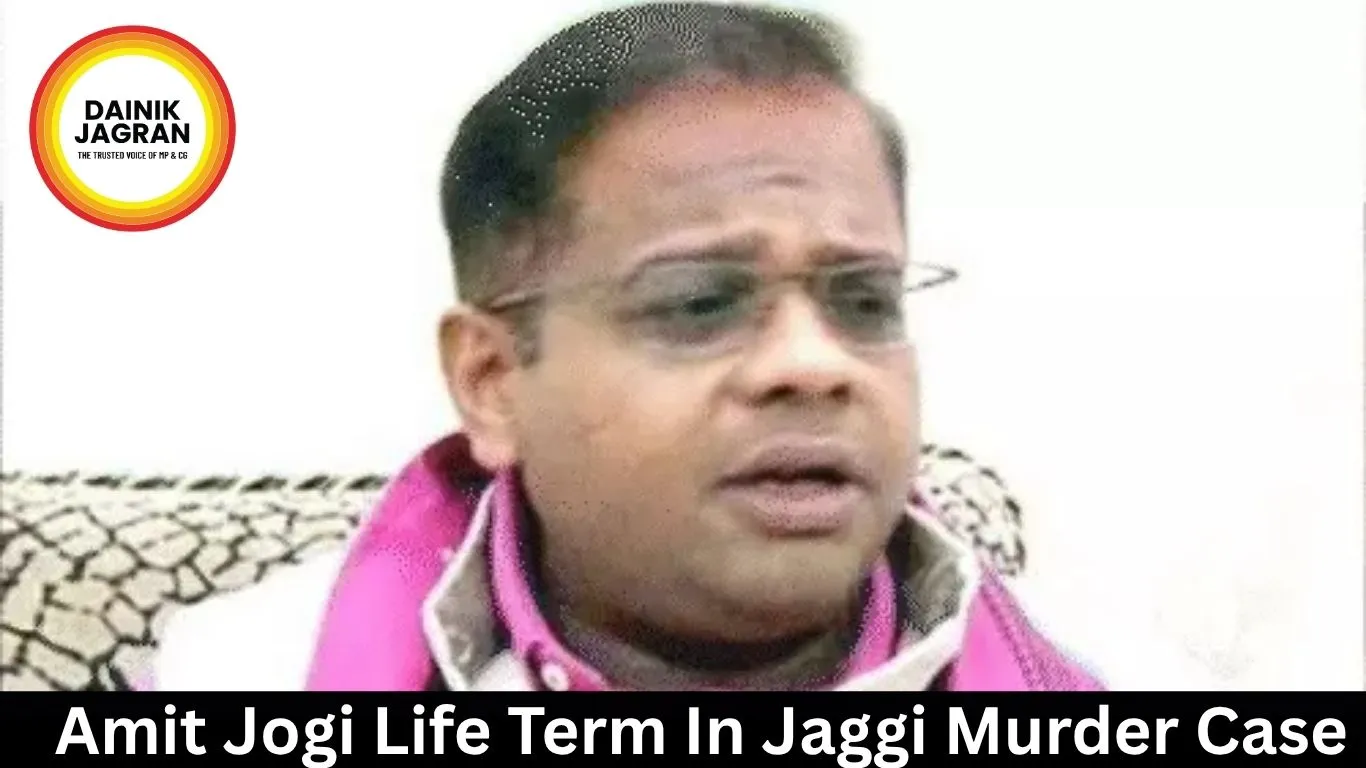
Amit Jogi Life Term In Jaggi Murder Case
Digital Desk
Chhattisgarh High Court sentences Amit Jogi to life imprisonment in 2003 Ramavatar Jaggi murder case, overturning his 2007 acquittal. Court rules no discrimination among accused with similar evidence.
Amit Jogi Gets Life Term In Jaggi Murder Case After 20 Years
Chhattisgarh High Court says discrimination among accused with similar evidence not permissible; Amit Jogi, son of former CM Ajit Jogi, convicted in 2003 murder of NCP leader Ramavatar Jaggi
Life Term For Amit Jogi
In a significant development in Chhattisgarh’s high-profile Ramavatar Jaggi murder case, the state High Court on Wednesday sentenced Amit Jogi – son of former chief minister Ajit Jogi – to life imprisonment. A special division bench of Chief Justice Ramesh Sinha and Justice Arvind Verma delivered the verdict, overturning the 2007 trial court order that had acquitted him.
The court observed that when all accused face similar charges and evidence, no single accused can be deliberately treated differently. “Discrimination among accused on identical evidence is not permissible unless a concrete and separate reason for acquittal is proven,” the bench noted.
Court’s Strong Observation
The division bench made it clear that acquitting one accused while convicting others on the same set of evidence is legally untenable. Sources indicated that the judges found no exceptional ground to spare Amit Jogi when 28 other accused had already been held guilty. The ruling effectively closes a legal loophole that had kept the former CM’s son out of prison for nearly two decades.
The 2003 Murder Case
Ramavatar Jaggi, a Nationalist Congress Party (NCP) leader and close associate of former Union minister Vidyacharan Shukla, was shot dead in Raipur on June 4, 2003. The murder sent shockwaves through Chhattisgarh’s political circles. Following allegations of bias and dissatisfaction with the initial police probe, the state government handed over the investigation to the CBI.
The central agency subsequently charged 31 accused, including Amit Jogi, with murder and criminal conspiracy. Two accused – Baltu Pathak and Surendra Singh – turned government witnesses during the trial.
Previous Acquittal Overturned
On May 31, 2007, a special court in Raipur had granted Amit Jogi the benefit of doubt and acquitted him. The victim’s son, Satish Jaggi, challenged this acquittal before the Supreme Court. The apex court stayed the trial court’s order and later transferred the case back to the Chhattisgarh High Court for a fresh, detailed hearing.
Two years ago, the division bench had already dismissed appeals filed by other convicts in the case, upholding their life sentences. The Supreme Court then accepted a CBI appeal and directed the High Court to re-examine Amit Jogi’s role comprehensively.
Conspiracy Allegations
Appearing before the High Court, Satish Jaggi’s counsel B.P. Sharma argued that the murder conspiracy was “sponsored by the then state government.” He alleged that critical evidence was destroyed under government influence once the CBI probe began. “In such a case, evidence alone is not decisive – the conspiracy must be uncovered,” Sharma had submitted.
According to officials familiar with the proceedings, the bench found merit in the argument that all accused operated with a common intention, making selective acquittal unjustified.
Other Convicts Named
Among the 28 individuals earlier convicted in the Jaggi murder case are two former CSPs (superintendents of police), a former police station in-charge, Yaaya Dheber – brother of former Raipur mayor Ejaz Dheber – and shooter Chiman Singh. The High Court has now added Amit Jogi to the list of those serving life terms.
What Lies Ahead
Legal experts tracking the case say Amit Jogi is likely to appeal the verdict before the Supreme Court. His legal team had earlier maintained that the CBI’s chargesheet lacked direct evidence against him. However, with the High Court’s categorical ruling on discrimination in evidence, any further appeal faces an uphill climb.
The Jaggi murder case remains one of Chhattisgarh’s most politically sensitive trials. For now, the family of Ramavatar Jaggi has welcomed the verdict, calling it “justice after 20 years of waiting.” This latest news today underscores how courts are scrutinising selective acquittals in high-profile murder cases. As an India news update, the ruling reinforces the principle that identical evidence must lead to identical outcomes – regardless of the accused’s political background. For readers of any English news portal India, this verdict stands as a landmark on evidentiary fairness in criminal law.
--------
🚨 Beat the News Rush – Join Now!
Get breaking alerts, hot exclusives, and game-changing stories instantly on your phone. No delays, no fluff – just the edge you need. ⚡
Tap to join:
🟢 WhatsApp Channel: Dainik Jagran MP CG
Crave more?
🅕 Facebook: Dainik Jagran MP CG English
🅧 Twitter (X): Dainik Jagran MP CG
🅘 Instagram: Dainik Jagran MP CG
Share the fire – keep your crew ahead! 🗞️🔥
Amit Jogi Life Term In Jaggi Murder Case
Digital Desk
Amit Jogi Gets Life Term In Jaggi Murder Case After 20 Years
Chhattisgarh High Court says discrimination among accused with similar evidence not permissible; Amit Jogi, son of former CM Ajit Jogi, convicted in 2003 murder of NCP leader Ramavatar Jaggi
Life Term For Amit Jogi
In a significant development in Chhattisgarh’s high-profile Ramavatar Jaggi murder case, the state High Court on Wednesday sentenced Amit Jogi – son of former chief minister Ajit Jogi – to life imprisonment. A special division bench of Chief Justice Ramesh Sinha and Justice Arvind Verma delivered the verdict, overturning the 2007 trial court order that had acquitted him.
The court observed that when all accused face similar charges and evidence, no single accused can be deliberately treated differently. “Discrimination among accused on identical evidence is not permissible unless a concrete and separate reason for acquittal is proven,” the bench noted.
Court’s Strong Observation
The division bench made it clear that acquitting one accused while convicting others on the same set of evidence is legally untenable. Sources indicated that the judges found no exceptional ground to spare Amit Jogi when 28 other accused had already been held guilty. The ruling effectively closes a legal loophole that had kept the former CM’s son out of prison for nearly two decades.
The 2003 Murder Case
Ramavatar Jaggi, a Nationalist Congress Party (NCP) leader and close associate of former Union minister Vidyacharan Shukla, was shot dead in Raipur on June 4, 2003. The murder sent shockwaves through Chhattisgarh’s political circles. Following allegations of bias and dissatisfaction with the initial police probe, the state government handed over the investigation to the CBI.
The central agency subsequently charged 31 accused, including Amit Jogi, with murder and criminal conspiracy. Two accused – Baltu Pathak and Surendra Singh – turned government witnesses during the trial.
Previous Acquittal Overturned
On May 31, 2007, a special court in Raipur had granted Amit Jogi the benefit of doubt and acquitted him. The victim’s son, Satish Jaggi, challenged this acquittal before the Supreme Court. The apex court stayed the trial court’s order and later transferred the case back to the Chhattisgarh High Court for a fresh, detailed hearing.
Two years ago, the division bench had already dismissed appeals filed by other convicts in the case, upholding their life sentences. The Supreme Court then accepted a CBI appeal and directed the High Court to re-examine Amit Jogi’s role comprehensively.
Conspiracy Allegations
Appearing before the High Court, Satish Jaggi’s counsel B.P. Sharma argued that the murder conspiracy was “sponsored by the then state government.” He alleged that critical evidence was destroyed under government influence once the CBI probe began. “In such a case, evidence alone is not decisive – the conspiracy must be uncovered,” Sharma had submitted.
According to officials familiar with the proceedings, the bench found merit in the argument that all accused operated with a common intention, making selective acquittal unjustified.
Other Convicts Named
Among the 28 individuals earlier convicted in the Jaggi murder case are two former CSPs (superintendents of police), a former police station in-charge, Yaaya Dheber – brother of former Raipur mayor Ejaz Dheber – and shooter Chiman Singh. The High Court has now added Amit Jogi to the list of those serving life terms.
What Lies Ahead
Legal experts tracking the case say Amit Jogi is likely to appeal the verdict before the Supreme Court. His legal team had earlier maintained that the CBI’s chargesheet lacked direct evidence against him. However, with the High Court’s categorical ruling on discrimination in evidence, any further appeal faces an uphill climb.
The Jaggi murder case remains one of Chhattisgarh’s most politically sensitive trials. For now, the family of Ramavatar Jaggi has welcomed the verdict, calling it “justice after 20 years of waiting.” This latest news today underscores how courts are scrutinising selective acquittals in high-profile murder cases. As an India news update, the ruling reinforces the principle that identical evidence must lead to identical outcomes – regardless of the accused’s political background. For readers of any English news portal India, this verdict stands as a landmark on evidentiary fairness in criminal law.


