Chhattisgarh Coal Block Approval Set to Boost Rajasthan’s Power Supply
Digital Desk
The Centre has granted in-principle forest clearance for the Kente Extension coal block in Chhattisgarh, a move expected to ease Rajasthan's annual coal shortage and strengthen electricity generation.
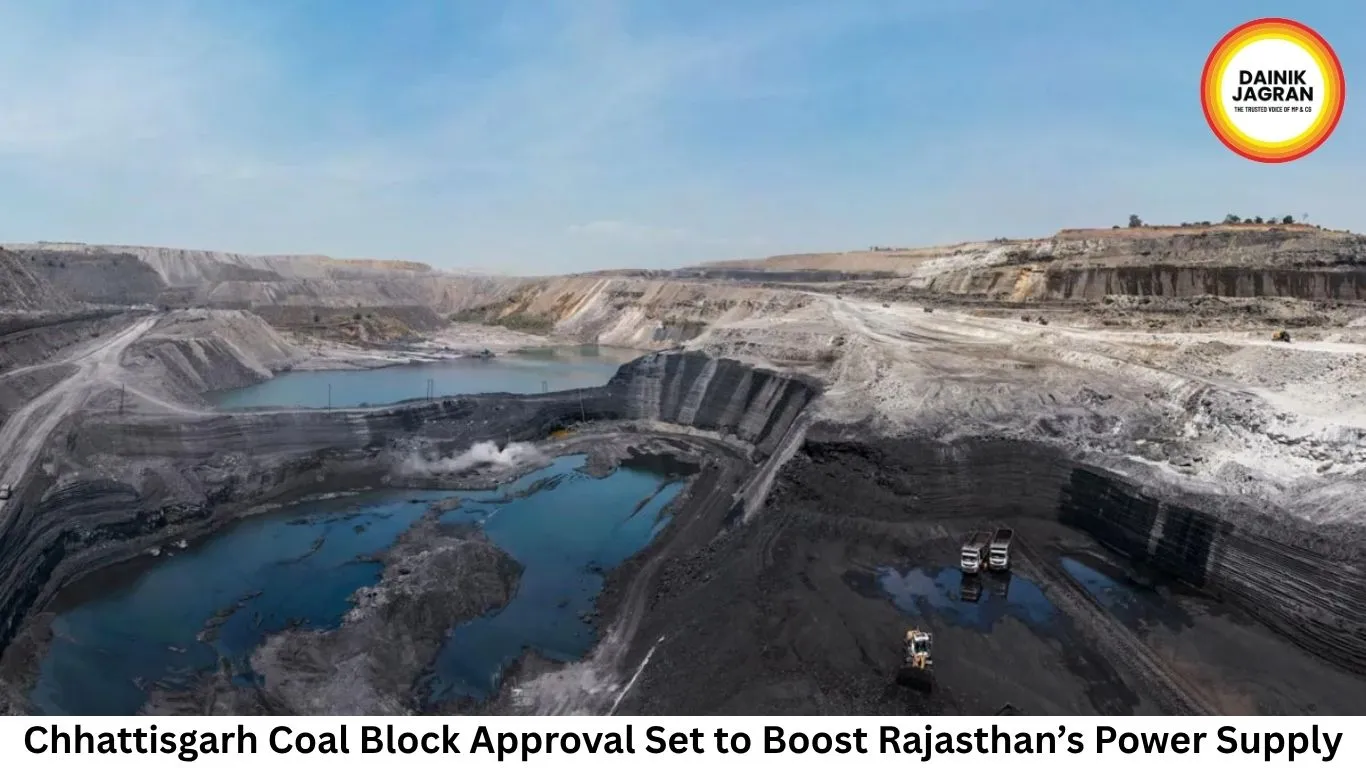
Rajasthan has received a major boost in its efforts to secure long-term fuel supplies for power generation after the Central Government granted Stage-I forest clearance for the Kente Extension Open Cast Coal Block in Chhattisgarh's Hasdeo-Arand region. The coal block, allocated to Rajasthan Rajya Vidyut Utpadan Nigam Limited (RVUNL), is expected to help address the state's recurring coal shortage and ensure a more stable supply to key thermal power stations. The approval follows recommendations made by the Forest Advisory Committee under the Ministry of Environment, Forest and Climate Change. Officials believe the project could significantly improve coal availability for Rajasthan's Chhabra and Suratgarh thermal power plants, which play a critical role in meeting the state's growing electricity demand.
Under the project, approximately 1,743 hectares of forest land will be diverted for mining activities. The coal block is expected to produce nearly 90 million tonnes of coal over a mining life of around 33 to 36 years.
Relief for Power Sector
Energy officials say Rajasthan's thermal power plants require nearly 24.05 million tonnes of coal annually to operate at full capacity. Existing sources have been unable to meet this requirement, resulting in an estimated shortfall of around 9 million tonnes every year.
The Kente Extension coal block is expected to bridge much of this gap and reduce the state's dependence on costly coal purchases from external markets. A stable fuel supply could also help power plants operate more efficiently and improve electricity generation reliability.
Experts estimate that the total coal reserves expected from the block are equivalent to approximately 14 to 17 months of Jaipur city's average electricity consumption. However, the electricity generated from the coal will be supplied through Rajasthan's integrated power grid rather than being dedicated exclusively to Jaipur.
Environmental Concerns
The project has also triggered concerns among environmental groups and conservationists. The Hasdeo-Arand region is known for its dense forests, biodiversity, and ecological significance. Government documents indicate that thousands of trees may be affected as mining activities expand across the approved forest area.
The region is also home to several wildlife species, including elephants, leopards, sloth bears, hyenas, jackals, deer, and pangolins. The mining site is located approximately 3.6 kilometres from the proposed Lemru Elephant Reserve, making wildlife conservation a key consideration for regulators.
As part of the approval conditions, authorities have mandated the implementation of wildlife protection measures and plans to minimize human-animal conflict during mining operations.
Financial and Environmental Obligations
The approval comes with several conditions that RVUNL must fulfill before mining can proceed. The company will be required to pay the Net Present Value (NPV) of the diverted forest land and undertake compensatory afforestation to offset environmental losses.
Officials have also directed the implementation of a Wildlife Mitigation Plan worth approximately ₹16.73 crore and a Soil and Moisture Conservation Plan estimated at around ₹15.01 crore. These measures aim to reduce the environmental impact of mining activities and protect local ecosystems.
Mining to Be Conducted in Phases
The clearance granted by the Centre is not a final mining approval. It represents a preliminary forest clearance subject to strict compliance requirements.
Mining will be carried out in two phases. The first phase will cover nearly 1,002 hectares of forest land and may continue for up to 15 years. Expansion into the remaining area will only be permitted after authorities review environmental compliance, biodiversity conservation efforts, and rehabilitation measures undertaken during the initial phase.
Apart from mining operations, officials acknowledge that transporting coal from Chhattisgarh to Rajasthan presents another major challenge. Infrastructure such as railway connectivity, coal handling facilities, and transportation networks will need to be developed to ensure a smooth supply chain.
The project is expected to play an important role in Rajasthan's long-term energy security strategy while simultaneously testing the balance between industrial development and environmental conservation.

--------
🚨 Beat the News Rush – Join Now!
Get breaking alerts, hot exclusives, and game-changing stories instantly on your phone. No delays, no fluff – just the edge you need. ⚡
Tap to join:
🟢 WhatsApp Channel: Dainik Jagran MP CG
Crave more?
🅕 Facebook: Dainik Jagran MP CG English
🅧 Twitter (X): Dainik Jagran MP CG
🅘 Instagram: Dainik Jagran MP CG
Share the fire – keep your crew ahead! 🗞️🔥
Chhattisgarh Coal Block Approval Set to Boost Rajasthan’s Power Supply
Digital Desk
Rajasthan has received a major boost in its efforts to secure long-term fuel supplies for power generation after the Central Government granted Stage-I forest clearance for the Kente Extension Open Cast Coal Block in Chhattisgarh's Hasdeo-Arand region. The coal block, allocated to Rajasthan Rajya Vidyut Utpadan Nigam Limited (RVUNL), is expected to help address the state's recurring coal shortage and ensure a more stable supply to key thermal power stations. The approval follows recommendations made by the Forest Advisory Committee under the Ministry of Environment, Forest and Climate Change. Officials believe the project could significantly improve coal availability for Rajasthan's Chhabra and Suratgarh thermal power plants, which play a critical role in meeting the state's growing electricity demand.
Under the project, approximately 1,743 hectares of forest land will be diverted for mining activities. The coal block is expected to produce nearly 90 million tonnes of coal over a mining life of around 33 to 36 years.
Relief for Power Sector
Energy officials say Rajasthan's thermal power plants require nearly 24.05 million tonnes of coal annually to operate at full capacity. Existing sources have been unable to meet this requirement, resulting in an estimated shortfall of around 9 million tonnes every year.
The Kente Extension coal block is expected to bridge much of this gap and reduce the state's dependence on costly coal purchases from external markets. A stable fuel supply could also help power plants operate more efficiently and improve electricity generation reliability.
Experts estimate that the total coal reserves expected from the block are equivalent to approximately 14 to 17 months of Jaipur city's average electricity consumption. However, the electricity generated from the coal will be supplied through Rajasthan's integrated power grid rather than being dedicated exclusively to Jaipur.
Environmental Concerns
The project has also triggered concerns among environmental groups and conservationists. The Hasdeo-Arand region is known for its dense forests, biodiversity, and ecological significance. Government documents indicate that thousands of trees may be affected as mining activities expand across the approved forest area.
The region is also home to several wildlife species, including elephants, leopards, sloth bears, hyenas, jackals, deer, and pangolins. The mining site is located approximately 3.6 kilometres from the proposed Lemru Elephant Reserve, making wildlife conservation a key consideration for regulators.
As part of the approval conditions, authorities have mandated the implementation of wildlife protection measures and plans to minimize human-animal conflict during mining operations.
Financial and Environmental Obligations
The approval comes with several conditions that RVUNL must fulfill before mining can proceed. The company will be required to pay the Net Present Value (NPV) of the diverted forest land and undertake compensatory afforestation to offset environmental losses.
Officials have also directed the implementation of a Wildlife Mitigation Plan worth approximately ₹16.73 crore and a Soil and Moisture Conservation Plan estimated at around ₹15.01 crore. These measures aim to reduce the environmental impact of mining activities and protect local ecosystems.
Mining to Be Conducted in Phases
The clearance granted by the Centre is not a final mining approval. It represents a preliminary forest clearance subject to strict compliance requirements.
Mining will be carried out in two phases. The first phase will cover nearly 1,002 hectares of forest land and may continue for up to 15 years. Expansion into the remaining area will only be permitted after authorities review environmental compliance, biodiversity conservation efforts, and rehabilitation measures undertaken during the initial phase.
Apart from mining operations, officials acknowledge that transporting coal from Chhattisgarh to Rajasthan presents another major challenge. Infrastructure such as railway connectivity, coal handling facilities, and transportation networks will need to be developed to ensure a smooth supply chain.
The project is expected to play an important role in Rajasthan's long-term energy security strategy while simultaneously testing the balance between industrial development and environmental conservation.