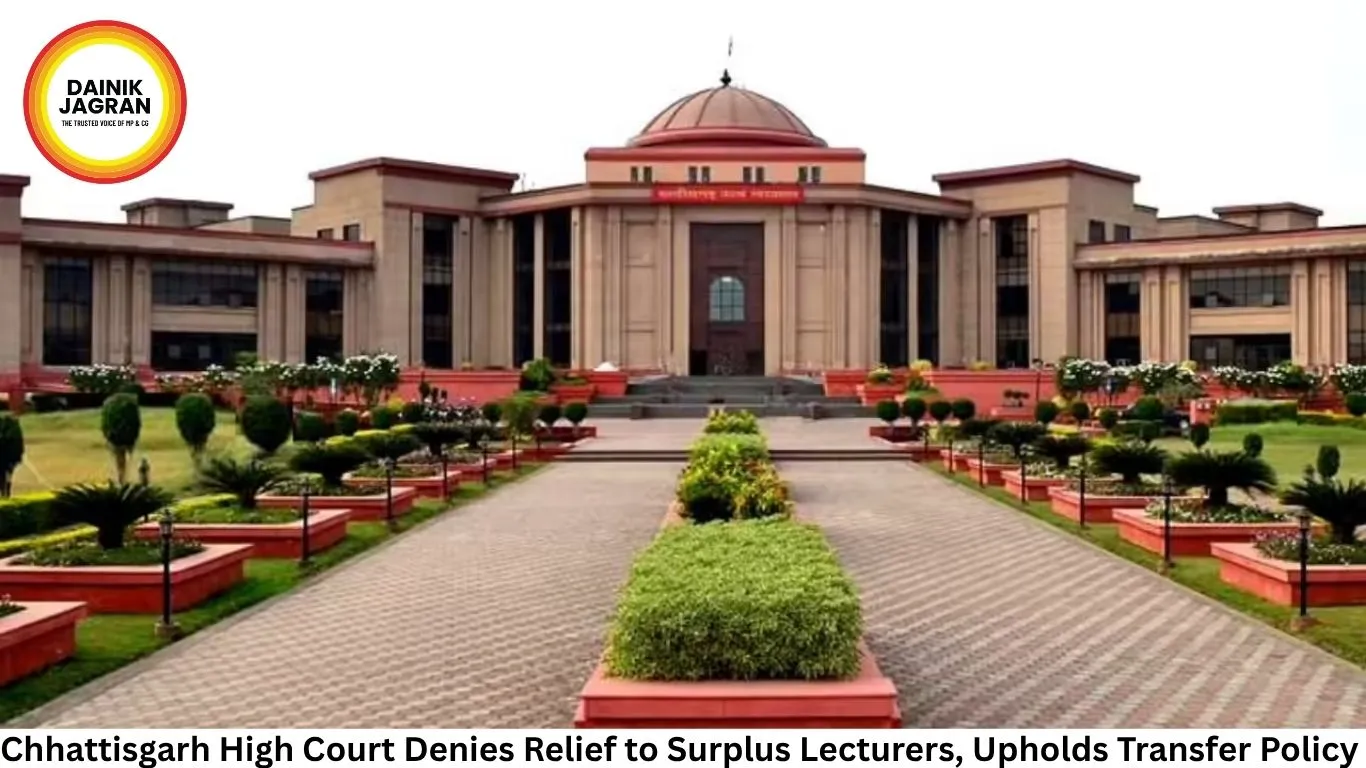
Chhattisgarh High Court Denies Relief to Surplus Lecturers, Upholds Transfer Policy

Digital Desk

Chhattisgarh High Court Denies Relief to Surplus Lecturers, Upholds Transfer Policy

The High Court has upheld the state's rationalisation policy, ruling that teachers cannot claim a right to remain posted in schools where there are no students enrolled in their subject.

The Chhattisgarh High Court has refused to grant relief to two commerce lecturers who challenged their transfer under the state's rationalisation policy. A Division Bench comprising Chief Justice Ramesh Sinha and Justice Ravindra Kumar Agrawal dismissed the appeal and upheld an earlier order passed by a Single Bench. The court observed that there was no justification for retaining teachers in a school where not a single student was enrolled in the subject they were appointed to teach. The ruling reinforces the state government's policy of redistributing surplus teachers to educational institutions where their services are required.

The case involved two commerce lecturers, Shakuntala Rathore and Krishna Devi Sahu, who were posted at Government Higher Secondary School, Sivni, in Janjgir-Champa district. During a departmental review conducted under the rationalisation policy, authorities found that there were no students enrolled in the commerce stream at the school.

As a result, both lecturers were declared surplus and were transferred through a counselling process to schools in Dasrangpur and Kona in Mungeli district.

Teachers Challenged Transfer

The lecturers approached the High Court, arguing that the transfer process was arbitrary and discriminatory. They alleged that vacant posts within the district were concealed during counselling and that the department failed to follow a fair procedure while reallocating teachers.

The petitioners sought judicial intervention, claiming that the transfer orders adversely affected them and did not adequately consider available vacancies closer to their original place of posting.

However, the state government defended its decision, stating that the transfers were carried out strictly in accordance with Clause 7(C)(2) of the rationalisation policy.

Court Supports Government's Stand

Government representatives informed the court that the policy mandates the transfer of teachers from schools where no students are enrolled in a particular subject to institutions where students require instruction in that discipline.

The state further explained that senior teachers were first given an opportunity to participate in district-level counselling. Subsequent postings were made through divisional-level counselling based on administrative requirements and established procedures.

After reviewing the submissions, the Division Bench agreed with the government's position and found no legal infirmity in the transfer process.

No Right to Remain at Preferred Posting

While affirming the Single Bench decision, the High Court reiterated that transfers and staff adjustments fall within the administrative domain of the employer. The court noted that judicial review in such matters is limited unless there is evidence of illegality, mala fide intent, or violation of statutory provisions.

The judges observed that government employees, including teachers, cannot claim a legal right to remain posted at a particular location or in their home district. Since there were no commerce students at the original school, the transfer of the lecturers to institutions where their services were needed was both reasonable and consistent with the policy framework.

The judgment is expected to have wider implications for similar cases arising from the state's teacher rationalisation programme. Education department officials believe the decision will support efforts to ensure better distribution of teaching staff and improve academic resources in schools where student enrollment remains high.


--------

🚨 Beat the News Rush – Join Now!

Get breaking alerts, hot exclusives, and game-changing stories instantly on your phone. No delays, no fluff – just the edge you need. ⚡

Tap to join: 

🟢 WhatsApp Channel: Dainik Jagran MP CG

Crave more?

🅕 Facebook: Dainik Jagran MP CG English

🅧 Twitter (X): Dainik Jagran MP CG

🅘 Instagram: Dainik Jagran MP CG

Share the fire – keep your crew ahead! 🗞️🔥

english.dainikjagranmpcg.com
20 Jun 2026 By Rishita

Chhattisgarh High Court Denies Relief to Surplus Lecturers, Upholds Transfer Policy

Digital Desk

The Chhattisgarh High Court has refused to grant relief to two commerce lecturers who challenged their transfer under the state's rationalisation policy. A Division Bench comprising Chief Justice Ramesh Sinha and Justice Ravindra Kumar Agrawal dismissed the appeal and upheld an earlier order passed by a Single Bench. The court observed that there was no justification for retaining teachers in a school where not a single student was enrolled in the subject they were appointed to teach. The ruling reinforces the state government's policy of redistributing surplus teachers to educational institutions where their services are required.

The case involved two commerce lecturers, Shakuntala Rathore and Krishna Devi Sahu, who were posted at Government Higher Secondary School, Sivni, in Janjgir-Champa district. During a departmental review conducted under the rationalisation policy, authorities found that there were no students enrolled in the commerce stream at the school.

As a result, both lecturers were declared surplus and were transferred through a counselling process to schools in Dasrangpur and Kona in Mungeli district.

Teachers Challenged Transfer

The lecturers approached the High Court, arguing that the transfer process was arbitrary and discriminatory. They alleged that vacant posts within the district were concealed during counselling and that the department failed to follow a fair procedure while reallocating teachers.

The petitioners sought judicial intervention, claiming that the transfer orders adversely affected them and did not adequately consider available vacancies closer to their original place of posting.

However, the state government defended its decision, stating that the transfers were carried out strictly in accordance with Clause 7(C)(2) of the rationalisation policy.

Court Supports Government's Stand

Government representatives informed the court that the policy mandates the transfer of teachers from schools where no students are enrolled in a particular subject to institutions where students require instruction in that discipline.

The state further explained that senior teachers were first given an opportunity to participate in district-level counselling. Subsequent postings were made through divisional-level counselling based on administrative requirements and established procedures.

After reviewing the submissions, the Division Bench agreed with the government's position and found no legal infirmity in the transfer process.

No Right to Remain at Preferred Posting

While affirming the Single Bench decision, the High Court reiterated that transfers and staff adjustments fall within the administrative domain of the employer. The court noted that judicial review in such matters is limited unless there is evidence of illegality, mala fide intent, or violation of statutory provisions.

The judges observed that government employees, including teachers, cannot claim a legal right to remain posted at a particular location or in their home district. Since there were no commerce students at the original school, the transfer of the lecturers to institutions where their services were needed was both reasonable and consistent with the policy framework.

The judgment is expected to have wider implications for similar cases arising from the state's teacher rationalisation programme. Education department officials believe the decision will support efforts to ensure better distribution of teaching staff and improve academic resources in schools where student enrollment remains high.

https://english.dainikjagranmpcg.com/states/chhattisgarh/chhattisgarh-high-court-denies-relief-to-surplus-lecturers-upholds-transfer/article-20369

Related Posts

Latest News