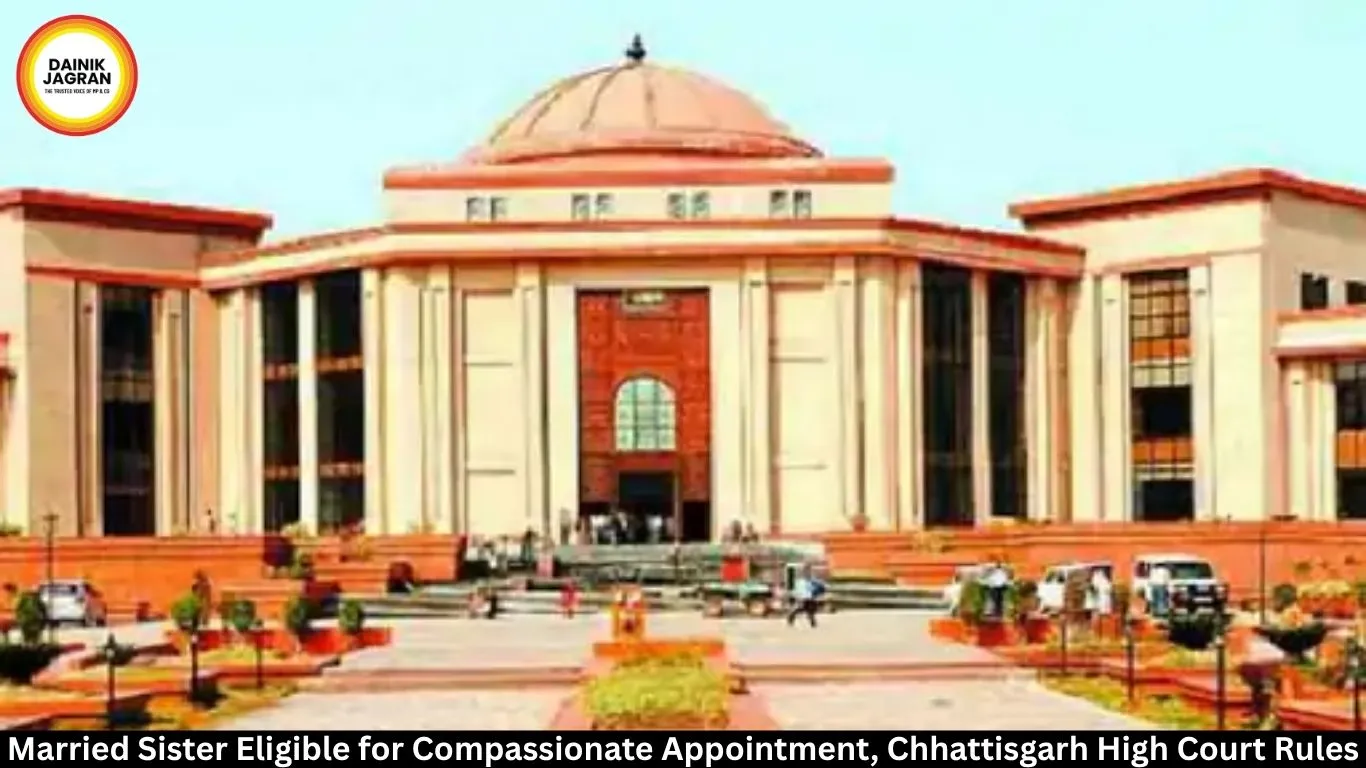
Chhattisgarh High Court Rules Married Sister Eligible for Compassionate Appointment
Digital desk
The Chhattisgarh High Court ruled that a married sister is entitled to compassionate appointment after the death of an unmarried government employee, saying marriage does not end ties with the parental family.
In a significant ruling reinforcing gender equality, the Chhattisgarh High Court has held that a married sister of an unmarried deceased government employee is equally entitled to compassionate appointment, observing that marriage does not sever a woman's relationship with her parental family.
Justice Sanjay K. Agrawal quashed a state government order dated September 19, 2019, which had denied compassionate appointment to a married woman solely on the ground of her marital status. The court directed the state authorities to reconsider the case and issue a fresh order within four weeks.
Marriage Not Ground for Disqualification
The High Court observed that depriving a married woman of compassionate appointment merely because she is married amounts to gender discrimination and violates the constitutional principles of equality.
The court stated that the traditional assumption that a daughter or sister ceases to be part of her parental family after marriage is outdated and inconsistent with Articles 14 and 15 of the Constitution.
It further noted that the purpose of compassionate appointment is to provide immediate financial relief to a bereaved family following the death of its earning member. Therefore, financial dependency and the family's need for assistance—not marital status—should be the determining factors.
Case Background
The case arose after Durgesh Mishra, who was serving as a District Public Prosecutor in Janjgir-Champa, died while in service on June 13, 2018. Mishra was unmarried.
Following his death, his elderly mother, Tara Mishra, applied for compassionate appointment in favour of her daughter, Amita Dubey, under the Chhattisgarh government's 2013 compassionate appointment policy.
However, the Home and General Administration Department rejected the application in September 2019, stating that the policy contained no explicit provision for granting compassionate appointment to a married sister.
Challenging the decision, the family approached the High Court.
Court Relies on Supreme Court Judgments
During the hearing, the petitioners argued that the Supreme Court had already clarified in earlier judgments, including Kulsum Nisha vs State of Uttar Pradesh and Saira Khatoon vs State of Bihar, that marriage alone does not end a daughter's or sister's relationship with her original family.
The petition also pointed out that the state's compassionate appointment policy allows the parents of an unmarried deceased government employee to recommend a sibling for appointment.
The High Court agreed, observing that if a married brother is not excluded from consideration, denying the same benefit to a married sister solely because of her gender and marital status amounts to unconstitutional discrimination.
Changing Social Reality Recognised
The court acknowledged that many married daughters and sisters continue to financially support their parents and families, making the old presumption that marriage permanently shifts all responsibilities away from the parental home legally and socially untenable.
It stressed that compassionate appointment schemes should be interpreted in a manner consistent with constitutional guarantees of equality and changing social realities.
Government Directed to Reconsider
Allowing the petition, the High Court set aside the government's earlier rejection order and instructed the authorities to reconsider Amita Dubey's claim for compassionate appointment in accordance with the applicable rules.
The court directed the state government to complete the exercise and pass a fresh, reasoned order within four weeks.
Chhattisgarh High Court Rules Married Sister Eligible for Compassionate Appointment
Digital desk
In a significant ruling reinforcing gender equality, the Chhattisgarh High Court has held that a married sister of an unmarried deceased government employee is equally entitled to compassionate appointment, observing that marriage does not sever a woman's relationship with her parental family.
Justice Sanjay K. Agrawal quashed a state government order dated September 19, 2019, which had denied compassionate appointment to a married woman solely on the ground of her marital status. The court directed the state authorities to reconsider the case and issue a fresh order within four weeks.
Marriage Not Ground for Disqualification
The High Court observed that depriving a married woman of compassionate appointment merely because she is married amounts to gender discrimination and violates the constitutional principles of equality.
The court stated that the traditional assumption that a daughter or sister ceases to be part of her parental family after marriage is outdated and inconsistent with Articles 14 and 15 of the Constitution.
It further noted that the purpose of compassionate appointment is to provide immediate financial relief to a bereaved family following the death of its earning member. Therefore, financial dependency and the family's need for assistance—not marital status—should be the determining factors.
Case Background
The case arose after Durgesh Mishra, who was serving as a District Public Prosecutor in Janjgir-Champa, died while in service on June 13, 2018. Mishra was unmarried.
Following his death, his elderly mother, Tara Mishra, applied for compassionate appointment in favour of her daughter, Amita Dubey, under the Chhattisgarh government's 2013 compassionate appointment policy.
However, the Home and General Administration Department rejected the application in September 2019, stating that the policy contained no explicit provision for granting compassionate appointment to a married sister.
Challenging the decision, the family approached the High Court.
Court Relies on Supreme Court Judgments
During the hearing, the petitioners argued that the Supreme Court had already clarified in earlier judgments, including Kulsum Nisha vs State of Uttar Pradesh and Saira Khatoon vs State of Bihar, that marriage alone does not end a daughter's or sister's relationship with her original family.
The petition also pointed out that the state's compassionate appointment policy allows the parents of an unmarried deceased government employee to recommend a sibling for appointment.
The High Court agreed, observing that if a married brother is not excluded from consideration, denying the same benefit to a married sister solely because of her gender and marital status amounts to unconstitutional discrimination.
Changing Social Reality Recognised
The court acknowledged that many married daughters and sisters continue to financially support their parents and families, making the old presumption that marriage permanently shifts all responsibilities away from the parental home legally and socially untenable.
It stressed that compassionate appointment schemes should be interpreted in a manner consistent with constitutional guarantees of equality and changing social realities.
Government Directed to Reconsider
Allowing the petition, the High Court set aside the government's earlier rejection order and instructed the authorities to reconsider Amita Dubey's claim for compassionate appointment in accordance with the applicable rules.
The court directed the state government to complete the exercise and pass a fresh, reasoned order within four weeks.

Recommended For You
--------
🚨 Beat the News Rush – Join Now!
Get breaking alerts, hot exclusives, and game-changing stories instantly on your phone. No delays, no fluff – just the edge you need. ⚡
Tap to join:
🟢 WhatsApp Channel: Dainik Jagran MP CG
Crave more?
🅕 Facebook: Dainik Jagran MP CG English
🅧 Twitter (X): Dainik Jagran MP CG
🅘 Instagram: Dainik Jagran MP CG
Share the fire – keep your crew ahead! 🗞️🔥