


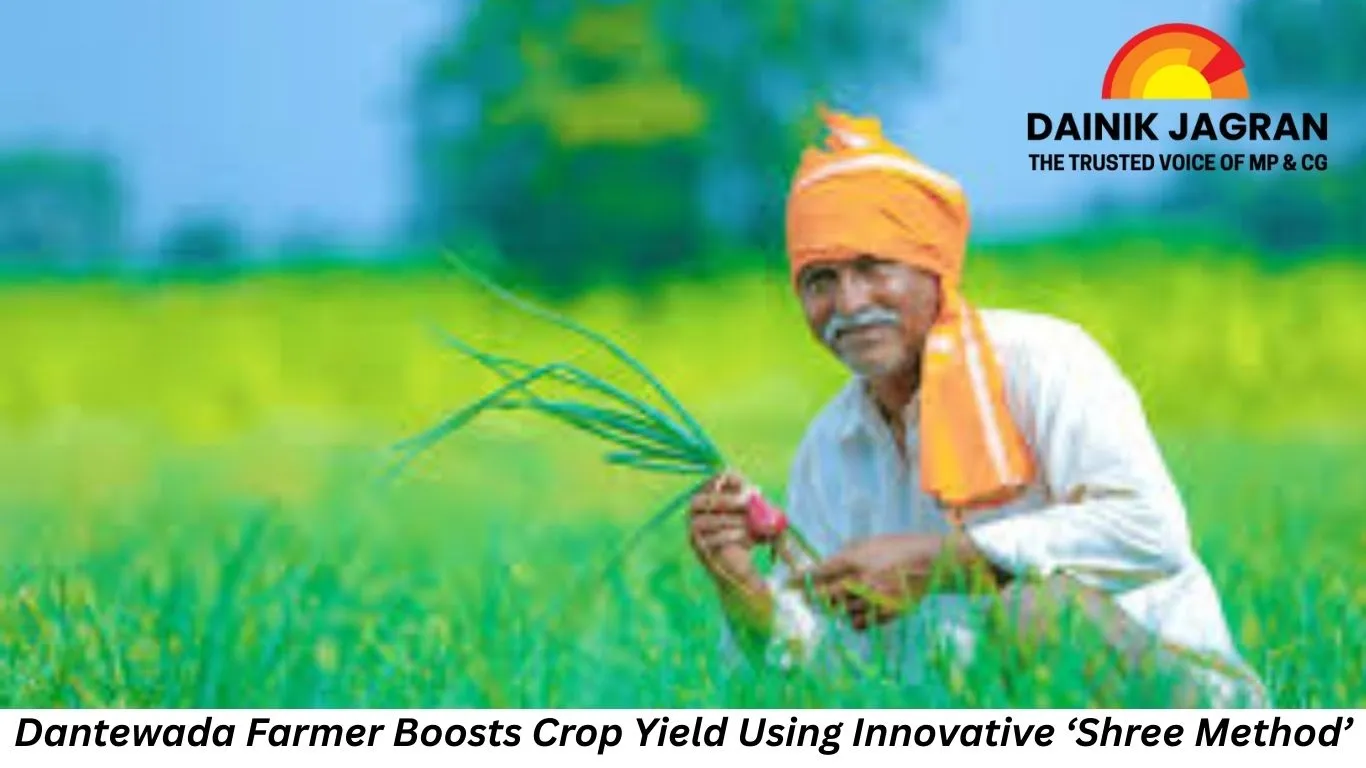
Dantewada Farmer Boosts Crop Yield Using Innovative ‘Shree Method’
Digital Desk
Tulsi Ram shared that he previously cultivated paddy using conventional methods, which involved high costs and limited output. Two years ago, he visited Araku in Andhra Pradesh, where he observed Kutki cultivation using the Shree Method and learned its advantages. Inspired by this, he applied the method on two acres of land this season.
In traditional cultivation, Kutki yields about 1.5 to 2 quintals per acre, whereas the Shree Method boosts production to 8–10 quintals per acre, resulting innearly five times the profit. This method uses less seed and water, improves nutrient management, enhances soil fertility, and simplifies weed control. Lower production costs combined with higher yields and superior crop quality ensure better market prices, increasing net profit.
Tulsi Ram has also encouraged 10 other farmers in his village to adopt this technique, demonstrating that integrating modern methods with organic practices can generate substantial returns even with limited resources.
In addition to Kutki, Tulsi Ram practices organic vegetable cultivation, using neem solution, Jeevamrit, Ghana Jeevamrit, and indigenous cow dung fertilizer, producing chemical-free vegetables sold at premium prices in local markets. He also grows Ragi (Madia) during summer using the Shree Method, maintaining year-round productivity of his farmland.
Through innovation and sustainable practices, Tulsi Ram’s approach showcases how technology-driven farming can significantly enhance yields, reduce costs, and improve livelihoods for small-scale farmers in Dantewada.




.jpg)




