Fourth elephant calf dies in Raigarh; body found in Mand river
Digital Desk
The tragic death of a 3-to-5-month-old elephant calf in Raigarh marks the fourth such casualty in the district within 25 days, raising alarms over wildlife safety.
In another alarming setback for wildlife conservation in Chhattisgarh, an elephant calf was found dead in the Mand river in Raigarh district on Monday morning. This marks the fourth elephant calf death reported from the region in the last 25 days, triggering serious concerns among wildlife enthusiasts and forest department officials.
The body of the deceased calf, estimated to be between three and five months old, was spotted by local villagers floating near the confluence point of the river between Gurda and Dehjari villages. The area falls under the Kharsia forest range.
Herd movement on Sunday night
According to local sources, a large herd of approximately 52 elephants had crossed over from the neighboring Chhal forest range into the Kharsia area late on Sunday night.
Forest officials suspect that the herd had moved toward the Mand river confluence to drink water or bathe. It is highly likely that the young calf, unable to negotiate the water currents or mud, got separated from the herd and drowned. The rest of the herd reportedly moved back toward the Chhal range before daybreak.
Rescue operation by villagers
On Monday morning, residents of nearby villages noticed the carcass in the water. As word spread, a large crowd gathered near the riverbank. The villagers promptly alerted the forest department.
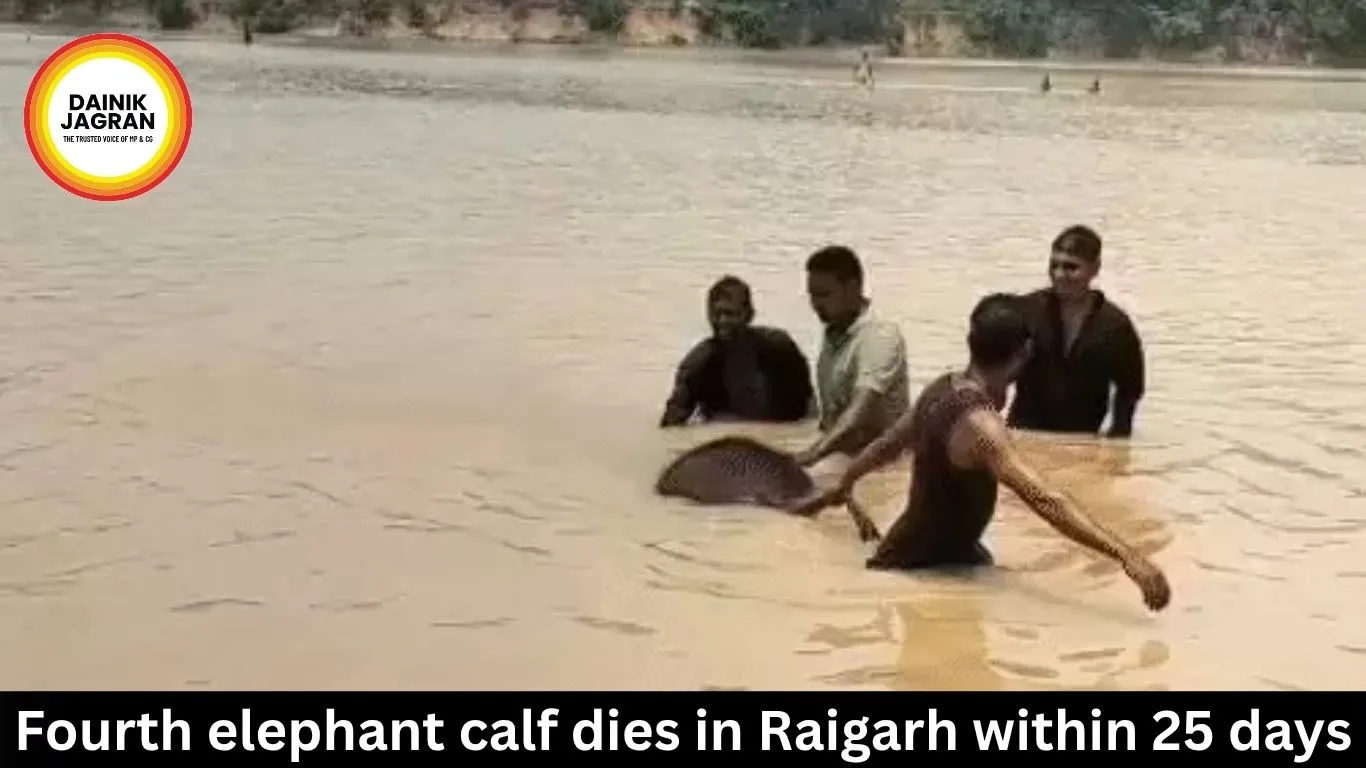
A team of forest personnel rushed to the spot shortly after receiving the information. Due to the challenging terrain along the riverbank, officials had to seek the assistance of local villagers to retrieve the body from the water. After considerable effort, the carcass was pulled ashore.
Drowning suspected, says DFO
Speaking on the development, Raigarh Divisional Forest Officer (DFO) Arvind PM stated that initial observations point toward drowning as the primary cause of death.
"The elephant calf's body was recovered from the Mand river. Preliminary inspection suggests the calf died due to drowning after getting stuck or left behind. Our teams reached the spot immediately, and standard legal procedures, including the panchnama, have been initiated," the DFO said.
A formal post-mortem examination is being conducted to ascertain the exact cause and timing of the death, officials added.
Four deaths in 25 days
The latest incident has highlighted the rising vulnerability of elephant calves in the region. Raigarh district, which is divided into two forest divisions, has now recorded four elephant calf deaths since May 8. Three of these fatalities occurred in the Dharamjaigarh forest division, while one has been recorded in the Raigarh division.
The streak of tragedies began on May 8 when a six-month-old calf drowned in the Ghoghra dam under the Chhal range. Just days later, on May 11, another young calf lost its life after getting stuck in the marshy edges of a dam in the Kerajharia forest area near Tarkela village.
More recently, on the morning of May 24, another calf's body was recovered from a pond in the Amaguda-Pusalda area. In that instance, heart-wrenching videos had surfaced on social media showing a grieving mother elephant desperately trying to revive her dead calf using her trunk and feet, while the herd trumpeted through the night.
Growing conflict and monitoring challenges
Local wildlife activists have expressed deep concern over the back-to-back casualties, pointing out that migrating herds with very young calves require closer monitoring by ground-level forest staff.
The frequent movement of large herds between Chhal and Kharsia ranges often brings them close to water bodies that turn treacherous during seasonal changes. While forest tracking teams do monitor the large herds, keeping track of every newborn or young calf in dense cover remains a logistical challenge under current field conditions.

--------
๐จ Beat the News Rush โ Join Now!
Get breaking alerts, hot exclusives, and game-changing stories instantly on your phone. No delays, no fluff โ just the edge you need. โก
Tap to join:ย
๐ข WhatsApp Channel: Dainik Jagran MP CG
Crave more?
๐ Facebook: Dainik Jagran MP CG English
๐ ง Twitter (X): Dainik Jagran MP CG
๐ Instagram: Dainik Jagran MP CG
Share the fire โ keep your crew ahead! ๐๏ธ๐ฅ
Fourth elephant calf dies in Raigarh; body found in Mand river
Digital Desk
In another alarming setback for wildlife conservation in Chhattisgarh, an elephant calf was found dead in the Mand river in Raigarh district on Monday morning. This marks the fourth elephant calf death reported from the region in the last 25 days, triggering serious concerns among wildlife enthusiasts and forest department officials.
The body of the deceased calf, estimated to be between three and five months old, was spotted by local villagers floating near the confluence point of the river between Gurda and Dehjari villages. The area falls under the Kharsia forest range.
Herd movement on Sunday night
According to local sources, a large herd of approximately 52 elephants had crossed over from the neighboring Chhal forest range into the Kharsia area late on Sunday night.
Forest officials suspect that the herd had moved toward the Mand river confluence to drink water or bathe. It is highly likely that the young calf, unable to negotiate the water currents or mud, got separated from the herd and drowned. The rest of the herd reportedly moved back toward the Chhal range before daybreak.
Rescue operation by villagers
On Monday morning, residents of nearby villages noticed the carcass in the water. As word spread, a large crowd gathered near the riverbank. The villagers promptly alerted the forest department.
A team of forest personnel rushed to the spot shortly after receiving the information. Due to the challenging terrain along the riverbank, officials had to seek the assistance of local villagers to retrieve the body from the water. After considerable effort, the carcass was pulled ashore.
Drowning suspected, says DFO
Speaking on the development, Raigarh Divisional Forest Officer (DFO) Arvind PM stated that initial observations point toward drowning as the primary cause of death.
"The elephant calf's body was recovered from the Mand river. Preliminary inspection suggests the calf died due to drowning after getting stuck or left behind. Our teams reached the spot immediately, and standard legal procedures, including the panchnama, have been initiated," the DFO said.
A formal post-mortem examination is being conducted to ascertain the exact cause and timing of the death, officials added.
Four deaths in 25 days
The latest incident has highlighted the rising vulnerability of elephant calves in the region. Raigarh district, which is divided into two forest divisions, has now recorded four elephant calf deaths since May 8. Three of these fatalities occurred in the Dharamjaigarh forest division, while one has been recorded in the Raigarh division.
The streak of tragedies began on May 8 when a six-month-old calf drowned in the Ghoghra dam under the Chhal range. Just days later, on May 11, another young calf lost its life after getting stuck in the marshy edges of a dam in the Kerajharia forest area near Tarkela village.
More recently, on the morning of May 24, another calf's body was recovered from a pond in the Amaguda-Pusalda area. In that instance, heart-wrenching videos had surfaced on social media showing a grieving mother elephant desperately trying to revive her dead calf using her trunk and feet, while the herd trumpeted through the night.
Growing conflict and monitoring challenges
Local wildlife activists have expressed deep concern over the back-to-back casualties, pointing out that migrating herds with very young calves require closer monitoring by ground-level forest staff.
The frequent movement of large herds between Chhal and Kharsia ranges often brings them close to water bodies that turn treacherous during seasonal changes. While forest tracking teams do monitor the large herds, keeping track of every newborn or young calf in dense cover remains a logistical challenge under current field conditions.