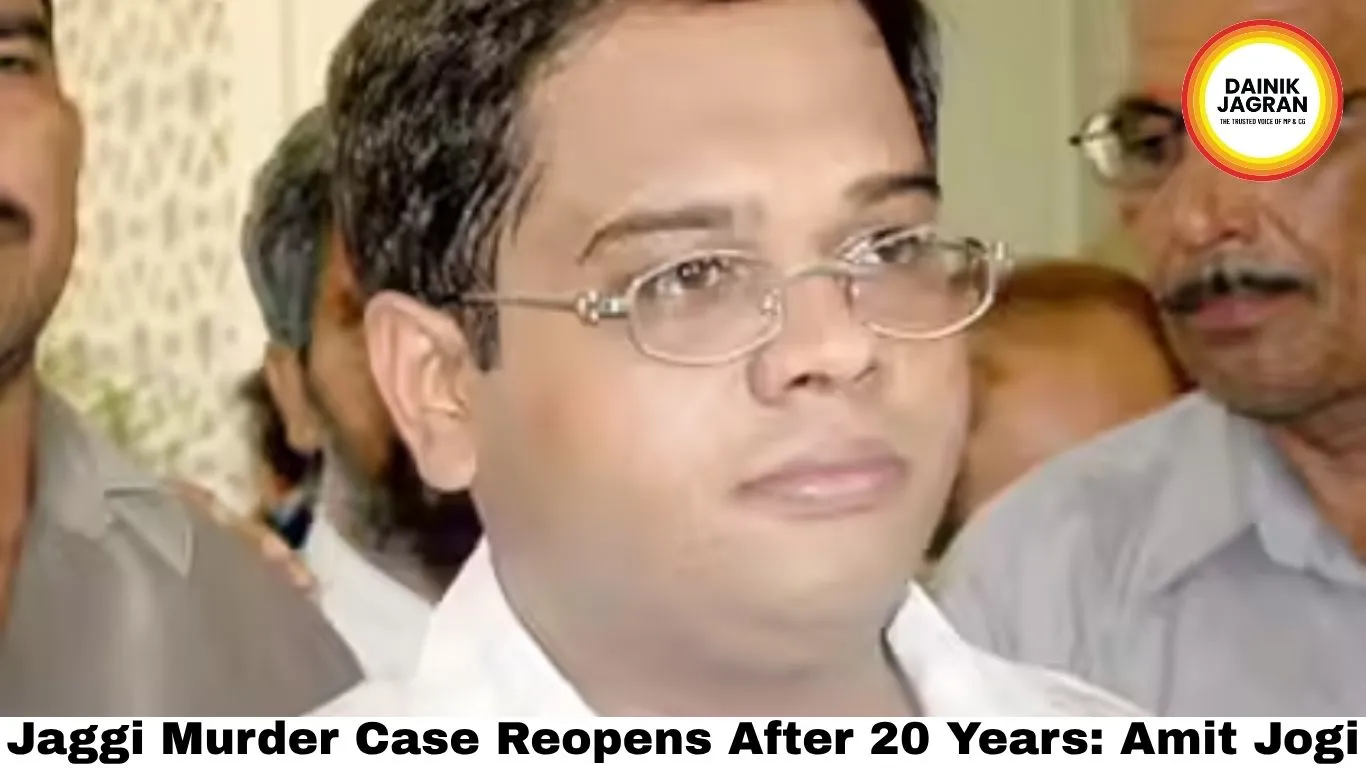
Jaggi Murder Case Reopens After 20 Years: Amit Jogi Back in Court as Chhattisgarh High Court Begins Fresh Hearing on Supreme Court Orders

Digital Desk

Jaggi Murder Case Reopens After 20 Years: Amit Jogi Back in Court as Chhattisgarh High Court Begins Fresh Hearing on Supreme Court Orders

The Jaggi murder case is back in Chhattisgarh High Court after Supreme Court orders fresh hearing against Amit Jogi's acquittal. Next hearing set for April 1, 2026.

Jaggi Murder Case Reopens After 20 Years — Amit Jogi Back in the Dock as High Court Begins Fresh Hearing

A political murder from 2003 is refusing to rest. With the Supreme Court stepping in and the Chhattisgarh High Court resuming hearings, the Jaggi murder case is once again at the centre of Chhattisgarh's legal and political landscape.


A Case That Refused to Die

The long-running Ramavatar Jaggi murder case has been officially reopened in the Chhattisgarh High Court, following firm directions from the Supreme Court of India. On Wednesday, March 25, 2026, a Division Bench of Chief Justice Ramesh Sinha and Justice Arvind Kumar Verma issued notices to Satish Jaggi and Amit Jogi, directing both to appear before the court along with their legal counsel.

The development follows the Supreme Court's landmark ruling in November 2025, which allowed the Central Bureau of Investigation's appeal, condoned a significant procedural delay, and directed the High Court to re-examine the plea against Amit Jogi's acquittal purely on its merits. The next crucial hearing has been scheduled for April 1, 2026.


What Is the Jaggi Murder Case?

The case stems from the brutal murder of National Congress Party leader Ramavatar Jaggi in Raipur, Chhattisgarh, in 2003. Initially investigated by state police, the case was subsequently handed to the CBI following complaints that the local investigation was compromised due to political influence. The CBI filed a detailed chargesheet alleging that Amit Aishwarya Jogi — son of then Chief Minister Ajit Jogi — had conspired with others to eliminate Jaggi, a prominent rival political figure.

While 28 co-accused were convicted following trial, the trial court acquitted Amit Jogi, citing insufficient evidence against him. Three separate appeals were then filed in the Chhattisgarh High Court — by the state government, by the victim's son Satish Jaggi, and by the CBI itself. The High Court dismissed all three appeals. The matter appeared closed — until the Supreme Court stepped in with a decisive intervention.


How the Supreme Court Changed Everything

In its November 2025 ruling, the Supreme Court made a pointed and significant observation. It noted that a case involving such grave allegations — specifically, a conspiracy to murder a rival political leader — should not be thrown out on the basis of mere technicalities or procedural delays. The court adopted a liberal approach and condoned the CBI's delay of over 1,373 days in filing its appeal, remitting the matter back to the Chhattisgarh High Court for fresh consideration on merits.

This is a landmark judicial position. Indian courts have frequently dismissed delayed appeals on procedural grounds alone. In this instance, the Supreme Court sent a clear and unambiguous message: where the crime is grave, the door to justice must not be shut by paperwork.

Legal observers across the country have taken note. The ruling reinforces the principle that courts must look beyond technicalities when the allegations at the heart of a case involve political violence, conspiracy, and the misuse of power.


What Amit Jogi Said

Following Wednesday's court proceedings, Amit Jogi addressed the development publicly through social media with characteristic composure. He acknowledged that the High Court would take up the matter on April 1 in a case where he had already been acquitted over two decades ago, and expressed his confidence that justice would continue to favour him. He referred to the matter as one of faith and divine grace.

His calm, however, does not diminish the legal gravity of the situation. With the case now formally reopened on merits, Amit Jogi — who was previously arrested, spent time in custody, and was later acquitted — may be required to seek fresh bail arrangements. Satish Jaggi, the deceased's son, made the position clear: Amit Jogi has once again become an active accused in this matter.


Why This Case Matters Beyond Chhattisgarh

The Jaggi murder case is far more than a regional crime story. It sits at the intersection of political power, criminal conspiracy, institutional accountability, and judicial perseverance. The charges involve an alleged plot to murder a member of an opposing political party at a time when the accused's father was the sitting Chief Minister of the state — making it one of the most politically sensitive criminal cases in Chhattisgarh's history.

The case also raises a deeper constitutional question that the Supreme Court itself has flagged: in matters involving both state police and CBI investigations, does the state government retain the independent right to file an appeal against an acquittal? This question may ultimately require examination by a larger constitutional bench.

For ordinary citizens watching from the outside, the issue is simpler — and more moral. Can the powerful truly be held accountable, even two decades after the crime? The courts appear to be answering: they must at least face the trial.


The Road Ahead: April 1 Hearing

The Chhattisgarh High Court has assigned the responsibility of serving notices to the Raipur SP, who will be required to present a compliance affidavit confirming service to all parties. The stage is now formally set for what promises to be a critical legal proceeding on April 1.

The CBI must argue before the High Court why it should be granted leave to challenge the trial court's acquittal of Amit Jogi. All parties — Amit Jogi, the state government, and the victim's family — will be represented. Legal analysts expect the hearing to set the tone for what could be a prolonged and closely watched appellate process.


Justice Moves Slowly, But It Moves

The Jaggi murder case is a powerful reminder that in India's judicial system, the word "closed" is rarely the final word in matters of grave consequence. Twenty-three years after NCP leader Ramavatar Jaggi was shot dead in Raipur, his family continues to seek justice in courtrooms. The accused's son continues to defend his acquittal. And India's highest court has firmly declared that crimes of this magnitude deserve examination on their merits — not burial in bureaucratic delay.

April 1 will be watched closely — not just in Chhattisgarh, but by every observer who believes that justice, however slow its pace, must eventually arrive.

english.dainikjagranmpcg.com
26 Mar 2026 By Jiya.S

Jaggi Murder Case Reopens After 20 Years: Amit Jogi Back in Court as Chhattisgarh High Court Begins Fresh Hearing on Supreme Court Orders

Digital Desk

Jaggi Murder Case Reopens After 20 Years — Amit Jogi Back in the Dock as High Court Begins Fresh Hearing

A political murder from 2003 is refusing to rest. With the Supreme Court stepping in and the Chhattisgarh High Court resuming hearings, the Jaggi murder case is once again at the centre of Chhattisgarh's legal and political landscape.


A Case That Refused to Die

The long-running Ramavatar Jaggi murder case has been officially reopened in the Chhattisgarh High Court, following firm directions from the Supreme Court of India. On Wednesday, March 25, 2026, a Division Bench of Chief Justice Ramesh Sinha and Justice Arvind Kumar Verma issued notices to Satish Jaggi and Amit Jogi, directing both to appear before the court along with their legal counsel.

The development follows the Supreme Court's landmark ruling in November 2025, which allowed the Central Bureau of Investigation's appeal, condoned a significant procedural delay, and directed the High Court to re-examine the plea against Amit Jogi's acquittal purely on its merits. The next crucial hearing has been scheduled for April 1, 2026.


What Is the Jaggi Murder Case?

The case stems from the brutal murder of National Congress Party leader Ramavatar Jaggi in Raipur, Chhattisgarh, in 2003. Initially investigated by state police, the case was subsequently handed to the CBI following complaints that the local investigation was compromised due to political influence. The CBI filed a detailed chargesheet alleging that Amit Aishwarya Jogi — son of then Chief Minister Ajit Jogi — had conspired with others to eliminate Jaggi, a prominent rival political figure.

While 28 co-accused were convicted following trial, the trial court acquitted Amit Jogi, citing insufficient evidence against him. Three separate appeals were then filed in the Chhattisgarh High Court — by the state government, by the victim's son Satish Jaggi, and by the CBI itself. The High Court dismissed all three appeals. The matter appeared closed — until the Supreme Court stepped in with a decisive intervention.


How the Supreme Court Changed Everything

In its November 2025 ruling, the Supreme Court made a pointed and significant observation. It noted that a case involving such grave allegations — specifically, a conspiracy to murder a rival political leader — should not be thrown out on the basis of mere technicalities or procedural delays. The court adopted a liberal approach and condoned the CBI's delay of over 1,373 days in filing its appeal, remitting the matter back to the Chhattisgarh High Court for fresh consideration on merits.

This is a landmark judicial position. Indian courts have frequently dismissed delayed appeals on procedural grounds alone. In this instance, the Supreme Court sent a clear and unambiguous message: where the crime is grave, the door to justice must not be shut by paperwork.

Legal observers across the country have taken note. The ruling reinforces the principle that courts must look beyond technicalities when the allegations at the heart of a case involve political violence, conspiracy, and the misuse of power.


What Amit Jogi Said

Following Wednesday's court proceedings, Amit Jogi addressed the development publicly through social media with characteristic composure. He acknowledged that the High Court would take up the matter on April 1 in a case where he had already been acquitted over two decades ago, and expressed his confidence that justice would continue to favour him. He referred to the matter as one of faith and divine grace.

His calm, however, does not diminish the legal gravity of the situation. With the case now formally reopened on merits, Amit Jogi — who was previously arrested, spent time in custody, and was later acquitted — may be required to seek fresh bail arrangements. Satish Jaggi, the deceased's son, made the position clear: Amit Jogi has once again become an active accused in this matter.


Why This Case Matters Beyond Chhattisgarh

The Jaggi murder case is far more than a regional crime story. It sits at the intersection of political power, criminal conspiracy, institutional accountability, and judicial perseverance. The charges involve an alleged plot to murder a member of an opposing political party at a time when the accused's father was the sitting Chief Minister of the state — making it one of the most politically sensitive criminal cases in Chhattisgarh's history.

The case also raises a deeper constitutional question that the Supreme Court itself has flagged: in matters involving both state police and CBI investigations, does the state government retain the independent right to file an appeal against an acquittal? This question may ultimately require examination by a larger constitutional bench.

For ordinary citizens watching from the outside, the issue is simpler — and more moral. Can the powerful truly be held accountable, even two decades after the crime? The courts appear to be answering: they must at least face the trial.


The Road Ahead: April 1 Hearing

The Chhattisgarh High Court has assigned the responsibility of serving notices to the Raipur SP, who will be required to present a compliance affidavit confirming service to all parties. The stage is now formally set for what promises to be a critical legal proceeding on April 1.

The CBI must argue before the High Court why it should be granted leave to challenge the trial court's acquittal of Amit Jogi. All parties — Amit Jogi, the state government, and the victim's family — will be represented. Legal analysts expect the hearing to set the tone for what could be a prolonged and closely watched appellate process.


Justice Moves Slowly, But It Moves

The Jaggi murder case is a powerful reminder that in India's judicial system, the word "closed" is rarely the final word in matters of grave consequence. Twenty-three years after NCP leader Ramavatar Jaggi was shot dead in Raipur, his family continues to seek justice in courtrooms. The accused's son continues to defend his acquittal. And India's highest court has firmly declared that crimes of this magnitude deserve examination on their merits — not burial in bureaucratic delay.

April 1 will be watched closely — not just in Chhattisgarh, but by every observer who believes that justice, however slow its pace, must eventually arrive.

https://english.dainikjagranmpcg.com/states/chhattisgarh/jaggi-murder-case-reopens-after-20-years-amit-jogi-back/article-16024

Advertisement

Latest News