


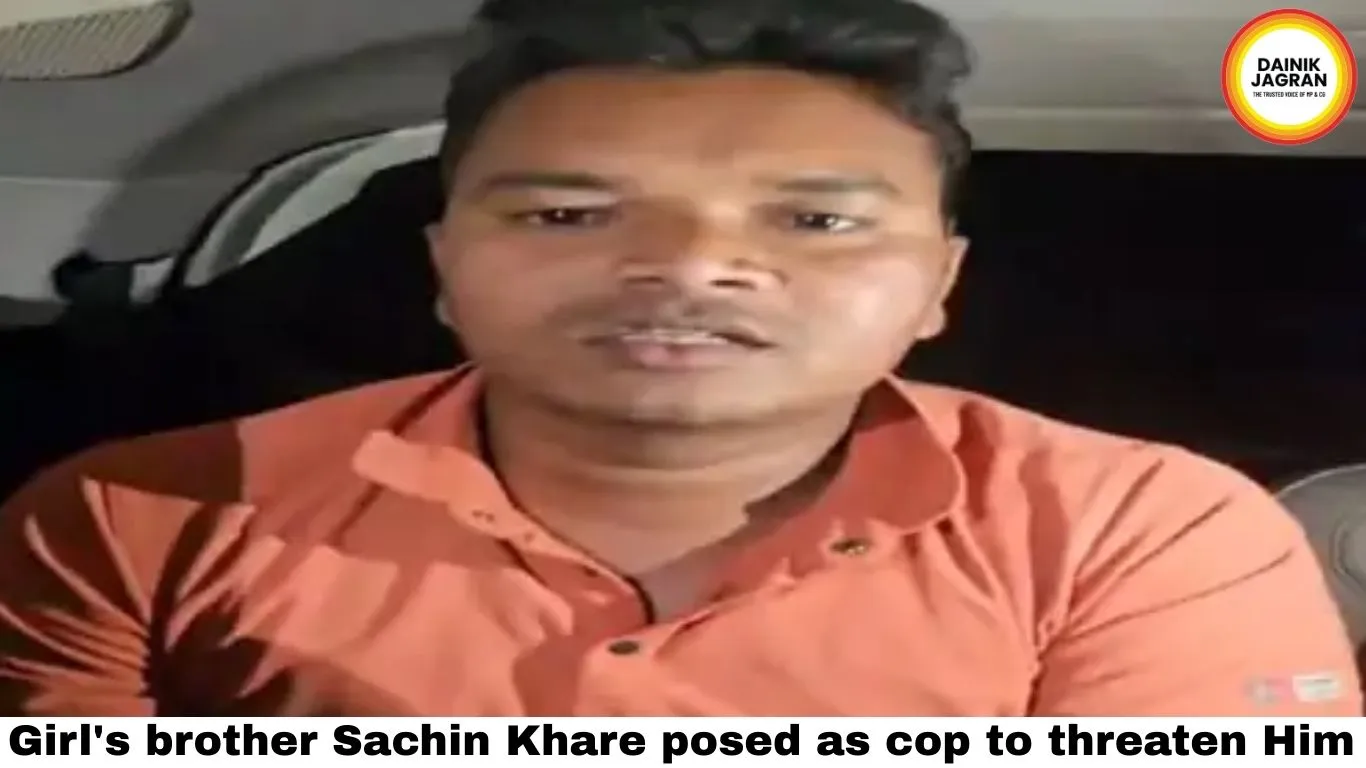
Korba Mechanic Suicide Case: Big Twist Reveals Girl's Brother Posed as Cop to Threaten 25-Year-Old Sanat Kashyap — Police Cleared, Sachin Khare Arrested
Digital Desk
A Viral Video, A Dead Young Man, and a Truth That Was Hidden in Plain Sight
On the night of March 13, 2026, a video began circulating rapidly across WhatsApp groups and social media channels in Chhattisgarh. In it, a young man — visibly distressed, voice trembling — made serious allegations against the Pantora Chowki police before taking his own life. The video went viral within hours. Outrage erupted. Police departments braced for impact.
But within 24 hours, investigators uncovered a truth that turned the entire narrative on its head — and left one young man dead, a police unit falsely accused, and a real perpetrator exposed.
The investigation revealed that the case was the complete opposite of what the viral video alleged. The girl's brother Sachin Khare had threatened the deceased Sanat Kashyap by impersonating a police officer. Sachin had used his brother Shailendra Patle's mobile phone to call Sanat Kashyap, abused him and instructed him to come to the police station. Taking swift action, Janjgir police arrested the accused Sachin Khare.
Who Was Sanat Kashyap? A Life Cut Tragically Short
The deceased, Sanat Kashyap, was 25 years old. He was a resident of Chorbhatti, Thana Mulmala in Janjgir-Champa district. At the time of his death, he was living and working at the Ashok Leyland Workshop in village Patadhi, Thana Urga.
A mechanic in his mid-twenties — far from home, working at a commercial workshop in a village he was not from — Sanat represents the face of young India that rarely makes headlines unless something goes terribly wrong. He had a life ahead of him. He had plans. What he did not have, in his final hours, was the ability to distinguish a real police threat from a fabricated one.
In his video, Sanat Kashyap had accused the Pantora Chowki police of harassing him — alleging that police had called him, abused him, and threatened him over the phone. He said that tormented by this harassment, he had decided to end his life.
Those watching the video believed him. So did the police superintendent — initially.
The Twist That Changed Everything
Janjgir-Champa Superintendent of Police Vijay Kumar Pandey took the viral video seriously and immediately launched an investigation. This was the right call — and it is precisely because he acted quickly and without institutional defensiveness that the truth emerged so rapidly.
What investigators found was this: Sachin Khare had targeted Dhirendra Patle's friend Sanat Kashyap. He called Sanat Kashyap from Shailendra Patle's phone number. On the call, he introduced himself as a police officer from Pantora Chowki, abused Sanat, and threatened him to appear at the police station. Terrified by the threats and abuses, Sanat took his own life. During questioning, Sachin Khare confessed to his crime.
The motive, as is common in such cases, appears to lie in the personal relationship between Sachin's sister and the deceased — a family member who disapproved of the connection, and chose the most cowardly and catastrophic means of expressing that disapproval: impersonating law enforcement to intimidate and terrorise a young man into silence.
The result was not silence. It was death.
Police Impersonation: A Crime India Treats Too Lightly
The Korba case throws a harsh spotlight on a crime that Indian law technically punishes but society frequently underestimates: impersonating a police officer.
Under Section 171 of the Bharatiya Nyaya Sanhita 2023 — which replaced the Indian Penal Code — impersonating a public servant, including a police officer, is a cognisable offence punishable with imprisonment up to two years, a fine, or both. When that impersonation directly results in the death of a person — as it did in Sanat Kashyap's case — the charges can escalate to abetment of suicide under Section 108, which carries a sentence of up to ten years.
Sachin Khare made a phone call. He pretended to be a constable. He shouted, threatened and abused a young man who was alone, far from home, and had no way to verify whether the caller was real or fake. And that young man believed him — because in India, a call from someone claiming to be police is not something most ordinary people feel empowered to question or dismiss.
That fear is real. And it is what Sachin Khare deliberately weaponised.
The Larger Problem: Why Young Men Cannot Call a Bluff
The Korba case is not just about one impersonator and one victim. It is about a systemic vulnerability that exists in Indian society — the outsized psychological power that the police uniform, real or imagined, holds over ordinary citizens.
Studies on custodial deaths and police harassment in India consistently show that fear of law enforcement — warranted or not — keeps millions of people from exercising their constitutional rights. A young mechanic from Janjgir-Champa, working at a remote workshop, receiving what he believed was a call from the local police chowki, had no roadmap for what to do. He did not know he could call the SP's office. He did not know he could record the call and report it. He did not know that a fake police call is itself a crime.
He only knew fear. And fear, in that moment, consumed everything.
What Must Change: Three Urgent Demands
The death of Sanat Kashyap must not be reduced to a crime report filed and closed. It must trigger real change:
- Public awareness campaigns on police impersonation: The Chhattisgarh government and state police must launch district-level drives informing citizens — especially migrant workers and rural youth — that they have the right to verify any caller's identity through the police helpline before responding to any threat or summons.
- Mandatory caller verification for police communications: Any official communication from a police station involving a summons or notice must be issued in writing or via the official police portal — not through informal phone calls from personal numbers that cannot be verified.
- Fast-tracked prosecution of Sachin Khare: A confession has been recorded. The evidence is digital — call logs, phone records, witness testimony. The state must ensure this case reaches sentencing swiftly, with charges including impersonation and abetment of suicide. Anything less would be an insult to Sanat Kashyap's memory.
Sanat Deserved Better From Every System Around Him
Sanat Kashyap was 25 years old. He was a mechanic — the kind of person who fixes engines so the rest of the world can keep moving. He did not deserve to die in a village workshop, alone and terrified, because a man with a grudge and a borrowed phone decided to play policeman.
SP Vijay Kumar Pandey responded swiftly, took the viral video seriously, initiated an immediate investigation, and ensured the arrest of the real culprit within 24 hours. That speed and integrity deserves recognition — and stands as a model for how police institutions should respond when their name is invoked, fairly or unfairly, in a public crisis.
But recognition for the police cannot be the end of this story. The end must be justice for Sanat — full, uncompromising, and delivered without delay.
A young man recorded his last moments because he trusted that someone would listen. The least India owes him now is to make sure that no one else dies the same way.
He filmed it so the truth would survive him. Let us make sure it does.
.jpg)




