


Raigarh Tribal Girls Hostel Controversy: Students Made to Paint and Clean, Probe Ordered After Viral Video
Digital Desk
The Raigarh Tribal Girls Hostel controversy has triggered widespread outrage after a viral video showed minor students allegedly being made to paint walls and clean hazardous areas inside their hostel premises. The incident, reported from Chhattisgarh’s Raigarh district, has prompted the administration to order a formal inquiry.
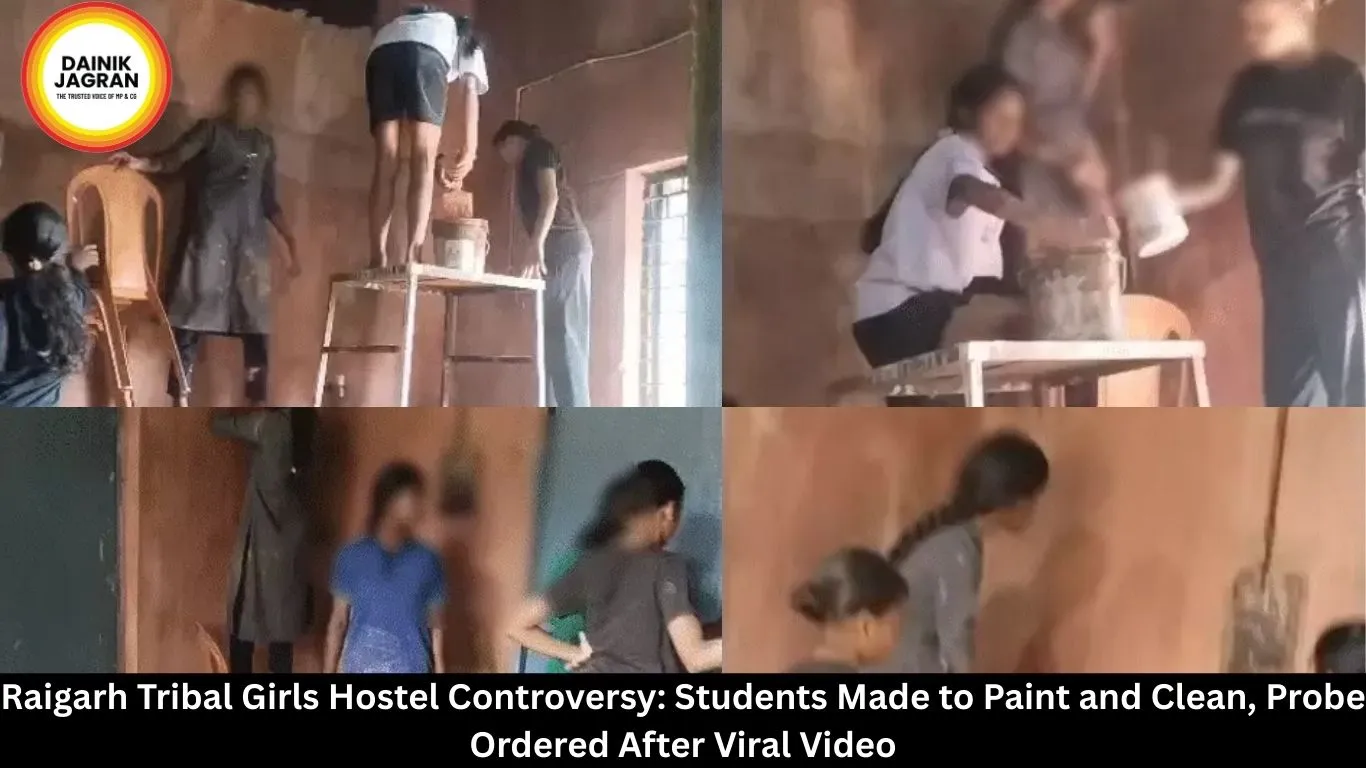
The matter pertains to a pre-matric Adiwasi Kanya Chhatrawas located in Kodasiya village of Lailunga block. Nearly 40–45 girls from Classes 6 to 10 reside in the hostel. The viral footage shows students mixing paint, climbing onto ledges, and cleaning accumulated dirt from roof projections.
What the Viral Video Shows
The now-viral Chhattisgarh Hostel Viral Video shows:
Girls painting hostel walls
Students standing on elevated edges (chhajja) to remove dirt
Buckets of paint being mixed by students
No visible staff supervision during the work
Photos circulating online further reveal girls cleaning roof extensions before painting, raising concerns over safety and child rights violations.
The video reportedly surfaced after one of the hostel students recorded the activity and shared it on social media.
Administration Orders Inquiry
Taking cognizance of the Raigarh Tribal Girls Hostel issue, the Tribal Development Department has initiated an investigation. A three-member inquiry committee has been constituted by the Collector’s Office (Tribal Development Branch).
The committee includes:
Dharmendra Singh Bais
Dhaneshwari Sidar
Umesh Patel
The team is scheduled to visit the hostel on February 28, 2026, to conduct an on-ground assessment and submit a detailed report. Officials have assured that further action will be taken based on the findings.
Warden’s Clarification
Hostel warden Purnima Chauhan has denied direct involvement. She stated that laborers were hired for painting work and that only minor cleaning of the kitchen area remained. According to her statement, during her absence, a peon allegedly asked the students to complete the pending work.
However, the explanation has raised further questions about supervision, accountability, and the safety of minor girls residing in the government-run facility.
Why This Matters Now
The Raigarh Tribal Girls Hostel controversy comes amid increasing scrutiny over student welfare in residential government institutions. Recently, a similar incident was reported in Mahasamund district, where students were seen sweeping and clearing grass on the first day of school.
Experts say such incidents reflect systemic issues in hostel management. Education rights activists emphasize that:
Students cannot be assigned maintenance or hazardous tasks.
Government funds are allocated annually for hostel upkeep (reportedly ₹25,000 per year in this case).
Safety protocols must be strictly followed in residential facilities.
Child welfare advocates argue that beyond administrative action, structural reforms and regular inspections are essential.
Expert Perspective
Education policy observers note that residential hostels for tribal students are crucial for bridging educational gaps in rural areas. However, mismanagement can undermine trust in welfare schemes.
“Hostels are meant to provide safe learning environments. Assigning physical maintenance work to minors raises serious ethical and legal concerns,” a Raigarh-based education analyst said.
What Happens Next?
The outcome of the inquiry will determine whether disciplinary action is taken against staff members. The Tribal Development Department has stated that appropriate measures will follow as per established norms.
For now, the Raigarh Tribal Girls Hostel case has sparked debate over accountability in government-run educational institutions — and reinforced the need for stronger monitoring mechanisms.
As investigations continue, stakeholders await clarity on whether this was a lapse in supervision or a deeper administrative failure.



.jpg)




