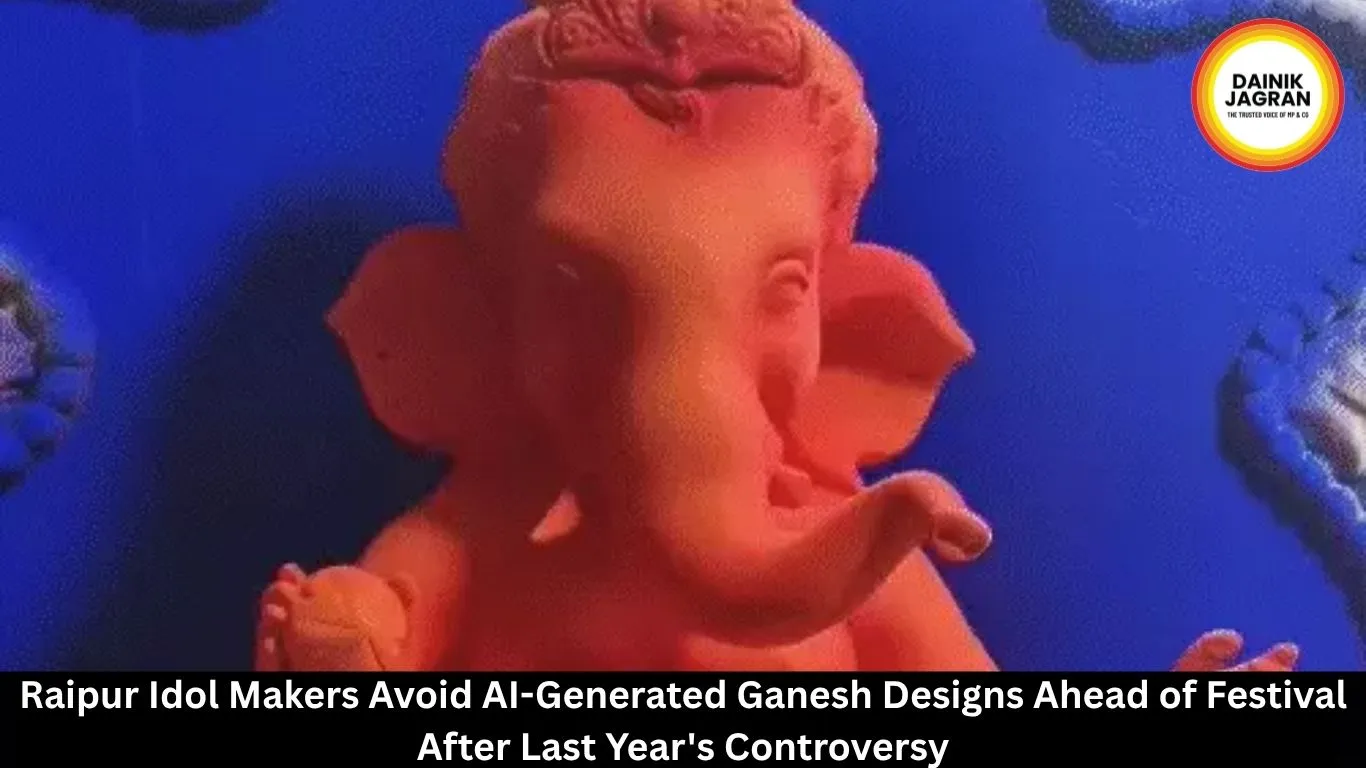
Raipur Idol Makers Avoid AI Ganesh Designs Ahead of Ganesh Chaturthi 2026
Ganesh idol makers in Raipur are largely avoiding AI-generated designs this year following last year's controversy, opting instead for traditional forms of Lord Ganesha ahead of Ganesh Chaturthi.
With Ganesh Chaturthi set to begin on September 14, idol makers across Raipur are working round the clock to complete thousands of Ganesh idols. However, one notable trend has emerged this year—most artisans are deliberately avoiding idols based on artificial intelligence (AI)-generated designs, citing concerns over religious sensitivities and the controversy that erupted during last year's festival.
More than 15,000 small and large Ganesh idols are expected to be installed across homes, neighbourhoods and community pandals in the city during the festival.
Traditional Forms Dominate
This year's collections prominently feature traditional depictions of Lord Ganesha, including Shiva-inspired Ganesha, Lord Ram, Lord Krishna, Bal Ganesh, Balaji and Ardhanarishwar-themed idols.
Artisans say devotees continue to prefer conventional representations rooted in religious tradition rather than experimental designs.
Last Year's Dispute Influences Artisans
The decision to avoid AI-generated idol designs follows a controversy during the previous Ganesh festival in Raipur's Lakhe Nagar, where a Ganesh idol created using AI-inspired artwork drew objections from Hindu organisations.
The dispute escalated into protests and police complaints, prompting many idol makers to reassess their approach to designing religious idols.
According to artisans, the incident highlighted the need to exercise greater caution while creating idols intended for public worship.
Customers Bring AI Images
Idol maker Yashwant said customers often approach workshops with AI-generated images sourced from social media, requesting similar idols.
While acknowledging that such designs may appear visually appealing, he said religious idols must conform to established traditions and devotional sentiments.
"We avoid creating designs that could lead to controversy later. Religious faith should take precedence over experimentation," he said.
Strong Demand for Conventional Idols
Artisans reported that bookings for Shiva, Shri Ram, Shri Krishna, Bal Ganesh, Ardhanarishwar and Balaji forms have been particularly strong this year.
Workshops across the city have extended working hours, with craftsmen engaged late into the night painting, decorating and giving finishing touches to idols ahead of the festival season.
Many artisans said business has improved compared to last year as orders from Ganesh festival committees continue to increase.
Hindu Organisations Issue Advisory
Representatives of Hindu organisations have also appealed to idol makers and festival committees to avoid AI-generated depictions of Lord Ganesha.
Vishwadini Pandey, state president of the Hindu Swabhiman Organisation, said the group has requested organisers not to install AI-generated Ganesh idols similar to those that became the subject of controversy last year.
She said the organisation would oppose any depiction that it believes hurts religious sentiments.
Legal Position on Religious Sentiments
Senior advocate Virat Verma said that if someone intentionally insults a religion, deity or religious symbol, or performs an act that deliberately hurts religious sentiments, legal action may be initiated under the relevant provisions of the Bharatiya Nyaya Sanhita (BNS).
He said police examine complaints on a case-by-case basis, and an FIR may be registered if a prima facie offence is established during the investigation.
A Festival with Deep Roots
Historians trace Raipur's public Ganesh festival tradition back nearly 125 years. The earliest community celebrations were organised in Purani Basti, Gudhiyari and Baniyapara, before expanding to Golbazar, Sadar Bazar, Ramsagarpara and other parts of the city.
During India's freedom movement, public Ganesh celebrations also served as platforms for social unity and nationalist mobilisation, making the festival an enduring symbol of faith, tradition and community participation.

--------
🚨 Beat the News Rush – Join Now!
Get breaking alerts, hot exclusives, and game-changing stories instantly on your phone. No delays, no fluff – just the edge you need. ⚡
Tap to join:
🟢 WhatsApp Channel: Dainik Jagran MP CG
Crave more?
🅕 Facebook: Dainik Jagran MP CG English
🅧 Twitter (X): Dainik Jagran MP CG
🅘 Instagram: Dainik Jagran MP CG
Share the fire – keep your crew ahead! 🗞️🔥
Raipur Idol Makers Avoid AI Ganesh Designs Ahead of Ganesh Chaturthi 2026
With Ganesh Chaturthi set to begin on September 14, idol makers across Raipur are working round the clock to complete thousands of Ganesh idols. However, one notable trend has emerged this year—most artisans are deliberately avoiding idols based on artificial intelligence (AI)-generated designs, citing concerns over religious sensitivities and the controversy that erupted during last year's festival.
More than 15,000 small and large Ganesh idols are expected to be installed across homes, neighbourhoods and community pandals in the city during the festival.
Traditional Forms Dominate
This year's collections prominently feature traditional depictions of Lord Ganesha, including Shiva-inspired Ganesha, Lord Ram, Lord Krishna, Bal Ganesh, Balaji and Ardhanarishwar-themed idols.
Artisans say devotees continue to prefer conventional representations rooted in religious tradition rather than experimental designs.
Last Year's Dispute Influences Artisans
The decision to avoid AI-generated idol designs follows a controversy during the previous Ganesh festival in Raipur's Lakhe Nagar, where a Ganesh idol created using AI-inspired artwork drew objections from Hindu organisations.
The dispute escalated into protests and police complaints, prompting many idol makers to reassess their approach to designing religious idols.
According to artisans, the incident highlighted the need to exercise greater caution while creating idols intended for public worship.
Customers Bring AI Images
Idol maker Yashwant said customers often approach workshops with AI-generated images sourced from social media, requesting similar idols.
While acknowledging that such designs may appear visually appealing, he said religious idols must conform to established traditions and devotional sentiments.
"We avoid creating designs that could lead to controversy later. Religious faith should take precedence over experimentation," he said.
Strong Demand for Conventional Idols
Artisans reported that bookings for Shiva, Shri Ram, Shri Krishna, Bal Ganesh, Ardhanarishwar and Balaji forms have been particularly strong this year.
Workshops across the city have extended working hours, with craftsmen engaged late into the night painting, decorating and giving finishing touches to idols ahead of the festival season.
Many artisans said business has improved compared to last year as orders from Ganesh festival committees continue to increase.
Hindu Organisations Issue Advisory
Representatives of Hindu organisations have also appealed to idol makers and festival committees to avoid AI-generated depictions of Lord Ganesha.
Vishwadini Pandey, state president of the Hindu Swabhiman Organisation, said the group has requested organisers not to install AI-generated Ganesh idols similar to those that became the subject of controversy last year.
She said the organisation would oppose any depiction that it believes hurts religious sentiments.
Legal Position on Religious Sentiments
Senior advocate Virat Verma said that if someone intentionally insults a religion, deity or religious symbol, or performs an act that deliberately hurts religious sentiments, legal action may be initiated under the relevant provisions of the Bharatiya Nyaya Sanhita (BNS).
He said police examine complaints on a case-by-case basis, and an FIR may be registered if a prima facie offence is established during the investigation.
A Festival with Deep Roots
Historians trace Raipur's public Ganesh festival tradition back nearly 125 years. The earliest community celebrations were organised in Purani Basti, Gudhiyari and Baniyapara, before expanding to Golbazar, Sadar Bazar, Ramsagarpara and other parts of the city.
During India's freedom movement, public Ganesh celebrations also served as platforms for social unity and nationalist mobilisation, making the festival an enduring symbol of faith, tradition and community participation.