

Raipur Nagar Nigam Budget 2026‑27 | ₹2,130‑Cr Plan
Digital Desk
Raipur Nagar Nigam approves ₹2,130‑crore budget for FY 2026‑27, focusing on women’s hostels, an electronic market, CCTV security and smart‑city projects in the state capital.
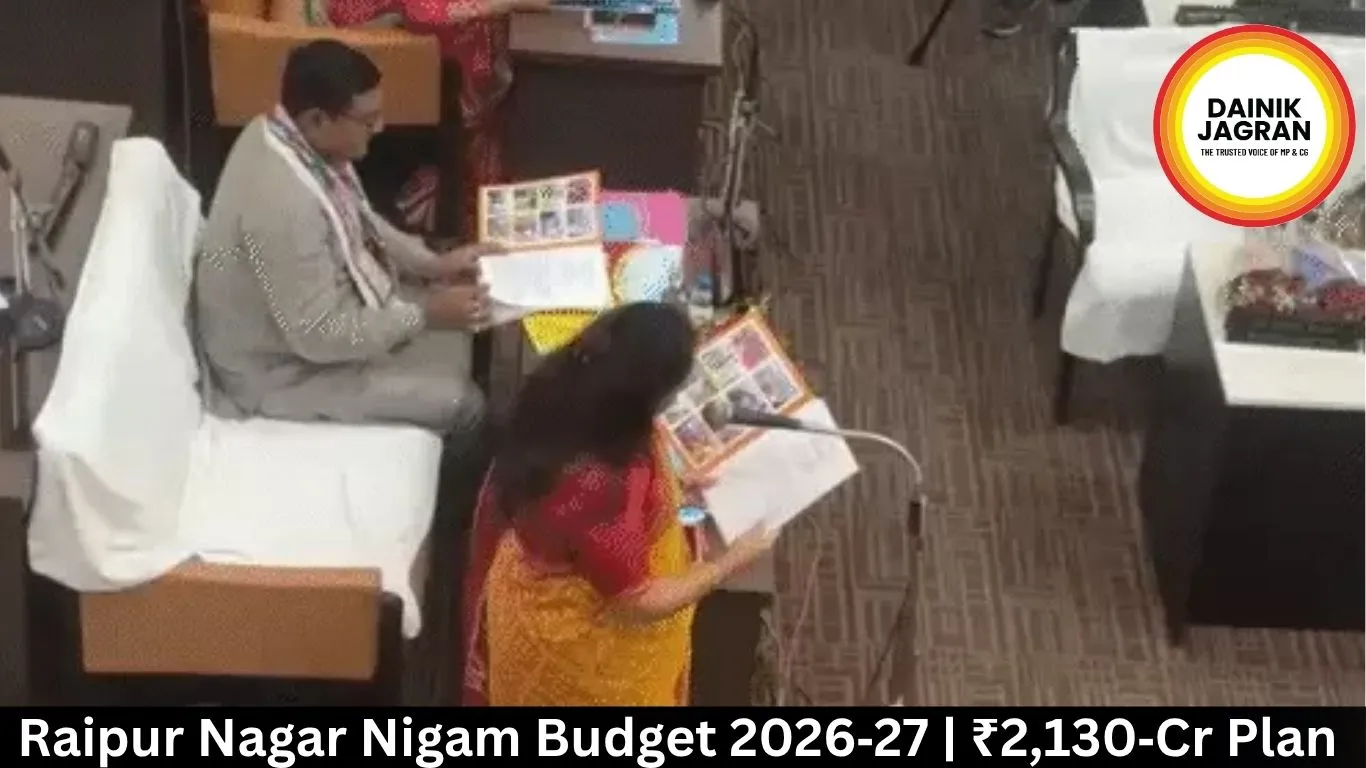
Raipur Municipal Corporation has adopted a ₹2,130.35‑crore budget for financial year 2026‑27, with outlays targeting women‑centric infrastructure, surveillance expansion and urban commerce. Mayor Meenal Choubey presented the annual municipal budget in the Greater Raipur civic body’s plenary session, highlighting a shift towards “smart governance” and inclusive city‑level development.
Officials peg total projected revenue at ₹1,924.09 crore and capital‑plus‑revenue expenditure at ₹2,130.35 crore, indicating a modest revenue gap of roughly ₹139 lakh. The exercise also marks the first full‑year budget under the current municipal regime since the 2025 local‑body elections.
Key city projects
The budget earmarks several high‑visibility projects for central Raipur. Authorities plan to set up a working‑women’s hostel near Pandari–Naraiya talab, a move aimed at improving access to affordable and secure accommodation for single women professionals and students. An additional “women’s peace home” (Mahila Shanti Gruha) is proposed at a cost of about ₹5 crore to provide specialised shelter and counselling support for women facing distress.
Security infrastructure will be expanded with the installation of 268 CCTV cameras at a provisional cost of around ₹1.4 crore, according to municipal officials. The drive on urban safety also includes a proposed women‑vendors’ zone at Bhudha Talab dharna site and handicapped‑friendly lifts at the Shaheed Smarak complex.
Electronics market and bonds
To boost local commerce, the administration plans to develop an electronic market in the Shankar Nagar–Dumratarai corridor. The project will be partly funded through a ₹100‑crore municipal bond issuance, for which the state government has already granted prior approval under urban‑finance norms. The bond is expected to allow the corporation to raise market‑linked, ring‑fenced debt for infrastructure and commercial‑area upgrading.
Public documents show that the electronic‑market proposal originally targeted Dumratarai, while a parallel commercial complex slated near Crystal Arcade in Shankar Nagar is also listed as bond‑linked. The idea is to concentrate electronics and allied retail in a modern, hassle‑free trading zone with standardised utilities and parking.
Housing, parking and public spaces
The budget allocates approximately ₹789 crore under capital expenditure, covering housing schemes, road‑widening, storm‑water drainage, and other civic works. Housing and slum‑in‑situ development figure prominently, with outlays on the Pradhan Mantri Awas Yojana and legacy AMRUT‑related projects.
Parking and mobility upgrades include automatic parking facilities at the Nagarnigam headquarters and in Pandari area. The plan also lists funding for beautification of two parks in each of the city’s zones, additional public toilets and community halls, and a proposal to install robotic suction‑based road‑sweeping machines at a cost of about ₹1.5 crore.
Women, youth and environment
Beyond physical infrastructure, the document reserves significant space for gender‑sensitive and cultural‑environmental initiatives. Alongside the two women’s hostels, the corporation plans to mirror the Nalanda‑style campus layout with a central youth hostel and library complex. Each ward is to get a “utensil‑bank” (bartan‑bank) scheme to reduce single‑use plastic and promote reusable crockery at public events.
The Kharkhoda Mahotsav, envisioned as an annual cultural and environmental festival, will be formally launched under the city’s cultural calendar. The programme is pitched as a tool to reinforce Raipur’s identity as a green and heritage‑rich capital city.
Revenue sources and spending pattern
The finance department projects tax and non‑tax revenue from municipal sources at roughly ₹392.15 crore, with fees and charges adding about ₹75.44 crore and cleanliness cess another ₹47.56 crore. Rental income from holdings and arcades is estimated at ₹5.30 crore, with grants and state‑linked transfers expected to contribute ₹356.21 crore.
Under the 2025‑26 budget, total allocations stood at ₹1,529.53 crore, with around ₹1,528.73 crore spent and a nominal surplus of about ₹79 lakh. Officials say the 2026‑27 exercise builds on those commitments, adding new components such as the electronic‑market bonds and expanded electronic‑surveillance outlay.
Political temperature in the house
The budget presentation was preceded by a noisy protest by the Congress‑led opposition in the council chamber. Some Congress councillors carried placards bearing “broken promises” and collectively sang “वादा तेरा वादा”, triggering a rebuttal from presiding officer Suryakant Rathore, who demanded the placards be removed before proceedings began.
Opposition members insisted that earlier unfulfilled announcements, including rate‑subsidy schemes, must be discussed before the new budget is passed. Leader of Opposition Akash Tiwari later told reporters that the public had been “misled” and that the new budget made no mention of promised tax relaxations, even as the corporation expanded its borrowing and fee‑based income avenues.
--------
🚨 Beat the News Rush – Join Now!
Get breaking alerts, hot exclusives, and game-changing stories instantly on your phone. No delays, no fluff – just the edge you need. ⚡
Tap to join:
🟢 WhatsApp Channel: Dainik Jagran MP CG
Crave more?
🅕 Facebook: Dainik Jagran MP CG English
🅧 Twitter (X): Dainik Jagran MP CG
🅘 Instagram: Dainik Jagran MP CG
Share the fire – keep your crew ahead! 🗞️🔥
Raipur Nagar Nigam Budget 2026‑27 | ₹2,130‑Cr Plan
Digital Desk
Raipur Municipal Corporation has adopted a ₹2,130.35‑crore budget for financial year 2026‑27, with outlays targeting women‑centric infrastructure, surveillance expansion and urban commerce. Mayor Meenal Choubey presented the annual municipal budget in the Greater Raipur civic body’s plenary session, highlighting a shift towards “smart governance” and inclusive city‑level development.
Officials peg total projected revenue at ₹1,924.09 crore and capital‑plus‑revenue expenditure at ₹2,130.35 crore, indicating a modest revenue gap of roughly ₹139 lakh. The exercise also marks the first full‑year budget under the current municipal regime since the 2025 local‑body elections.
Key city projects
The budget earmarks several high‑visibility projects for central Raipur. Authorities plan to set up a working‑women’s hostel near Pandari–Naraiya talab, a move aimed at improving access to affordable and secure accommodation for single women professionals and students. An additional “women’s peace home” (Mahila Shanti Gruha) is proposed at a cost of about ₹5 crore to provide specialised shelter and counselling support for women facing distress.
Security infrastructure will be expanded with the installation of 268 CCTV cameras at a provisional cost of around ₹1.4 crore, according to municipal officials. The drive on urban safety also includes a proposed women‑vendors’ zone at Bhudha Talab dharna site and handicapped‑friendly lifts at the Shaheed Smarak complex.
Electronics market and bonds
To boost local commerce, the administration plans to develop an electronic market in the Shankar Nagar–Dumratarai corridor. The project will be partly funded through a ₹100‑crore municipal bond issuance, for which the state government has already granted prior approval under urban‑finance norms. The bond is expected to allow the corporation to raise market‑linked, ring‑fenced debt for infrastructure and commercial‑area upgrading.
Public documents show that the electronic‑market proposal originally targeted Dumratarai, while a parallel commercial complex slated near Crystal Arcade in Shankar Nagar is also listed as bond‑linked. The idea is to concentrate electronics and allied retail in a modern, hassle‑free trading zone with standardised utilities and parking.
Housing, parking and public spaces
The budget allocates approximately ₹789 crore under capital expenditure, covering housing schemes, road‑widening, storm‑water drainage, and other civic works. Housing and slum‑in‑situ development figure prominently, with outlays on the Pradhan Mantri Awas Yojana and legacy AMRUT‑related projects.
Parking and mobility upgrades include automatic parking facilities at the Nagarnigam headquarters and in Pandari area. The plan also lists funding for beautification of two parks in each of the city’s zones, additional public toilets and community halls, and a proposal to install robotic suction‑based road‑sweeping machines at a cost of about ₹1.5 crore.
Women, youth and environment
Beyond physical infrastructure, the document reserves significant space for gender‑sensitive and cultural‑environmental initiatives. Alongside the two women’s hostels, the corporation plans to mirror the Nalanda‑style campus layout with a central youth hostel and library complex. Each ward is to get a “utensil‑bank” (bartan‑bank) scheme to reduce single‑use plastic and promote reusable crockery at public events.
The Kharkhoda Mahotsav, envisioned as an annual cultural and environmental festival, will be formally launched under the city’s cultural calendar. The programme is pitched as a tool to reinforce Raipur’s identity as a green and heritage‑rich capital city.
Revenue sources and spending pattern
The finance department projects tax and non‑tax revenue from municipal sources at roughly ₹392.15 crore, with fees and charges adding about ₹75.44 crore and cleanliness cess another ₹47.56 crore. Rental income from holdings and arcades is estimated at ₹5.30 crore, with grants and state‑linked transfers expected to contribute ₹356.21 crore.
Under the 2025‑26 budget, total allocations stood at ₹1,529.53 crore, with around ₹1,528.73 crore spent and a nominal surplus of about ₹79 lakh. Officials say the 2026‑27 exercise builds on those commitments, adding new components such as the electronic‑market bonds and expanded electronic‑surveillance outlay.
Political temperature in the house
The budget presentation was preceded by a noisy protest by the Congress‑led opposition in the council chamber. Some Congress councillors carried placards bearing “broken promises” and collectively sang “वादा तेरा वादा”, triggering a rebuttal from presiding officer Suryakant Rathore, who demanded the placards be removed before proceedings began.
Opposition members insisted that earlier unfulfilled announcements, including rate‑subsidy schemes, must be discussed before the new budget is passed. Leader of Opposition Akash Tiwari later told reporters that the public had been “misled” and that the new budget made no mention of promised tax relaxations, even as the corporation expanded its borrowing and fee‑based income avenues.


