
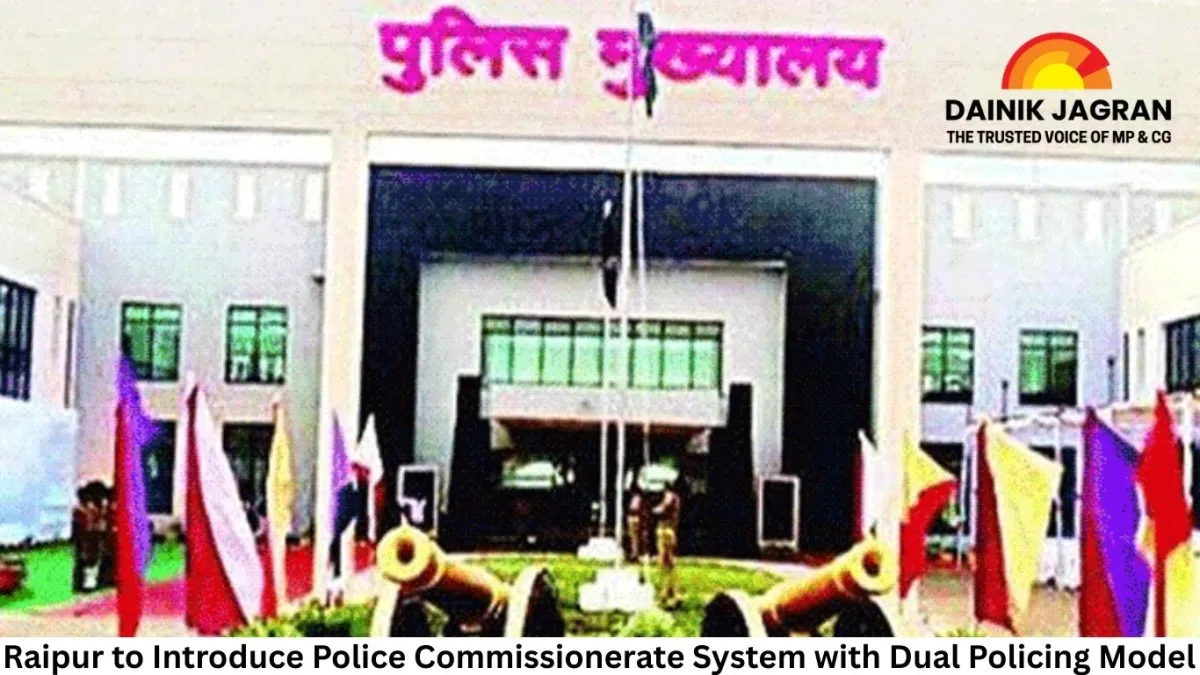

Raipur to Introduce Police Commissionerate System with Dual Policing Model from January 23
Digital desk
According to sources in the Home Department, the commissionerate system will cover 22 urban police stations falling under municipal limits. The remaining 15 police stations located in rural and outlying areas will function under a separate Rural SP. The Home Department is currently finalising the operational blueprint, which is expected to be placed before the state cabinet.
The proposed model closely mirrors an earlier experiment in Uttar Pradesh, where a similar split system was introduced in Kanpur and Varanasi. That arrangement was later withdrawn after authorities cited coordination challenges, jurisdictional disputes, and operational inefficiencies. UP eventually implemented a uniform commissionerate system across entire districts to streamline policing.
Senior officials and policing experts have expressed concerns that Raipur’s dual setup could create practical difficulties, particularly in areas with overlapping urban-rural boundaries. Issues related to VIP movement, jurisdiction during serious crimes, and command clarity are expected to emerge.
Under the proposed framework, security of the city core—including the Civil Lines area housing the Governor’s residence and ministerial bungalows—will fall under the police commissioner. In contrast, key installations such as the airport, the state Assembly, Secretariat, and ministerial residences in Naya Raipur will remain under the Rural SP’s jurisdiction.
Former Uttar Pradesh Director General of Police O.P. Singh said the commissionerate system works best when applied uniformly. “The police commissioner must be vested with full magisterial powers, including authority under Sections 144 and 188, arms licensing, and externment. Partial implementation weakens command and accountability,” he said, adding that commissioners should be of IG or ADG rank to ensure effective decision-making.
Local observers warn that crimes occurring near jurisdictional boundaries could lead to delays and disputes over investigation authority. Administrative processes such as transfers, postings, and housing allotments may also remain dependent on state-level approvals, limiting operational autonomy.
While the state government maintains that the move will strengthen urban policing, critics argue that treating rapidly urbanising zones like Naya Raipur as “rural” undermines ground realities. They caution that a divided policing structure could create confusion for citizens and operational gaps for law enforcement.
As the rollout date approaches, attention is focused on whether the state will reconsider a unified policing model or proceed with what some officials describe as a “half-commissionerate” experiment
.jpg)




