

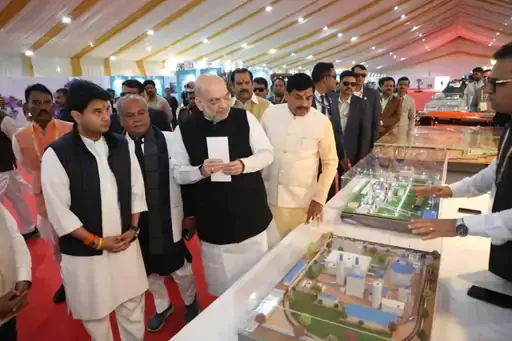
In Gwalior, Shah inaugurated the Growth Summit themed Employment through Investment, along with the Gwalior Trade Fair and the Atal Museum at the Mela Ground. During the event, foundation stones were laid and completed projects were dedicated for 1,655 industrial units, involving investments estimated at around ₹2 lakh crore. Officials said the projects are expected to generate large-scale employment and strengthen the state’s industrial base.
Addressing the gathering, Shah said Madhya Pradesh had once carried the image of a “sick state” during earlier Congress governments. He said Shivraj Singh Chouhan worked to reverse that perception, and asserted that Mohan Yadav is now accelerating development with renewed energy. The remarks drew applause from the audience, including senior BJP leaders and industrialists present at the summit.
The event also witnessed brief protests by Congress workers, with women activists showing black flags over pending political demands. Police personnel escorted the protesters out, citing security protocols.
Later in Rewa, Shah addressed farmers and advocated natural farming as a sustainable alternative to chemical-based agriculture. He said practices using cow dung and urine could improve soil health and farmers’ income, citing models where earnings reached up to ₹1.25 lakh per acre. Shah claimed nearly 40 lakh farmers nationwide have already adopted natural farming.
He also spoke about certification of natural produce through accredited laboratories to help farmers access wider markets, and urged participants to plant Peepal saplings as a step toward environmental conservation.

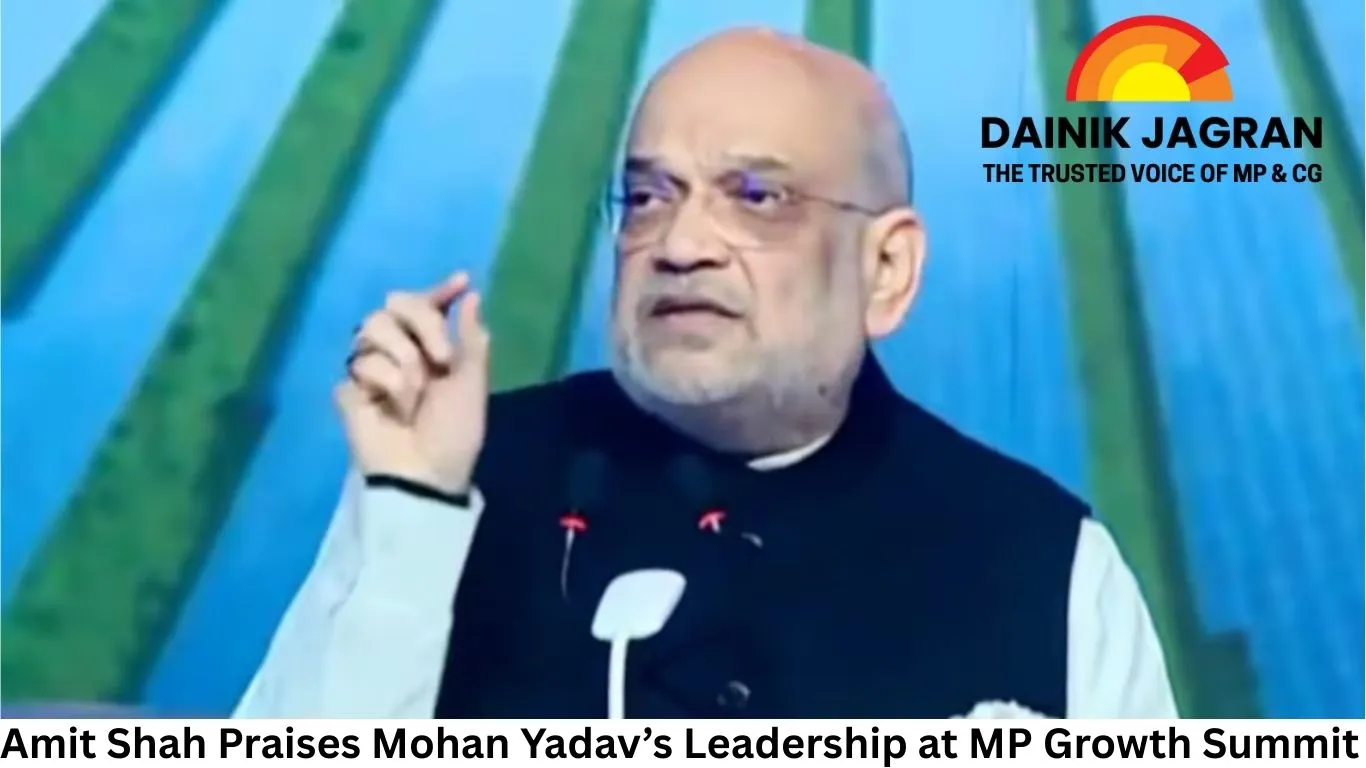
Amit Shah Praises Mohan Yadav’s Leadership at MP Growth Summit, Highlights Natural Farming in Rewa
Digital Desk
In Gwalior, Shah inaugurated the Growth Summit themed Employment through Investment, along with the Gwalior Trade Fair and the Atal Museum at the Mela Ground. During the event, foundation stones were laid and completed projects were dedicated for 1,655 industrial units, involving investments estimated at around ₹2 lakh crore. Officials said the projects are expected to generate large-scale employment and strengthen the state’s industrial base.
Addressing the gathering, Shah said Madhya Pradesh had once carried the image of a “sick state” during earlier Congress governments. He said Shivraj Singh Chouhan worked to reverse that perception, and asserted that Mohan Yadav is now accelerating development with renewed energy. The remarks drew applause from the audience, including senior BJP leaders and industrialists present at the summit.
The event also witnessed brief protests by Congress workers, with women activists showing black flags over pending political demands. Police personnel escorted the protesters out, citing security protocols.
Later in Rewa, Shah addressed farmers and advocated natural farming as a sustainable alternative to chemical-based agriculture. He said practices using cow dung and urine could improve soil health and farmers’ income, citing models where earnings reached up to ₹1.25 lakh per acre. Shah claimed nearly 40 lakh farmers nationwide have already adopted natural farming.
He also spoke about certification of natural produce through accredited laboratories to help farmers access wider markets, and urged participants to plant Peepal saplings as a step toward environmental conservation.



.jpg)




