

Ayodhya Bypass Sewage Dispute Resolved After Minister’s Meeting

Digital Desk

Ayodhya Bypass Sewage Dispute Resolved After Minister’s Meeting

The deadlock between Bhopal Municipal Corporation and NHAI over sewage line work on Ayodhya Bypass ended after minister Krishna Gaur intervened during a high-level meeting.

The deadlock between Bhopal Municipal Corporation and NHAI over sewage line work on Ayodhya Bypass ended after minister Krishna Gaur intervened during a high-level meeting. The ongoing dispute between the Bhopal Municipal Corporation (BMC) and the National Highways Authority of India (NHAI) over sewage pipeline work along the Ayodhya Bypass has finally been resolved following the intervention of Madhya Pradesh minister Krishna Gaur. The issue was linked to the city’s ambitious 16-kilometre-long 10-lane Ayodhya Bypass project and had stalled crucial sewage infrastructure work affecting more than five lakh residents.

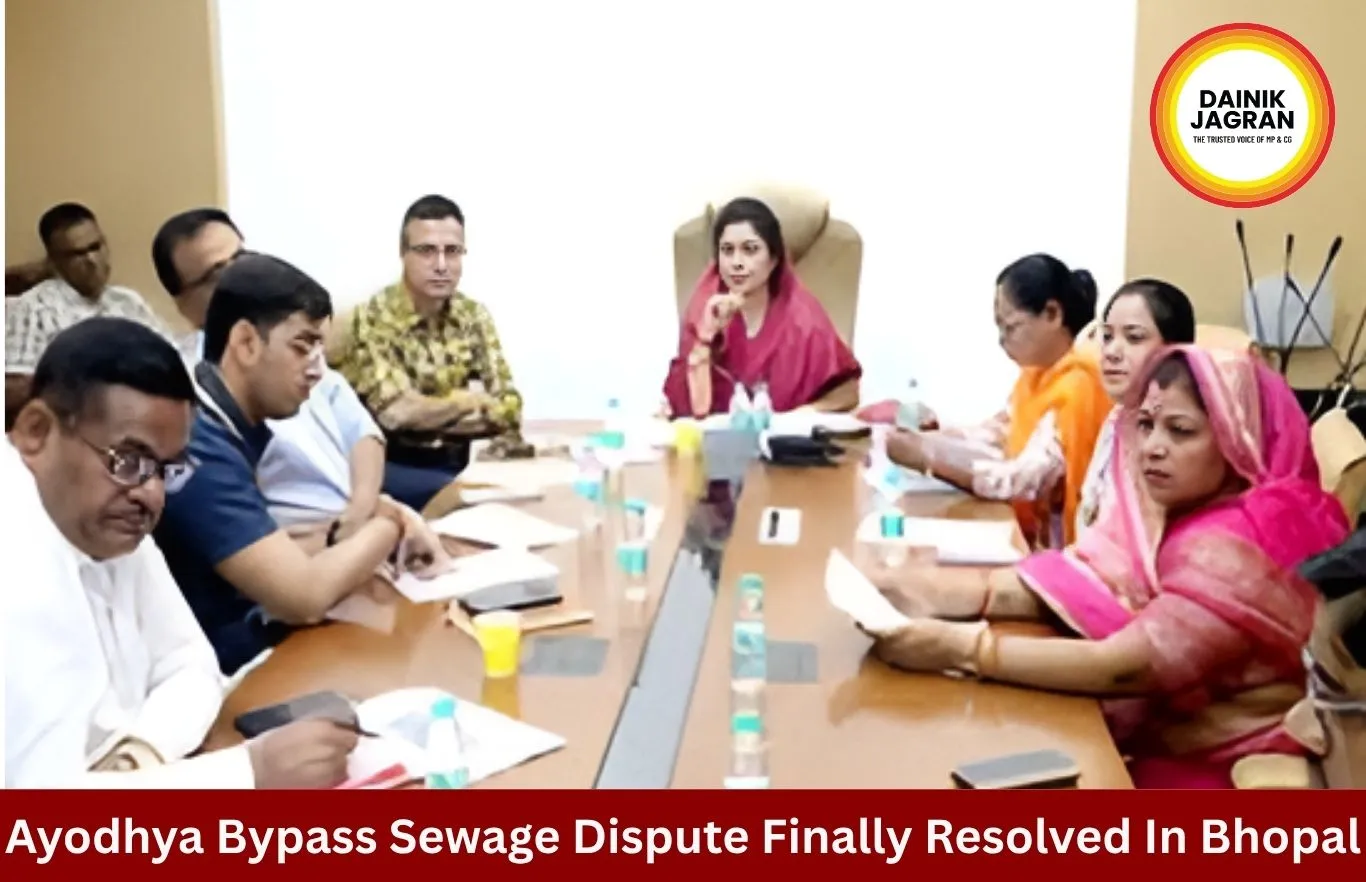
A high-level meeting was held in Bhopal where minister Krishna Gaur called officials from both departments to discuss the matter and find a practical solution. During the meeting, officials from the Municipal Corporation and NHAI reportedly engaged in a heated argument, with neither side willing to accept responsibility for the delay or communication gap.

Sources present at the meeting said the discussion continued for nearly half an hour, during which the minister expressed strong displeasure over the lack of coordination between the two agencies. Questioning the ongoing conflict between departments, Krishna Gaur reportedly asked officials whether the issue was being treated “like an India-Pakistan border”. The minister emphasised that public infrastructure projects are meant for citizens and departments must work together instead of creating obstacles that ultimately inconvenience the public. She directed both agencies to coordinate effectively and ensure that development work proceeds without further delays.

The primary dispute revolved around permission for laying sewage pipelines beneath the service roads of the Ayodhya Bypass project. Initially, NHAI had cited highway regulations and insisted that the sewage pipeline should be laid outside the 33-metre restricted zone on both sides of the road corridor. The Municipal Corporation argued that such conditions would make the project technically difficult and financially expensive.

Following the minister’s intervention, NHAI softened its earlier position and agreed to provide four metres of space on both sides of the road for laying the sewage line. Officials said three possible technical alternatives have now been identified for executing the pipeline work without affecting the highway structure.

The resolution is being viewed as a major relief for Bhopal’s urban infrastructure planning because the sewage network is directly linked to the city’s largest under-construction sewage treatment plant (STP) at Bhanpur. The 60 MLD sewage treatment plant depends heavily on this pipeline network for operation and future wastewater management.

Officials said if the dispute had continued unresolved, newly constructed roads under the Ayodhya Bypass project would eventually have needed to be dug up again for sewage work, resulting in significant public inconvenience and financial losses worth crores of rupees. Authorities believe the latest agreement will help prevent duplication of work and ensure better utilisation of public funds.

The Municipal Corporation had earlier objected to the language used in an official letter issued by NHAI, particularly the phrase “strict compliance of instructions”. Civic officials reportedly argued that such wording was inappropriate for projects related to public welfare and inter-departmental cooperation. The issue also became part of the discussion during the ministerial meeting.

After the intervention, both agencies have now agreed to work jointly on execution and planning. Officials from both departments are expected to conduct technical coordination meetings to finalise the alignment and construction schedule for the sewage network.

Urban development experts noted that infrastructure disputes between civic bodies and highway authorities are common in rapidly expanding cities, especially where large road projects overlap with underground utility systems such as sewage, water supply, and drainage lines. They said timely coordination between agencies is essential to avoid delays, cost escalation, and repeated construction work.

The Ayodhya Bypass project is considered one of Bhopal’s major road infrastructure developments aimed at improving urban connectivity and reducing traffic pressure in rapidly growing residential zones. Alongside road expansion, civic infrastructure such as sewage management and drainage systems are also being upgraded to support future population growth.

Officials indicated that work on the sewage line could begin soon after technical approvals are completed. The project is expected to benefit residents in several colonies connected to the Bhanpur sewage treatment network and improve overall sanitation infrastructure in eastern parts of the city.

--------

--------

🚨 Beat the News Rush – Join Now!

Get breaking alerts, hot exclusives, and game-changing stories instantly on your phone. No delays, no fluff – just the edge you need. ⚡

Tap to join: 

🟢 WhatsApp Channel: Dainik Jagran MP CG

Crave more?

🅕 Facebook: Dainik Jagran MP CG English

🅧 Twitter (X): Dainik Jagran MP CG

🅘 Instagram: Dainik Jagran MP CG

Share the fire – keep your crew ahead! 🗞️🔥

english.dainikjagranmpcg.com
14 May 2026 By Vaishnavi

Ayodhya Bypass Sewage Dispute Resolved After Minister’s Meeting

Digital Desk

The deadlock between Bhopal Municipal Corporation and NHAI over sewage line work on Ayodhya Bypass ended after minister Krishna Gaur intervened during a high-level meeting. The ongoing dispute between the Bhopal Municipal Corporation (BMC) and the National Highways Authority of India (NHAI) over sewage pipeline work along the Ayodhya Bypass has finally been resolved following the intervention of Madhya Pradesh minister Krishna Gaur. The issue was linked to the city’s ambitious 16-kilometre-long 10-lane Ayodhya Bypass project and had stalled crucial sewage infrastructure work affecting more than five lakh residents.

A high-level meeting was held in Bhopal where minister Krishna Gaur called officials from both departments to discuss the matter and find a practical solution. During the meeting, officials from the Municipal Corporation and NHAI reportedly engaged in a heated argument, with neither side willing to accept responsibility for the delay or communication gap.

Sources present at the meeting said the discussion continued for nearly half an hour, during which the minister expressed strong displeasure over the lack of coordination between the two agencies. Questioning the ongoing conflict between departments, Krishna Gaur reportedly asked officials whether the issue was being treated “like an India-Pakistan border”. The minister emphasised that public infrastructure projects are meant for citizens and departments must work together instead of creating obstacles that ultimately inconvenience the public. She directed both agencies to coordinate effectively and ensure that development work proceeds without further delays.

The primary dispute revolved around permission for laying sewage pipelines beneath the service roads of the Ayodhya Bypass project. Initially, NHAI had cited highway regulations and insisted that the sewage pipeline should be laid outside the 33-metre restricted zone on both sides of the road corridor. The Municipal Corporation argued that such conditions would make the project technically difficult and financially expensive.

Following the minister’s intervention, NHAI softened its earlier position and agreed to provide four metres of space on both sides of the road for laying the sewage line. Officials said three possible technical alternatives have now been identified for executing the pipeline work without affecting the highway structure.

The resolution is being viewed as a major relief for Bhopal’s urban infrastructure planning because the sewage network is directly linked to the city’s largest under-construction sewage treatment plant (STP) at Bhanpur. The 60 MLD sewage treatment plant depends heavily on this pipeline network for operation and future wastewater management.

Officials said if the dispute had continued unresolved, newly constructed roads under the Ayodhya Bypass project would eventually have needed to be dug up again for sewage work, resulting in significant public inconvenience and financial losses worth crores of rupees. Authorities believe the latest agreement will help prevent duplication of work and ensure better utilisation of public funds.

The Municipal Corporation had earlier objected to the language used in an official letter issued by NHAI, particularly the phrase “strict compliance of instructions”. Civic officials reportedly argued that such wording was inappropriate for projects related to public welfare and inter-departmental cooperation. The issue also became part of the discussion during the ministerial meeting.

After the intervention, both agencies have now agreed to work jointly on execution and planning. Officials from both departments are expected to conduct technical coordination meetings to finalise the alignment and construction schedule for the sewage network.

Urban development experts noted that infrastructure disputes between civic bodies and highway authorities are common in rapidly expanding cities, especially where large road projects overlap with underground utility systems such as sewage, water supply, and drainage lines. They said timely coordination between agencies is essential to avoid delays, cost escalation, and repeated construction work.

The Ayodhya Bypass project is considered one of Bhopal’s major road infrastructure developments aimed at improving urban connectivity and reducing traffic pressure in rapidly growing residential zones. Alongside road expansion, civic infrastructure such as sewage management and drainage systems are also being upgraded to support future population growth.

Officials indicated that work on the sewage line could begin soon after technical approvals are completed. The project is expected to benefit residents in several colonies connected to the Bhanpur sewage treatment network and improve overall sanitation infrastructure in eastern parts of the city.

--------

https://english.dainikjagranmpcg.com/states/madhya-pradesh/ayodhya-bypass-sewage-dispute-resolved-after-minister%E2%80%99s-meeting/article-18231

Latest News


