


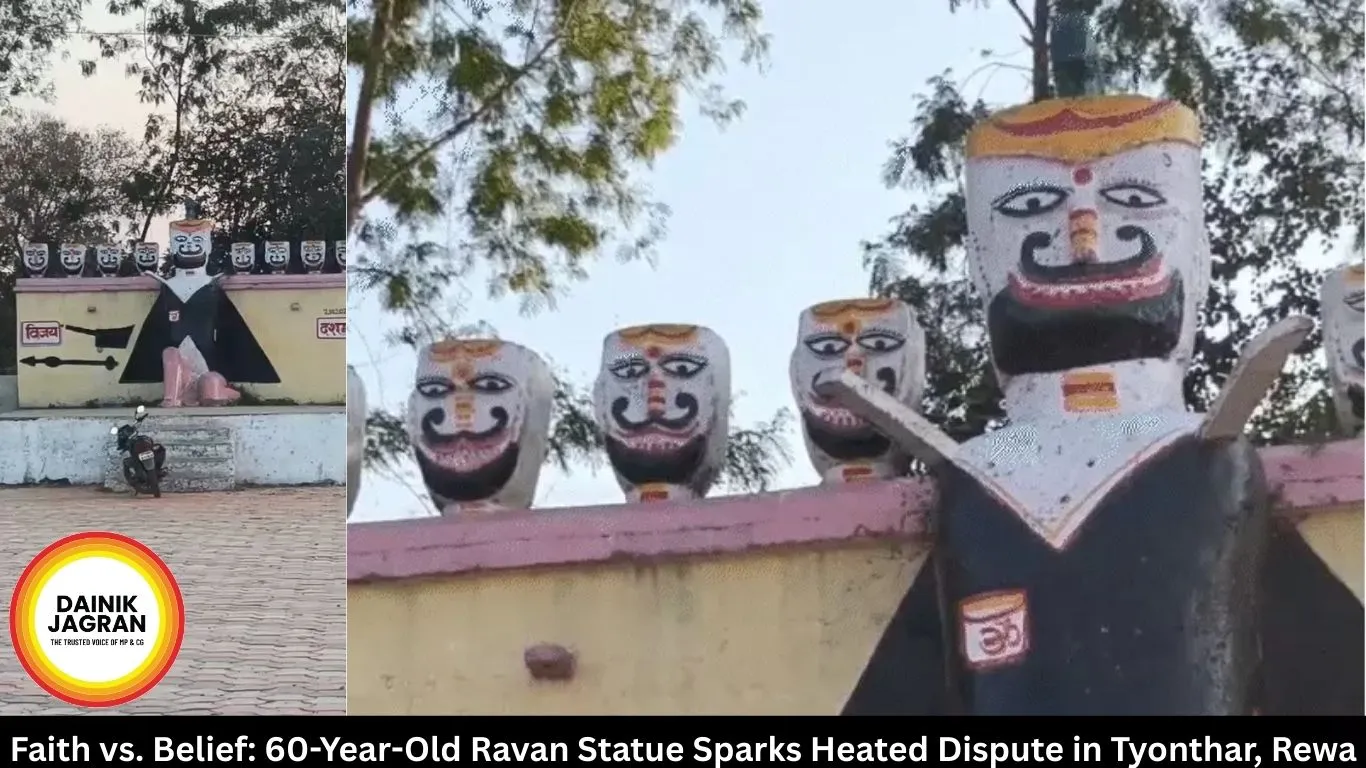
Faith vs. Belief: 60-Year-Old Ravan Statue Sparks Heated Dispute in Tyonthar, Rewa
Digital Desk
In the heart of the Vindhya region, a quiet town has become the epicenter of a unique ideological battle. A nearly 6-decade-old, 10-foot-tall statue of the Lankesh King Ravan in Tyonthar, Rewa, has divided the community into two fierce factions. What began as a local landmark is now at the center of a "Faith vs. Belief" controversy, with one side labeling it an inauspicious "Vastu defect" and the other defending it as a symbol of scholarly heritage.
The Trigger: A Wave of Illness and Stalled Growth
The tension reached a breaking point approximately six months ago when a series of health issues plagued the local population. Residents reported a rise in thyroid problems, skin diseases, and even cancer cases. As fear grew, some villagers—influenced by social media messages and local astrologers—began linking these misfortunes to the presence of the Ravan statue dispute.
"Development has stalled, and our children are constantly falling ill," says Seema Sahu, a local homemaker. "Many of us believe the statue is a source of negativity. We aren't against history, but the welfare of our village must come first."
A Clash of Perspectives: Scholarship vs. Superstition
The debate has split Tyonthar down the middle, with both sides presenting compelling, albeit conflicting, arguments:
The Case for Removal
-
Vastu Defects: Religious leaders like Bala Venkatesh Shastri argue that installing a permanent statue of Ravan in a town center generates negative energy.
-
Symbolism: Opponents argue that Ravan represents unrighteousness and arrogance, claiming a village's identity should be tied to positive figures like Lord Ram.
-
Psychological Impact: Some residents believe the removal will provide a "mental reset" for the community, potentially attracting the development and investment that has long evaded the region.
The Case for Preservation
-
Cultural Heritage: Supporters argue the statue, installed by a PWD officer 60 years ago, is a historical landmark and a tribute to Ravan’s status as a master of the Vedas.
-
Logic over Superstition: Social worker Shivendra Shukla points out that blaming a statue for a lack of hospitals or infrastructure is a diversion from administrative failures. "Removing a statue won't build a factory," he noted.
Administrative Standstill
Despite the rising heat, local authorities are treading carefully. Tyonthar SDM Prabhashankar Tripathi stated that while he is aware of the social media discourse, no formal written complaint has been filed. "A solution will be found through dialogue once both parties formally approach us," Tripathi said.
Meanwhile, local MLA Siddharth Tiwari, currently attending the assembly session in Bhopal, has remained neutral, stating he will assess the situation upon his return to the district.
Why This Matters Right Now
The Ravan statue dispute highlights a growing trend in rural India where traditional beliefs intersect with modern anxieties over health and economic development. As the "Remove the Statue" campaign gains traction on social media, the town remains in a stalemate, waiting to see if tradition will bow to the perceived need for a "purified" environment.
.jpg)




