


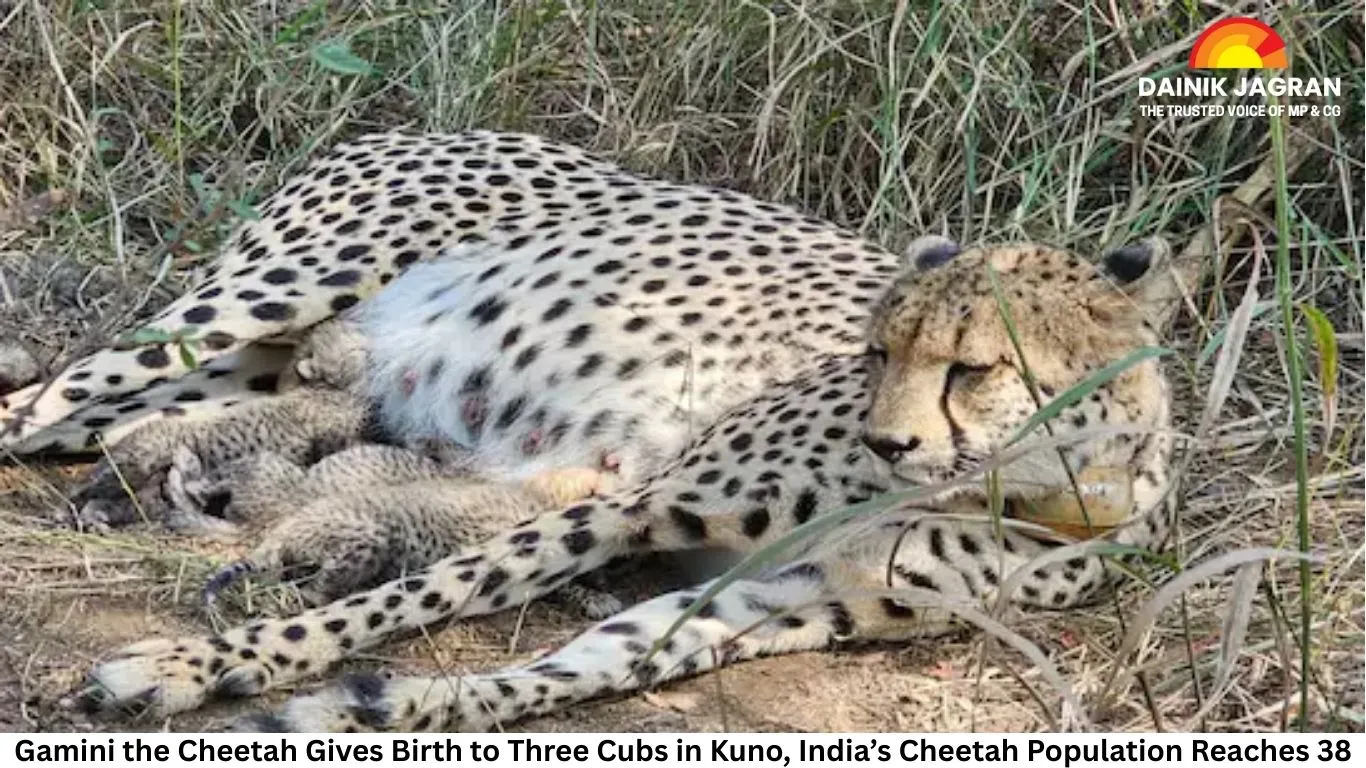
Gamini the Cheetah Gives Birth to Three Cubs in Kuno, India’s Cheetah Population Reaches 38
Digital Desk
Union Environment Minister Bhupendra Yadav announced the development on social media, calling it a milestone for Project Cheetah, the government’s flagship conservation programme aimed at restoring the species decades after its extinction in India. According to forest officials, the cubs were born on February 18, coinciding with the third anniversary of the arrival of cheetahs from South Africa.
Authorities said the newborns are healthy and under constant observation. Divisional Forest Officer R Thirukural stated that a veterinary team is monitoring the mother and cubs to ensure their safety during the critical early weeks. Wildlife experts consider this period crucial for survival, as cub mortality remains a key challenge in large carnivore reintroduction programmes.
Chief Minister Mohan Yadav welcomed the development, noting that the number of cubs born in India has now reached 27. He described the repeated successful births as evidence that scientific management, habitat preparation, and round-the-clock monitoring are yielding results.
Gamini was among the cheetahs translocated as part of India’s ambitious plan to revive the species, which vanished from the country in 1952 due to hunting and habitat loss. Conservationists say each successful litter strengthens the genetic base of the reintroduced population and increases the chances of establishing a stable, self-sustaining group in the wild.
Field staff and veterinarians at the park have been closely tracking the animals using radio collars, camera traps, and regular health assessments. Officials credit this intensive management, along with improved prey availability and habitat protection, for the steady rise in numbers.
Wildlife authorities view the latest births as a positive sign but caution that long-term success will depend on sustained protection, expansion of suitable habitats, and continued scientific oversight. For now, the arrival of three new cubs offers renewed optimism for one of the world’s most closely watched wildlife restoration projects.
.jpg)




