

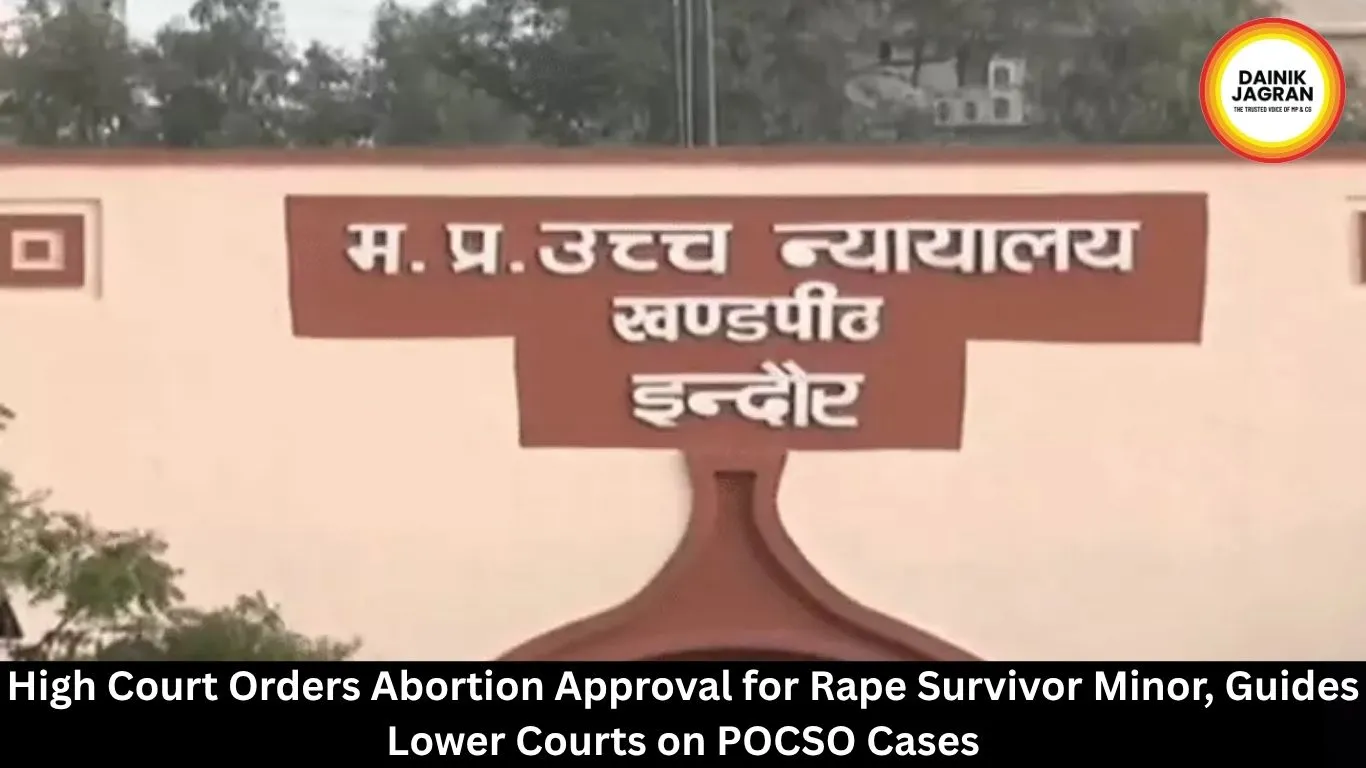
High Court Orders Abortion Approval for Rape Survivor Minor, Guides Lower Courts on POCSO Cases

Digital Desk

High Court Orders Abortion Approval for Rape Survivor Minor, Guides Lower Courts on POCSO Cases

Indore High Court grants medical termination approval to minor sexual assault survivor, directs special POCSO courts to follow MTP Act protocols without jurisdictional delays. Landmark ruling on survivor protection.


High Court Grants Abortion Approval to Rape-Survivor Minor, Directs Lower Courts on POCSO Protocol

Indore bench criticises trial court's refusal, emphasises swift medical termination in sexual abuse cases under MTP Act

Justice for Vulnerable Victims

The Indore Bench of the Madhya Pradesh High Court has granted approval for medical termination of pregnancy to a minor girl impregnated through sexual assault, addressing critical gaps in the judicial handling of such sensitive cases. The bench delivered its decision on December 1, 2025, marking a significant intervention in protections for child sexual abuse survivors.

The court observed that the victim and her mother were compelled to approach the High Court only because the lower POCSO court failed to provide relief, describing the situation as "concerning." This pronouncement underscores systemic delays that force vulnerable survivors through additional trauma.

Case Background and Timeline

The incident occurred in Ratlam district in January 2022 when a 16-year-old girl was sexually assaulted. Police registered a first information report (FIR) on March 13, 2022, at the Industrial Police Station under Indian Penal Code Sections 376 and 506, along with provisions of the Protection of Children from Sexual Offences (POCSO) Act, 2012.

Following the assault, the girl became pregnant. Her mother approached the special POCSO court seeking abortion approval under the Medical Termination of Pregnancy Act, 1971. The trial court rejected the application, citing lack of jurisdiction over such matters. This refusal prompted the mother to file a revision petition in the High Court.

High Court Overturns Lower Court Decision

Senior advocate Neeraj Soni, representing the victim, argued that the special POCSO court possessed the jurisdiction and legal framework to grant abortion approval. The bench agreed with this position and directed that registered medical practitioners may terminate pregnancy in such cases while adhering to the MTP Act, 1971, and the revised rules of 2020.

The court specifically referenced sub-rules 1, 2, 6, and 7 of the amended regulations, establishing clear precedent for future similar cases. This ruling effectively removes jurisdictional barriers that previously delayed critical medical decisions.

Court's Directive for Lower Courts

The bench issued binding directions to special POCSO courts nationwide, instructing them to grant abortion approval following the prescribed standard operating procedure (SOP). Courts must now recognise their authority under the MTP Act without deferring such matters to higher benches.

Justice noted that the victim suffered additional hardship through repeated court appearances and associated expenses, compounding physical and psychological trauma already inflicted by the crime. The ruling acknowledges that abortion procedures are inherently sensitive, and prolonged judicial delays intensify suffering.

Medical Assessment and Legal Framework

According to the report submitted by the medical board of Ratlam District Hospital, the victim was 14 weeks pregnant at the time of the court hearing. The obstetric assessment, led by Dr. Mamta Sharma, concluded that termination could be safely performed with consent from the girl's legal guardian, without medical complications.

The MTP Act permits registered practitioners to terminate pregnancy up to 20 weeks when it poses risks to the minor's physical or mental health. Under 2021 amendments, specific cases—including sexual assault survivors—allow termination up to 24 weeks, provided proper medical certification supports the decision.

Court's Commendation and Systemic Critique

The bench praised the victim's mother and advocate Neeraj Soni for pursuing justice despite difficult circumstances. It criticised doctors and lower courts for not treating such sensitive matters with appropriate urgency and legal compliance.

The judgment emphasised that medical reports must take precedence when judges consider abortion approvals in abuse cases. This direction ensures that medical evidence, rather than procedural technicalities, determines relief for survivors.

POCSO Act Protections for Child Victims

Legal experts emphasise that the POCSO Act provides comprehensive safeguards beyond criminal prosecution. The legislation mandates cases be registered within 30 days and trials concluded within one year. Trials must incorporate child-friendly procedures, including statements recorded by female officers in civilian clothes at locations of the child's choosing.

The law grants victims free legal assistance, psychological counselling, and compensation for rehabilitation and medical care. Victim identity remains confidential—media, police, and public institutions cannot disclose names, addresses, schools, or photographs.

Notably, for minors, consent holds no legal validity in sexual matters. Any sexual act with a child constitutes an offence regardless of the victim's apparent agreement.

Broader Implications for Justice Delivery

This ruling addresses a critical lacuna in India's judicial system where procedural delays often intensify trauma for survivors already vulnerable by age. Legal observers note that the decision sets precedent for all lower courts handling POCSO matters, potentially reducing the burden on high courts with preventive guidance.

The verdict recognises the distinction between criminal punishment and humanitarian relief. While criminal proceedings must follow rigorous protocols, decisions affecting the survivor's immediate health require faster resolution through established medical frameworks.


--------

🚨 Beat the News Rush – Join Now!

Get breaking alerts, hot exclusives, and game-changing stories instantly on your phone. No delays, no fluff – just the edge you need. ⚡

Tap to join: 

🟢 WhatsApp Channel: Dainik Jagran MP CG

Crave more?

🅕 Facebook: Dainik Jagran MP CG English

🅧 Twitter (X): Dainik Jagran MP CG

🅘 Instagram: Dainik Jagran MP CG

Share the fire – keep your crew ahead! 🗞️🔥

english.dainikjagranmpcg.com
23 Apr 2026 By Abhishek Joshi

High Court Orders Abortion Approval for Rape Survivor Minor, Guides Lower Courts on POCSO Cases

Digital Desk

High Court Grants Abortion Approval to Rape-Survivor Minor, Directs Lower Courts on POCSO Protocol

Indore bench criticises trial court's refusal, emphasises swift medical termination in sexual abuse cases under MTP Act

Justice for Vulnerable Victims

The Indore Bench of the Madhya Pradesh High Court has granted approval for medical termination of pregnancy to a minor girl impregnated through sexual assault, addressing critical gaps in the judicial handling of such sensitive cases. The bench delivered its decision on December 1, 2025, marking a significant intervention in protections for child sexual abuse survivors.

The court observed that the victim and her mother were compelled to approach the High Court only because the lower POCSO court failed to provide relief, describing the situation as "concerning." This pronouncement underscores systemic delays that force vulnerable survivors through additional trauma.

Case Background and Timeline

The incident occurred in Ratlam district in January 2022 when a 16-year-old girl was sexually assaulted. Police registered a first information report (FIR) on March 13, 2022, at the Industrial Police Station under Indian Penal Code Sections 376 and 506, along with provisions of the Protection of Children from Sexual Offences (POCSO) Act, 2012.

Following the assault, the girl became pregnant. Her mother approached the special POCSO court seeking abortion approval under the Medical Termination of Pregnancy Act, 1971. The trial court rejected the application, citing lack of jurisdiction over such matters. This refusal prompted the mother to file a revision petition in the High Court.

High Court Overturns Lower Court Decision

Senior advocate Neeraj Soni, representing the victim, argued that the special POCSO court possessed the jurisdiction and legal framework to grant abortion approval. The bench agreed with this position and directed that registered medical practitioners may terminate pregnancy in such cases while adhering to the MTP Act, 1971, and the revised rules of 2020.

The court specifically referenced sub-rules 1, 2, 6, and 7 of the amended regulations, establishing clear precedent for future similar cases. This ruling effectively removes jurisdictional barriers that previously delayed critical medical decisions.

Court's Directive for Lower Courts

The bench issued binding directions to special POCSO courts nationwide, instructing them to grant abortion approval following the prescribed standard operating procedure (SOP). Courts must now recognise their authority under the MTP Act without deferring such matters to higher benches.

Justice noted that the victim suffered additional hardship through repeated court appearances and associated expenses, compounding physical and psychological trauma already inflicted by the crime. The ruling acknowledges that abortion procedures are inherently sensitive, and prolonged judicial delays intensify suffering.

Medical Assessment and Legal Framework

According to the report submitted by the medical board of Ratlam District Hospital, the victim was 14 weeks pregnant at the time of the court hearing. The obstetric assessment, led by Dr. Mamta Sharma, concluded that termination could be safely performed with consent from the girl's legal guardian, without medical complications.

The MTP Act permits registered practitioners to terminate pregnancy up to 20 weeks when it poses risks to the minor's physical or mental health. Under 2021 amendments, specific cases—including sexual assault survivors—allow termination up to 24 weeks, provided proper medical certification supports the decision.

Court's Commendation and Systemic Critique

The bench praised the victim's mother and advocate Neeraj Soni for pursuing justice despite difficult circumstances. It criticised doctors and lower courts for not treating such sensitive matters with appropriate urgency and legal compliance.

The judgment emphasised that medical reports must take precedence when judges consider abortion approvals in abuse cases. This direction ensures that medical evidence, rather than procedural technicalities, determines relief for survivors.

POCSO Act Protections for Child Victims

Legal experts emphasise that the POCSO Act provides comprehensive safeguards beyond criminal prosecution. The legislation mandates cases be registered within 30 days and trials concluded within one year. Trials must incorporate child-friendly procedures, including statements recorded by female officers in civilian clothes at locations of the child's choosing.

The law grants victims free legal assistance, psychological counselling, and compensation for rehabilitation and medical care. Victim identity remains confidential—media, police, and public institutions cannot disclose names, addresses, schools, or photographs.

Notably, for minors, consent holds no legal validity in sexual matters. Any sexual act with a child constitutes an offence regardless of the victim's apparent agreement.

Broader Implications for Justice Delivery

This ruling addresses a critical lacuna in India's judicial system where procedural delays often intensify trauma for survivors already vulnerable by age. Legal observers note that the decision sets precedent for all lower courts handling POCSO matters, potentially reducing the burden on high courts with preventive guidance.

The verdict recognises the distinction between criminal punishment and humanitarian relief. While criminal proceedings must follow rigorous protocols, decisions affecting the survivor's immediate health require faster resolution through established medical frameworks.


https://english.dainikjagranmpcg.com/states/madhya-pradesh/high-court-orders-abortion-approval-for-rape-survivor-minor-guides/article-17240

Related Posts

Latest News


