

Indore EV Charging Fire: Son Finally Admits Car Was On Charge — What India's Deadliest Home Fire of 2026 Reveals About Our Unsafe Homes

Digital Desk

Indore EV Charging Fire: Son Finally Admits Car Was On Charge — What India's Deadliest Home Fire of 2026 Reveals About Our Unsafe Homes


Indore EV charging fire killed 8. Son now admits car was charging. Read the latest update, investigation findings & what every Indian home must fix now.

A Night That Changed Everything

In the dead of night on March 18, 2026, the Pugalia family home in Indore's Brijeshwari Annexe Colony was a busy, happy house. A family gathering was underway. Relatives had travelled from Bihar. Twelve people were asleep or settling down after the celebrations.

By early morning, eight of them were dead.

The fire is suspected to have started while a Tata Punch electric vehicle was being charged outside the home. A short circuit at the EV charging point caused the parked car to catch fire. What followed was rapid and merciless — the entire three-storey building was ablaze, and several LPG cylinders inside exploded in rapid succession. Firefighters who arrived at 4:02 AM said the full structure was already engulfed in flames.

This was not just a tragic accident. It was a collision of three deadly failures that exist in millions of Indian homes today.

The Son's Statement: A Story That Kept Changing

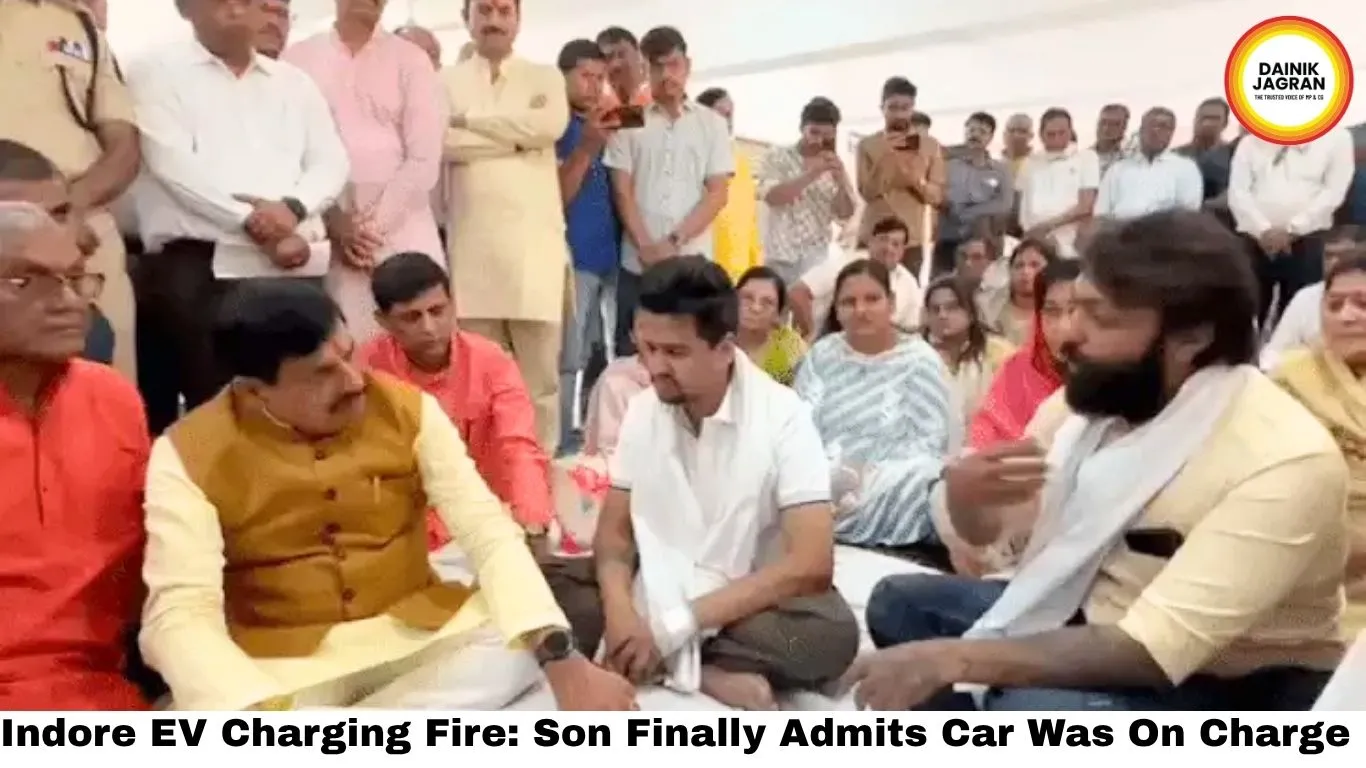
The most significant latest update in the Indore EV charging fire case is the statement of Saurabh Pugalia, son of deceased businessman Manoj Pugalia — and it tells a story that shifted dramatically under police questioning.

Shortly after the incident, Saurabh told reporters that the car was not charging that night. "The charger was not connected, so how could the car be charged?" he argued, pointing to a video circulating on social media that allegedly showed an explosion on a nearby electric pole that landed on the parked car.

He even complained to Chief Minister Mohan Yadav, alleging that police were spreading false rumours about EV charging being the cause.

But then the investigation caught up with him.

When police formally recorded his statement, Saurabh and his brother Harshit both confirmed to investigators that the car had indeed been put on charge — corroborating earlier findings by the electricity company and fire safety officials. Harshit specifically told investigators that he had plugged the car in for charging around 11 PM. Smart meter data further showed power consumption spiking to 9 kilowatts between 11 PM and 3 AM — consistent with vehicle charging.

This is a critical turning point in the case. The cause of the Indore EV charging fire is no longer in serious dispute. The investigation is now focused on what systemic failures made it so catastrophic.

Three Failures. One Inferno.

1. Unsafe EV Charging at Home

Overnight home charging using uncertified cables or overloaded domestic sockets is a documented fire risk. India's EV revolution is galloping ahead — but the safety infrastructure, consumer awareness and installation standards needed to support it are lagging dangerously behind. Thousands of Indian families are charging electric vehicles at home using makeshift setups with no fire safety measures whatsoever.

2. Illegal LPG Cylinder Storage

Police investigation revealed that the house was storing far more LPG cylinders than legally permitted. This is an alarmingly common practice in Indian homes, particularly when large gatherings or events are hosted. A single cylinder can turn a manageable fire into an explosion. Multiple cylinders, as seen here, turned a home into an inferno.

3. Electronic Door Locks — Security Turned Death Trap

The ground-floor door was locked from the inside, leaving residents trapped. Somil Pugalia, who narrowly escaped with his newlywed wife Sakhi, described how thick, dark smoke made it impossible to see anything. He and a few family members only survived by reaching the balcony and breaking iron grills after neighbours brought a ladder.

The electronic locks — designed for security — failed to operate during the power outage caused by the fire, sealing people inside a burning building. Whether it was an electronic lock or an iron door warped by extreme heat, the result was the same: the door could not be opened in time, and people died as a result.

The Heartbreaking Human Cost

Eight people perished in the fire at Arham Villa — Manoj Pugalia, his daughter-in-law Simran who was pregnant, relatives Vijay Sethia, Suman Sethia, Ruchika, Rashi, Tanay and Kartik — all dying from burns and suffocation. Six of the victims were relatives who had travelled from Kishanganj, Bihar for the family gathering.

And eight days later, the tragedy delivered one more devastating blow. The burnt remains of an 8-year-old child were recovered from the site, raising the confirmed toll and deepening the grief of a community that had barely begun to process its loss.

Government Response: Words or Action?

Chief Minister Mohan Yadav termed the incident a serious warning and ordered a detailed investigation, acknowledging that modern technologies like digital locks and electric vehicles carry new risks that citizens are not yet prepared for. Prime Minister Narendra Modi announced financial assistance of ₹2 lakh per deceased victim from the PMNRF, with ₹50,000 for the injured.

Urban Development Minister Kailash Vijayvargiya announced that an expert committee would formulate a Standard Operating Procedure for EV charging in residential areas.

These are welcome steps. But this article argues they are not enough — not by a long way.

An SOP announced after eight deaths is reactive governance. What India needs is proactive enforcement — mandatory safety audits for home EV charging installations, legally binding requirements for emergency manual overrides on all electronic door locks, and strict residential penalties for excess LPG cylinder storage.

What Every Indian Home Must Do Right Now

The Indore EV charging fire is not a distant tragedy. It is a mirror held up to modern Indian homes. Ask yourself these three questions today:

  • Is your EV charging setup certified and safely installed by a qualified technician? If you are using an extension cord or a domestic socket without a dedicated circuit, you are at risk.
  • Do your electronic door or gate locks have a manual override that works without power? If they do not, you could be trapped in your own home during a fire.
  • Are you storing more LPG cylinders than permitted? Indian rules allow only one cylinder in use and one spare in a domestic setting. More than that is illegal — and potentially fatal.

Eight lives lost. Two children. A pregnant woman. A businessman who had built a home called Arham Villa — meaning "the abode of peace."

The investigation is widening rather than narrowing, even days after the fire. That alone tells you this tragedy had multiple authors — poor policy enforcement, consumer unawareness, and the dangerous assumption that modern conveniences come with built-in safety.

They do not. Safety is a choice. And for millions of Indian families, it is a choice that has not yet been made.

The Indore EV charging fire must not become just another news story we scroll past. It must become the moment India got serious about home fire safety.


--------

🚨 Beat the News Rush – Join Now!

Get breaking alerts, hot exclusives, and game-changing stories instantly on your phone. No delays, no fluff – just the edge you need. ⚡

Tap to join: 

🟢 WhatsApp Channel: Dainik Jagran MP CG

Crave more?

🅕 Facebook: Dainik Jagran MP CG English

🅧 Twitter (X): Dainik Jagran MP CG

🅘 Instagram: Dainik Jagran MP CG

Share the fire – keep your crew ahead! 🗞️🔥

english.dainikjagranmpcg.com
26 Mar 2026 By Jiya.S

Indore EV Charging Fire: Son Finally Admits Car Was On Charge — What India's Deadliest Home Fire of 2026 Reveals About Our Unsafe Homes

Digital Desk

A Night That Changed Everything

In the dead of night on March 18, 2026, the Pugalia family home in Indore's Brijeshwari Annexe Colony was a busy, happy house. A family gathering was underway. Relatives had travelled from Bihar. Twelve people were asleep or settling down after the celebrations.

By early morning, eight of them were dead.

The fire is suspected to have started while a Tata Punch electric vehicle was being charged outside the home. A short circuit at the EV charging point caused the parked car to catch fire. What followed was rapid and merciless — the entire three-storey building was ablaze, and several LPG cylinders inside exploded in rapid succession. Firefighters who arrived at 4:02 AM said the full structure was already engulfed in flames.

This was not just a tragic accident. It was a collision of three deadly failures that exist in millions of Indian homes today.

The Son's Statement: A Story That Kept Changing

The most significant latest update in the Indore EV charging fire case is the statement of Saurabh Pugalia, son of deceased businessman Manoj Pugalia — and it tells a story that shifted dramatically under police questioning.

Shortly after the incident, Saurabh told reporters that the car was not charging that night. "The charger was not connected, so how could the car be charged?" he argued, pointing to a video circulating on social media that allegedly showed an explosion on a nearby electric pole that landed on the parked car.

He even complained to Chief Minister Mohan Yadav, alleging that police were spreading false rumours about EV charging being the cause.

But then the investigation caught up with him.

When police formally recorded his statement, Saurabh and his brother Harshit both confirmed to investigators that the car had indeed been put on charge — corroborating earlier findings by the electricity company and fire safety officials. Harshit specifically told investigators that he had plugged the car in for charging around 11 PM. Smart meter data further showed power consumption spiking to 9 kilowatts between 11 PM and 3 AM — consistent with vehicle charging.

This is a critical turning point in the case. The cause of the Indore EV charging fire is no longer in serious dispute. The investigation is now focused on what systemic failures made it so catastrophic.

Three Failures. One Inferno.

1. Unsafe EV Charging at Home

Overnight home charging using uncertified cables or overloaded domestic sockets is a documented fire risk. India's EV revolution is galloping ahead — but the safety infrastructure, consumer awareness and installation standards needed to support it are lagging dangerously behind. Thousands of Indian families are charging electric vehicles at home using makeshift setups with no fire safety measures whatsoever.

2. Illegal LPG Cylinder Storage

Police investigation revealed that the house was storing far more LPG cylinders than legally permitted. This is an alarmingly common practice in Indian homes, particularly when large gatherings or events are hosted. A single cylinder can turn a manageable fire into an explosion. Multiple cylinders, as seen here, turned a home into an inferno.

3. Electronic Door Locks — Security Turned Death Trap

The ground-floor door was locked from the inside, leaving residents trapped. Somil Pugalia, who narrowly escaped with his newlywed wife Sakhi, described how thick, dark smoke made it impossible to see anything. He and a few family members only survived by reaching the balcony and breaking iron grills after neighbours brought a ladder.

The electronic locks — designed for security — failed to operate during the power outage caused by the fire, sealing people inside a burning building. Whether it was an electronic lock or an iron door warped by extreme heat, the result was the same: the door could not be opened in time, and people died as a result.

The Heartbreaking Human Cost

Eight people perished in the fire at Arham Villa — Manoj Pugalia, his daughter-in-law Simran who was pregnant, relatives Vijay Sethia, Suman Sethia, Ruchika, Rashi, Tanay and Kartik — all dying from burns and suffocation. Six of the victims were relatives who had travelled from Kishanganj, Bihar for the family gathering.

And eight days later, the tragedy delivered one more devastating blow. The burnt remains of an 8-year-old child were recovered from the site, raising the confirmed toll and deepening the grief of a community that had barely begun to process its loss.

Government Response: Words or Action?

Chief Minister Mohan Yadav termed the incident a serious warning and ordered a detailed investigation, acknowledging that modern technologies like digital locks and electric vehicles carry new risks that citizens are not yet prepared for. Prime Minister Narendra Modi announced financial assistance of ₹2 lakh per deceased victim from the PMNRF, with ₹50,000 for the injured.

Urban Development Minister Kailash Vijayvargiya announced that an expert committee would formulate a Standard Operating Procedure for EV charging in residential areas.

These are welcome steps. But this article argues they are not enough — not by a long way.

An SOP announced after eight deaths is reactive governance. What India needs is proactive enforcement — mandatory safety audits for home EV charging installations, legally binding requirements for emergency manual overrides on all electronic door locks, and strict residential penalties for excess LPG cylinder storage.

What Every Indian Home Must Do Right Now

The Indore EV charging fire is not a distant tragedy. It is a mirror held up to modern Indian homes. Ask yourself these three questions today:

  • Is your EV charging setup certified and safely installed by a qualified technician? If you are using an extension cord or a domestic socket without a dedicated circuit, you are at risk.
  • Do your electronic door or gate locks have a manual override that works without power? If they do not, you could be trapped in your own home during a fire.
  • Are you storing more LPG cylinders than permitted? Indian rules allow only one cylinder in use and one spare in a domestic setting. More than that is illegal — and potentially fatal.

Eight lives lost. Two children. A pregnant woman. A businessman who had built a home called Arham Villa — meaning "the abode of peace."

The investigation is widening rather than narrowing, even days after the fire. That alone tells you this tragedy had multiple authors — poor policy enforcement, consumer unawareness, and the dangerous assumption that modern conveniences come with built-in safety.

They do not. Safety is a choice. And for millions of Indian families, it is a choice that has not yet been made.

The Indore EV charging fire must not become just another news story we scroll past. It must become the moment India got serious about home fire safety.

https://english.dainikjagranmpcg.com/states/madhya-pradesh/indore-ev-charging-fire-son-finally-admits-car-was-on/article-15976

Latest News


