

The Trust, supported by members of the Holkar royal family of Indore, has condemned the demolition carried out on January 10 during redevelopment work at the ghat. In a formal statement, the Trust said it was “shocked and outraged” by the action, calling it a grave insult to India’s cultural and spiritual heritage and to the legacy of Devi Ahilyabai Holkar, who restored the ghat in 1791.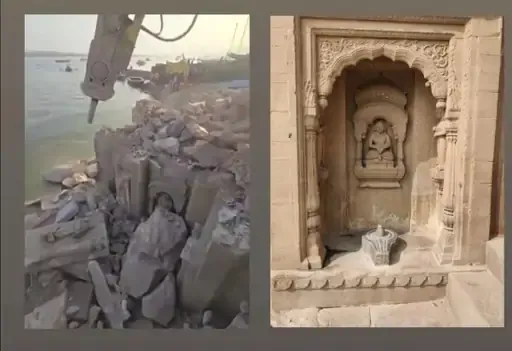
According to the Trust, the demolition was executed without prior notice or consultation and the structure was razed within hours on alleged instructions from municipal authorities. The demolished section holds exceptional historical value, as it is among the rare sites where effigies of Devi Ahilyabai Holkar—depicted worshipping the river Ganga—were installed during her lifetime.
The Trust claims that these sacred effigies and associated idols now lie buried under debris. It has begun efforts to recover the damaged statues and is preparing legal action against the agencies involved, asserting its role as the principal custodian of the ghat and of Ahilyabai Holkar’s legacy.
Heritage and legal experts have raised concerns over potential violations of the Ancient Monuments and Archaeological Sites and Remains (AMASR) Act, 1958. The law mandates strict protection of historically significant monuments and regulates any construction or demolition within a 100-metre prohibited zone and a 200-metre regulated zone. Amendments introduced in 2010 further tightened these safeguards. Experts argue that any intervention at Manikarnika Ghat should have involved prior permissions from the Archaeological Survey of India (ASI) and a detailed heritage impact assessment.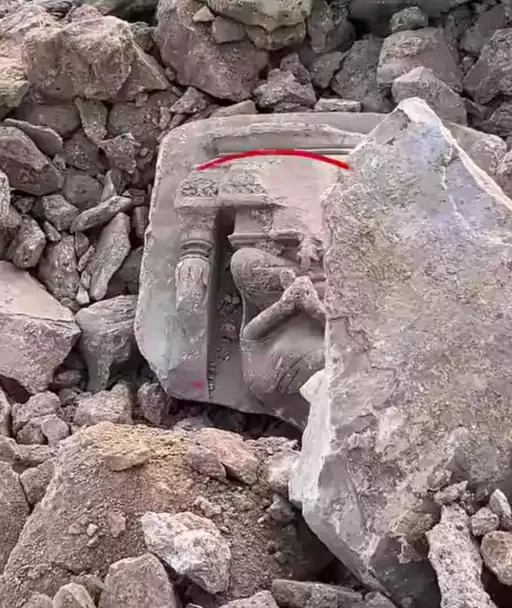
Historians have also flagged the cultural loss caused by the demolition. Manikarnika Ghat comprises at least 21 temples, dharamshalas, annakshetras, and bathing ghats, many built or restored under Devi Ahilyabai Holkar’s supervision. They note the contradiction between the government issuing commemorative coins and memoirs for her 300th birth anniversary, while allowing alterations to sites closely linked to her legacy.
In Indore, anger has spilled onto the streets. Members of the Dhangar, Pal, Baghel, and other communities have announced a meeting on January 15 to plan protests. Community leaders say the demolition, occurring during the concluding phase of Ahilyabai Holkar’s tricentenary celebrations, is deeply hurtful and demands redress.
As calls for accountability grow, the episode has reignited a broader national debate on heritage preservation versus urban redevelopment, and whether India’s most sacred sites are being altered without due respect for history, law, and faith.


Manikarnika Ghat Demolition Triggers Outrage; Khasgi Trust Seeks Probe, Restoration
Digital Desk
The Trust, supported by members of the Holkar royal family of Indore, has condemned the demolition carried out on January 10 during redevelopment work at the ghat. In a formal statement, the Trust said it was “shocked and outraged” by the action, calling it a grave insult to India’s cultural and spiritual heritage and to the legacy of Devi Ahilyabai Holkar, who restored the ghat in 1791.
According to the Trust, the demolition was executed without prior notice or consultation and the structure was razed within hours on alleged instructions from municipal authorities. The demolished section holds exceptional historical value, as it is among the rare sites where effigies of Devi Ahilyabai Holkar—depicted worshipping the river Ganga—were installed during her lifetime.
The Trust claims that these sacred effigies and associated idols now lie buried under debris. It has begun efforts to recover the damaged statues and is preparing legal action against the agencies involved, asserting its role as the principal custodian of the ghat and of Ahilyabai Holkar’s legacy.
Heritage and legal experts have raised concerns over potential violations of the Ancient Monuments and Archaeological Sites and Remains (AMASR) Act, 1958. The law mandates strict protection of historically significant monuments and regulates any construction or demolition within a 100-metre prohibited zone and a 200-metre regulated zone. Amendments introduced in 2010 further tightened these safeguards. Experts argue that any intervention at Manikarnika Ghat should have involved prior permissions from the Archaeological Survey of India (ASI) and a detailed heritage impact assessment.
Historians have also flagged the cultural loss caused by the demolition. Manikarnika Ghat comprises at least 21 temples, dharamshalas, annakshetras, and bathing ghats, many built or restored under Devi Ahilyabai Holkar’s supervision. They note the contradiction between the government issuing commemorative coins and memoirs for her 300th birth anniversary, while allowing alterations to sites closely linked to her legacy.
In Indore, anger has spilled onto the streets. Members of the Dhangar, Pal, Baghel, and other communities have announced a meeting on January 15 to plan protests. Community leaders say the demolition, occurring during the concluding phase of Ahilyabai Holkar’s tricentenary celebrations, is deeply hurtful and demands redress.
As calls for accountability grow, the episode has reignited a broader national debate on heritage preservation versus urban redevelopment, and whether India’s most sacred sites are being altered without due respect for history, law, and faith.
.jpg)




