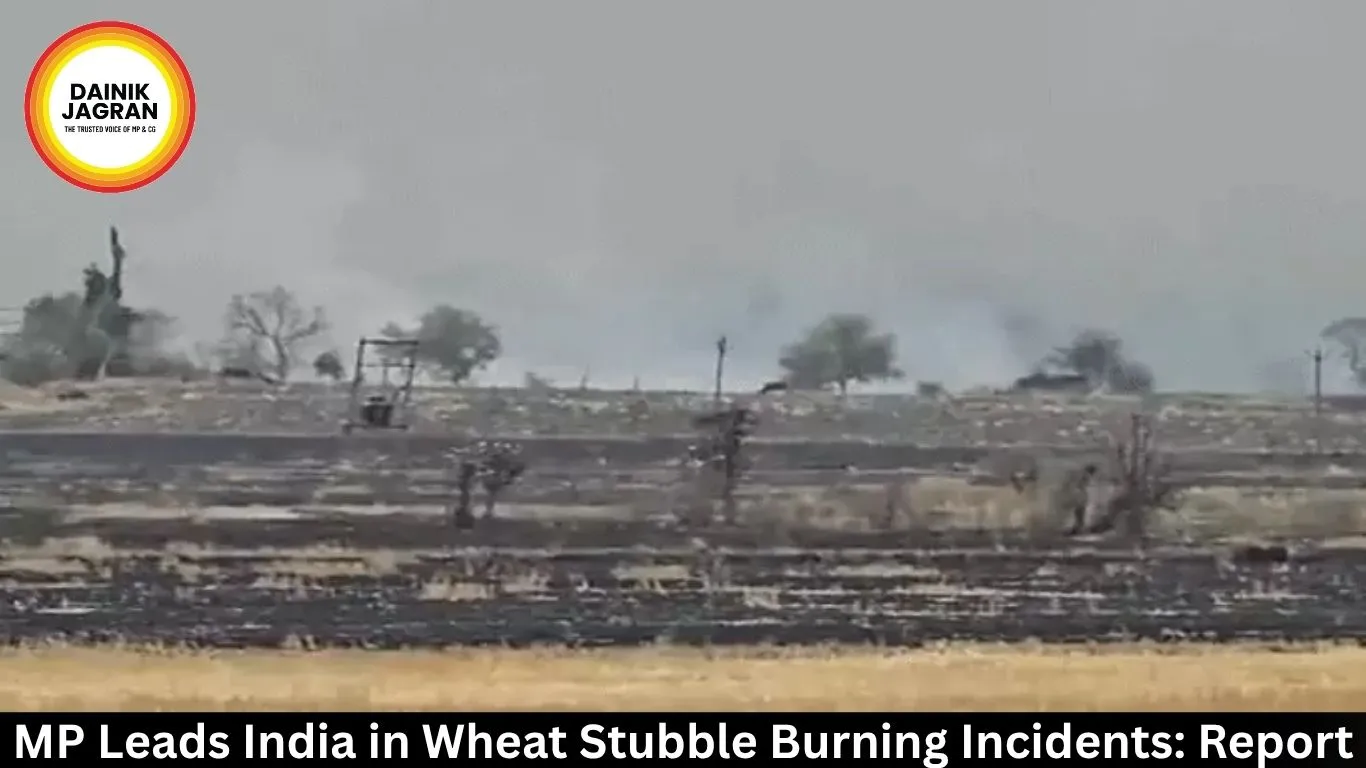
MP Leads India in Wheat Stubble Burning Incidents: Report
Digital Desk
Madhya Pradesh records over 20,000 wheat stubble burning cases in April 2026, the highest in India. Vidisha and Ujjain emerge as the worst-affected districts.
MP records highest wheat stubble burning cases in India
Over 20,000 incidents reported across Madhya Pradesh in April; Vidisha and Ujjain emerge as worst-hit districts in latest India news update.
Madhya Pradesh has emerged as the leading state in India for wheat stubble burning incidents this season, accounting for nearly 69% of all cases recorded across five major agricultural states. According to the latest data from the Consortium for Research on Agroecosystem Monitoring and Modeling from Space (CREAMS) and the Indian Council of Agricultural Research (ICAR), the state reported 20,164 fire incidents between April 1 and April 21, 2026.
Sharp spike in farm fires
The surge in farm fires has placed Madhya Pradesh ahead of Uttar Pradesh and Haryana in terms of environmental violations. Out of the 29,167 total cases monitored across the reporting states, MP’s share remains disproportionately high. While the current figures are slightly lower than the 20,422 cases recorded during the same period in 2025, experts warn that the state is on track to break previous records as the harvesting season peaks.
Hotspots in central India
District-level data highlights a concerning trend in the parliamentary constituency of Union Agriculture Minister Shivraj Singh Chouhan. Vidisha recorded the highest number of incidents with 2,086 cases in the first three weeks of April. Ujjain followed closely with 2,053 cases, while Raisen, Hoshangabad, and Seoni also reported significant numbers, ranging from 1,300 to 1,900 incidents each.
Comparison with other states
In the regional landscape, Uttar Pradesh ranks second with 8,889 incidents of stubble burning during the same window. Interestingly, states like Punjab and Haryana, which historically dominate headlines for paddy stubble burning, have reported significantly lower figures for wheat residue this month. Haryana saw 65 cases, while Punjab recorded only 44, highlighting a shifting geographical focus of crop residue mismanagement toward central India.
Reasons behind the blaze
Agricultural experts point toward a narrow window between crop cycles as the primary driver. Professor Ashish Srivastava from the College of Agriculture, Ganj Basoda, noted that farmers are increasingly opting for summer moong cultivation. "With very little time left after the wheat harvest to prepare the fields for the next crop, many farmers find burning the stubble to be the quickest and most cost-effective method," he explained.
Sustainable alternatives for farmers
The government continues to promote the use of specialized machinery to curb the practice. Farmers are encouraged to use Super Seeders, Rotavators, and Mulchers to manage residue without resorting to fire. Additionally, the use of Pusa Decomposer, a microbial solution that turns stubble into manure, is being advocated to maintain soil health. Officials emphasized that wheat straw can also be processed into animal feed rather than being destroyed.
Legal consequences of violations
Stubble burning remains prohibited nationwide under environmental protection laws. Local administrations in Madhya Pradesh have been authorized to impose spot fines ranging from ₹2,500 to ₹15,000 based on the land area affected. Authorities stated that repeat offenders could face stricter legal action, including potential imprisonment, as part of the latest government updates to tackle rising air pollution levels and soil degradation.
Future outlook for MP
As the summer heat intensifies, the state administration is expected to ramp up satellite monitoring and ground-level inspections. The focus remains on educating the farming community about the long-term depletion of soil nutrients caused by fire. Environmentalists argue that unless mechanized solutions become more accessible and affordable, the trend of stubble burning in MP may continue to pose a significant challenge to India's climate goals.

--------
🚨 Beat the News Rush – Join Now!
Get breaking alerts, hot exclusives, and game-changing stories instantly on your phone. No delays, no fluff – just the edge you need. ⚡
Tap to join:
🟢 WhatsApp Channel: Dainik Jagran MP CG
Crave more?
🅕 Facebook: Dainik Jagran MP CG English
🅧 Twitter (X): Dainik Jagran MP CG
🅘 Instagram: Dainik Jagran MP CG
Share the fire – keep your crew ahead! 🗞️🔥
MP Leads India in Wheat Stubble Burning Incidents: Report
Digital Desk
MP records highest wheat stubble burning cases in India
Over 20,000 incidents reported across Madhya Pradesh in April; Vidisha and Ujjain emerge as worst-hit districts in latest India news update.
Madhya Pradesh has emerged as the leading state in India for wheat stubble burning incidents this season, accounting for nearly 69% of all cases recorded across five major agricultural states. According to the latest data from the Consortium for Research on Agroecosystem Monitoring and Modeling from Space (CREAMS) and the Indian Council of Agricultural Research (ICAR), the state reported 20,164 fire incidents between April 1 and April 21, 2026.
Sharp spike in farm fires
The surge in farm fires has placed Madhya Pradesh ahead of Uttar Pradesh and Haryana in terms of environmental violations. Out of the 29,167 total cases monitored across the reporting states, MP’s share remains disproportionately high. While the current figures are slightly lower than the 20,422 cases recorded during the same period in 2025, experts warn that the state is on track to break previous records as the harvesting season peaks.
Hotspots in central India
District-level data highlights a concerning trend in the parliamentary constituency of Union Agriculture Minister Shivraj Singh Chouhan. Vidisha recorded the highest number of incidents with 2,086 cases in the first three weeks of April. Ujjain followed closely with 2,053 cases, while Raisen, Hoshangabad, and Seoni also reported significant numbers, ranging from 1,300 to 1,900 incidents each.
Comparison with other states
In the regional landscape, Uttar Pradesh ranks second with 8,889 incidents of stubble burning during the same window. Interestingly, states like Punjab and Haryana, which historically dominate headlines for paddy stubble burning, have reported significantly lower figures for wheat residue this month. Haryana saw 65 cases, while Punjab recorded only 44, highlighting a shifting geographical focus of crop residue mismanagement toward central India.
Reasons behind the blaze
Agricultural experts point toward a narrow window between crop cycles as the primary driver. Professor Ashish Srivastava from the College of Agriculture, Ganj Basoda, noted that farmers are increasingly opting for summer moong cultivation. "With very little time left after the wheat harvest to prepare the fields for the next crop, many farmers find burning the stubble to be the quickest and most cost-effective method," he explained.
Sustainable alternatives for farmers
The government continues to promote the use of specialized machinery to curb the practice. Farmers are encouraged to use Super Seeders, Rotavators, and Mulchers to manage residue without resorting to fire. Additionally, the use of Pusa Decomposer, a microbial solution that turns stubble into manure, is being advocated to maintain soil health. Officials emphasized that wheat straw can also be processed into animal feed rather than being destroyed.
Legal consequences of violations
Stubble burning remains prohibited nationwide under environmental protection laws. Local administrations in Madhya Pradesh have been authorized to impose spot fines ranging from ₹2,500 to ₹15,000 based on the land area affected. Authorities stated that repeat offenders could face stricter legal action, including potential imprisonment, as part of the latest government updates to tackle rising air pollution levels and soil degradation.
Future outlook for MP
As the summer heat intensifies, the state administration is expected to ramp up satellite monitoring and ground-level inspections. The focus remains on educating the farming community about the long-term depletion of soil nutrients caused by fire. Environmentalists argue that unless mechanized solutions become more accessible and affordable, the trend of stubble burning in MP may continue to pose a significant challenge to India's climate goals.