

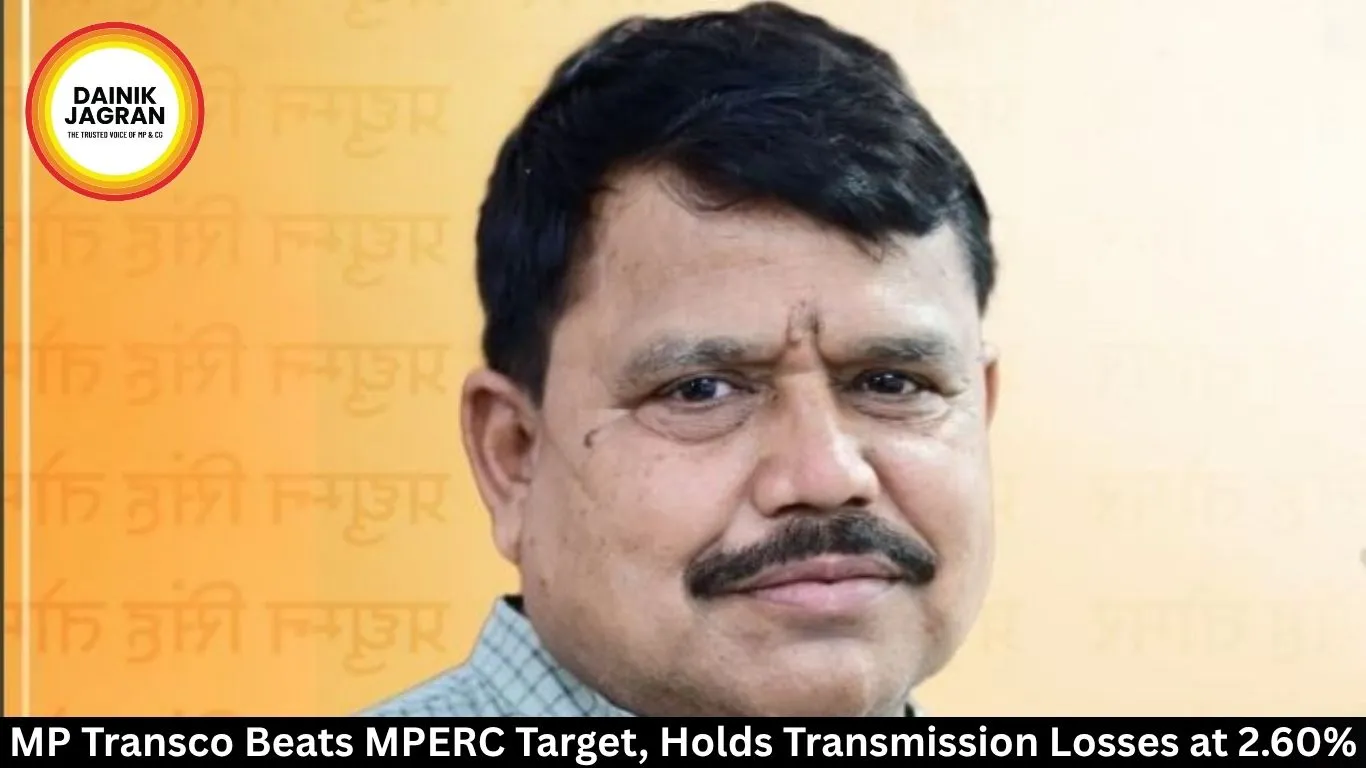
MP Transco Beats MPERC Target, Holds Transmission Losses at 2.60%
Digital Desk
Madhya Pradesh Power Transmission Company maintains transmission losses at 2.60% for FY 26, beating the regulatory target amid record peak power demand.
MP Transco Beats Regulatory Target, Holds Transmission Losses at 2.60%
Energy Minister Pradhuman Singh Tomar praises tech management as state utility outperforms MPERC's 2.75% benchmark despite soaring power demand.
In a major boost to Madhya Pradesh’s power infrastructure, the state-run Madhya Pradesh Power Transmission Company (MP Transco) has outperformed regulatory benchmarks by maintaining its transmission losses at 2.60% for the financial year 2025-26. The performance beats the strict 2.75% target set by the Madhya Pradesh Electricity Regulatory Commission (MPERC).
Energy Minister Pradhuman Singh Tomar confirmed the development on Tuesday afternoon, noting that the achievement solidifies MP Transco's position among the country's leading transmission utilities. The stability in efficiency comes at a time when the state's power network is facing unprecedented load growth.
Network expansion challenges
The stable loss metrics are particularly significant given the rapid expansion of the state's grid infrastructure over the last twelve months. Officials pointed out that maintaining the 2.60% figure—matching the previous fiscal year's performance—was highly challenging due to massive load variations and the continuous addition of new sub-stations.
Green energy integration
A key factor complicating grid operations this year was the large-scale integration of solar energy into the state grid. Renewable energy sources often introduce intermittent supply dynamics, forcing the transmission utility to constantly adjust voltage profiles. MP Transco managed to absorb this green power without compromising on system efficiency or allowing transmission losses to spike.
High demand management
According to officials familiar with the matter, the achievement was clocked during a period when Madhya Pradesh recorded some of its highest-ever peak power demand. Sources said that advanced load forecasting and real-time monitoring helped prevent system overloading, which traditionally drives up technical losses.
Coordination yields results
Reacting to the data, Energy Minister Tomar congratulated the engineers and ground staff of MP Transco and allied power discoms. He attributed the success to coordinated teamwork and modern technical management, reiterating that the state government remains committed to providing uninterrupted, quality power supply to both rural and urban consumers.
Focus on technical upgrades
Looking ahead, the utility plans to continue its focus on upgrading extra high voltage (EHV) sub-stations and lines. Power sector experts note that sustaining transmission losses well below the regulatory cap will directly help the financial health of the state's power distribution companies by reducing overall power procurement costs.
--------
🚨 Beat the News Rush – Join Now!
Get breaking alerts, hot exclusives, and game-changing stories instantly on your phone. No delays, no fluff – just the edge you need. ⚡
Tap to join:
🟢 WhatsApp Channel: Dainik Jagran MP CG
Crave more?
🅕 Facebook: Dainik Jagran MP CG English
🅧 Twitter (X): Dainik Jagran MP CG
🅘 Instagram: Dainik Jagran MP CG
Share the fire – keep your crew ahead! 🗞️🔥
MP Transco Beats MPERC Target, Holds Transmission Losses at 2.60%
Digital Desk
MP Transco Beats Regulatory Target, Holds Transmission Losses at 2.60%
Energy Minister Pradhuman Singh Tomar praises tech management as state utility outperforms MPERC's 2.75% benchmark despite soaring power demand.
In a major boost to Madhya Pradesh’s power infrastructure, the state-run Madhya Pradesh Power Transmission Company (MP Transco) has outperformed regulatory benchmarks by maintaining its transmission losses at 2.60% for the financial year 2025-26. The performance beats the strict 2.75% target set by the Madhya Pradesh Electricity Regulatory Commission (MPERC).
Energy Minister Pradhuman Singh Tomar confirmed the development on Tuesday afternoon, noting that the achievement solidifies MP Transco's position among the country's leading transmission utilities. The stability in efficiency comes at a time when the state's power network is facing unprecedented load growth.
Network expansion challenges
The stable loss metrics are particularly significant given the rapid expansion of the state's grid infrastructure over the last twelve months. Officials pointed out that maintaining the 2.60% figure—matching the previous fiscal year's performance—was highly challenging due to massive load variations and the continuous addition of new sub-stations.
Green energy integration
A key factor complicating grid operations this year was the large-scale integration of solar energy into the state grid. Renewable energy sources often introduce intermittent supply dynamics, forcing the transmission utility to constantly adjust voltage profiles. MP Transco managed to absorb this green power without compromising on system efficiency or allowing transmission losses to spike.
High demand management
According to officials familiar with the matter, the achievement was clocked during a period when Madhya Pradesh recorded some of its highest-ever peak power demand. Sources said that advanced load forecasting and real-time monitoring helped prevent system overloading, which traditionally drives up technical losses.
Coordination yields results
Reacting to the data, Energy Minister Tomar congratulated the engineers and ground staff of MP Transco and allied power discoms. He attributed the success to coordinated teamwork and modern technical management, reiterating that the state government remains committed to providing uninterrupted, quality power supply to both rural and urban consumers.
Focus on technical upgrades
Looking ahead, the utility plans to continue its focus on upgrading extra high voltage (EHV) sub-stations and lines. Power sector experts note that sustaining transmission losses well below the regulatory cap will directly help the financial health of the state's power distribution companies by reducing overall power procurement costs.


