


Rajgarh Sarpanch Slaps YouTuber: 24 Village Heads Protest Against Alleged ‘Journalist’ Blackmail Racket
Digital Desk
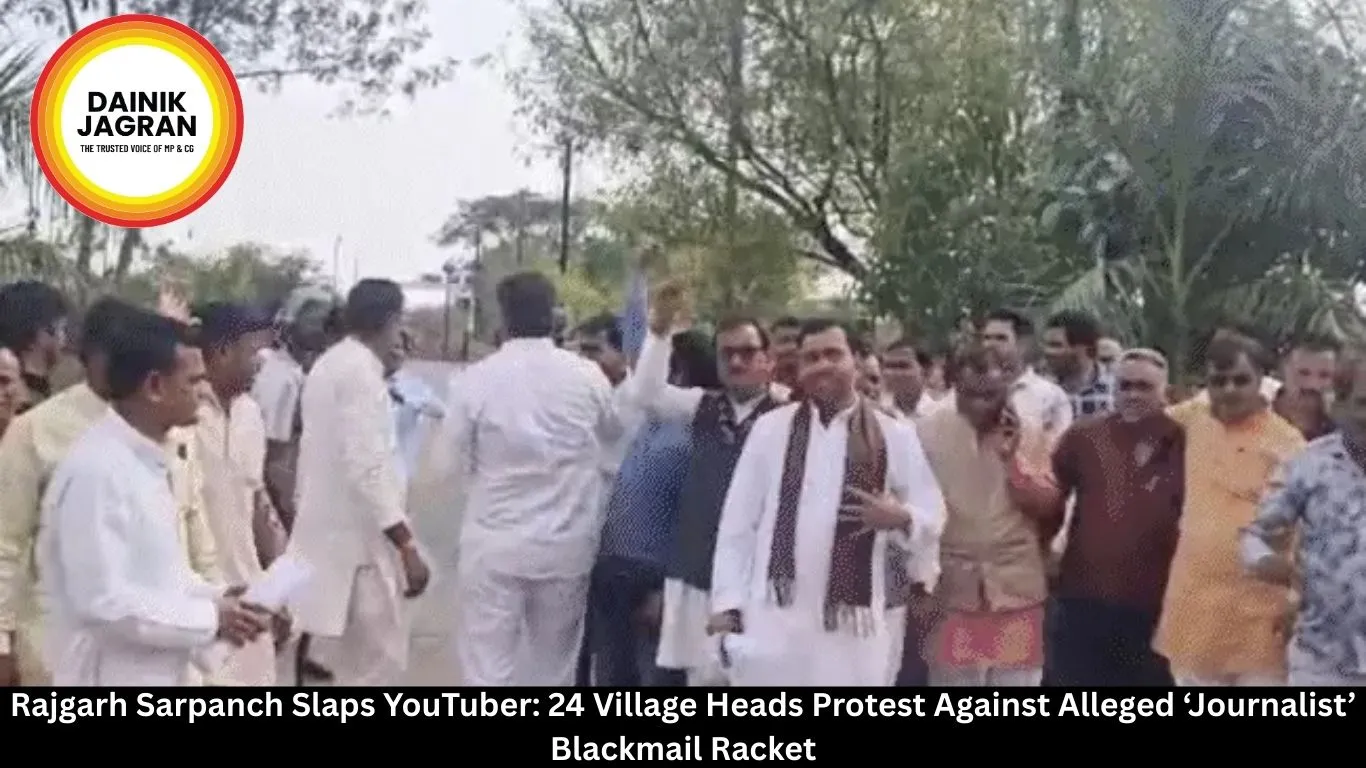
A dramatic confrontation in the Talen area of Rajgarh has escalated into a district-wide standoff between local governance and digital media creators. What began as a physical altercation on February 13 has now unveiled a complex web of extortion allegations, involving over two dozen village heads and a group of YouTubers posing as high-ranking media officials.
The incident gained national attention after a video surfaced showing Sarpanch Shravan Patidar slapping a YouTuber, leading to an FIR being filed 13 days after the event. However, the Sarpanch Association has now struck back, providing audio evidence and transaction receipts to the police, alleging a systematic blackmailing operation.
The Breaking Point: From "Inspection" to Assault
The conflict traces back to February 11, when a man identifying himself as Vishwas Chandravanshi, a journalist from Bhopal, contacted Panchayat Secretary Ashok Patidar. According to the Secretary, the callers used an authoritative tone, mimicking government officials to intimidate staff.
"They spoke like high-ranking officers," Ashok Patidar stated. "They claimed there were 'complaints from above' and demanded to see the Sarpanch immediately."
On February 13, the YouTubers arrived at Ikleragaon in an SUV. Sarpanch Shravan Patidar, who was en route to Rajgarh, returned to the village to meet them. After showing the group various construction sites to prove the quality of work, tensions boiled over. Patidar alleges that despite seeing the work, the group continued to demand a "settlement fee" of ₹20,000, leading to the physical altercation.
Allegations of Extortion and "Digital Terrorism"
The case took a significant turn when the Sarpanch Association intervened. More than 24 village heads from Rajgarh and Shajapur districts have approached SP Amit Tolana, alleging that they are being systematically targeted by "fake journalists."
Key allegations from the Sarpanch Association include:
-
The "Bhopal" Tactic: Individuals arrive with multiple ID cards from various TV channels, claiming to be sent by state authorities.
-
Monetary Demands: Audio recordings purportedly show the YouTubers demanding amounts ranging from ₹2,000 to ₹20,000 to "suppress" complaints.
-
Targeting the Vulnerable: Village heads claim these groups specifically target less educated sarpanchs who are unfamiliar with formal media protocols.
-
Digital Evidence: Sarpanch Patidar has submitted PhonePe transaction screenshots as proof of money transferred to the accused in previous instances.
The YouTuber’s Defense: "We Acted Out of Fear"
In response, Vishwas Chandravanshi claims the delay in filing the FIR—which took 13 days—was due to legitimate fear for his life. He denies the extortion charges, maintaining that he was simply investigating irregularities in village construction.
The situation was further complicated by a secondary incident on February 23, where the house of a local journalist, Sanjay Singh Solanki, was vandalized. The YouTubers claim the Sarpanch’s supporters are behind the attack, suspecting Solanki of "tipping off" the media.
Current Status and Legal Action
Following the SP's intervention, an FIR has been registered at the Talen police station against Sarpanch Patidar and his associate under sections related to assault. However, the police are now also investigating the extortion claims against the YouTubers.
SDOP Arvind Singh confirmed the gravity of the situation: "We have received complaints from over 24 panchayats. We are investigating the audio recordings and financial transactions provided. Action will be taken based on the truth that emerges from this inquiry."
Why This Matters for Rural Governance
This case highlights a growing trend in rural India where the line between legitimate digital journalism and "extortion via camera" is becoming increasingly blurred. For village heads, the challenge remains balancing transparency with the need to protect themselves from predatory practices.
.jpg)




