

TET Eligibility Rule Shift: MP to Issue Fresh Orders on Teacher Norms
Digital Desk
Supreme Court‑linked TET eligibility norms trigger fresh MP government orders; coverage of impacted teachers, exemptions and pay issues.
TET Exam Norms For Teachers
The Madhya Pradesh government has taken the first step toward recalibrating its policy on the Teacher Eligibility Test (TET) for existing school teachers, after the Supreme Court’s recent ruling that in‑service educators must clear the exam to remain in service or seek promotion. Officials say new state‑level orders will shortly spell out which teachers must take the TET, who may get exemptions, and how compliance will be tracked.
Who Must Take TET
The Supreme Court bench of Justices Dipankar Datta and Manmohan held that serving teachers who have more than five years of service left must qualify the TET within two years or face compulsory retirement. Teachers with less than five years to retirement can continue without qualifying, but without a TET pass they will not be considered for any promotion. NCTE’s original 2010‑2011 framework for classes 1–8, read with the RTE Act, now binds state governments to enforce these norms uniformly.
Fresh State‑Level Orders
In Bhopal, State School Education Department officials have been directed to draft a fresh notification that will identify the “category‑wise” TET applicability for MP’s around 1.5 lakh teachers. The Lok Shikshan Ayukta will circulate an order clarifying which cadre (primary, upper‑primary, aided/unaided, minority institutions) must mandatorily appear for TET and which may be eligible for procedural simplification or time‑bound waiver. A committee is also preparing a compliance roadmap, including timelines, grace periods, and modalities for teachers already within the five‑year‑to‑retirement window.
Ongoing Legal Process
State government advocates are currently consulting on a detailed legal opinion before filing a review petition in the Supreme Court, seeking clarification on implementation timelines and relief categories. The Madras High Court’s earlier 2025 order had allowed pre‑2011‑appointed teachers to continue in service without TET but kept it mandatory for promotion; the Supreme Court judgment has now tightened the position for all in‑service teachers with more than five years left. MP officials indicated that they will seek parity with other states, especially those with large cohorts of pre‑TET teachers, to avoid disproportionate impact on older educators.
Impact On Teachers And Pay
The Pay Commission and salary‑linked grievances are also under review: the state has resolved that pending cases involving increments and time‑scale pay for teachers will be fast‑tracked after the TET‑related orders are finalised. If the top court’s directions remain unchanged, the government will set up district‑level camps and block‑level orientation programmes to help teachers prepare for the TET pattern, syllabus and exam‑day procedures. Unions flagged that the combined pressure of exam preparation and pay‑related delays could fuel discontent among teachers, especially in rural blocks where training infrastructure is weak.
Unions Divided, Morcha Excludes Itself
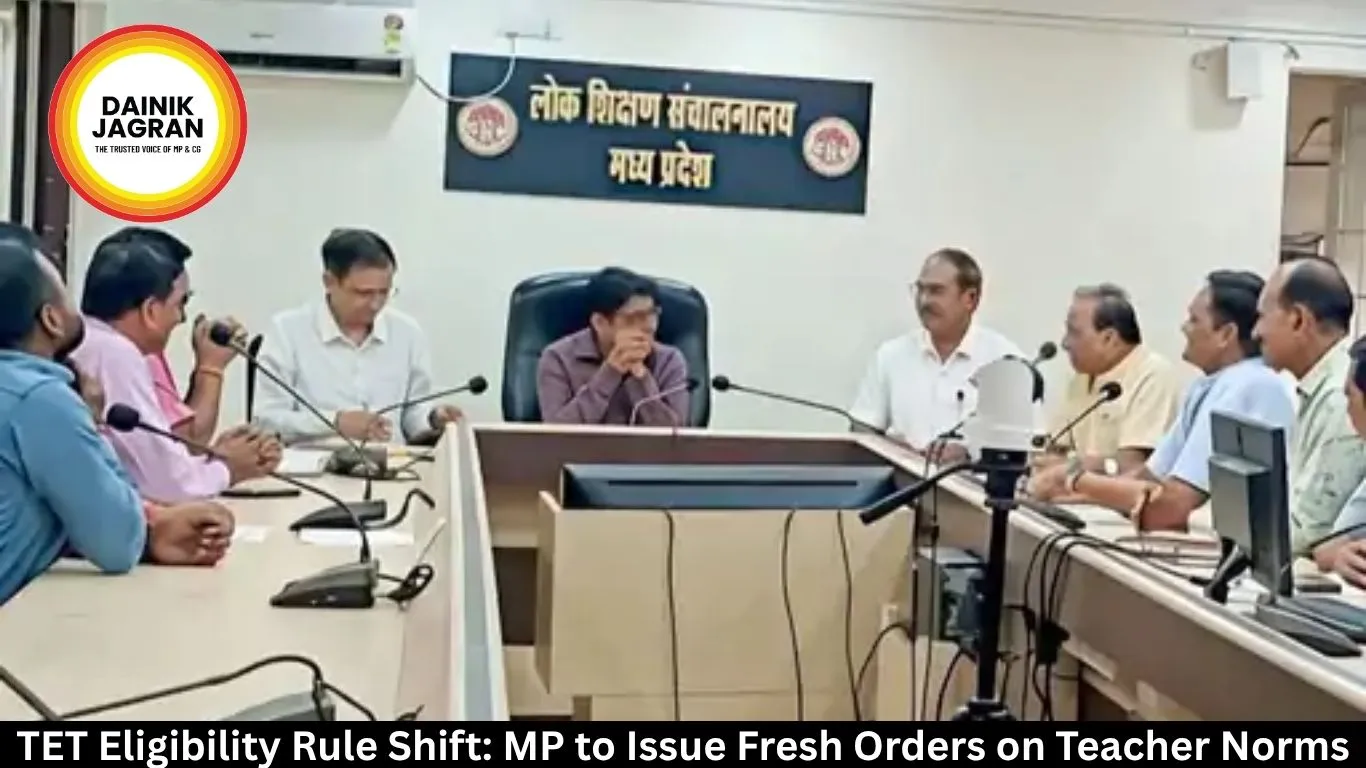
The recent meeting of the Lok Shikshan Ayukta with state employee associations and select teacher unions drew a sharp split within the teaching community. The Adhyapak Shikshak Sanyukt Morcha, an umbrella group of several teacher outfits, explicitly stayed out of the talks, saying it recognised only the “authorised representatives” as valid interlocutors with the government. The MP Outsource Employees Union also criticised the process, arguing that organisations most affected by the TET rule were not represented in the discussions, while those with fewer teaching staff dominated the table.
What Comes Next For MP
With the central government yet to issue a detailed all‑India SOP on the phase‑in of TET for pre‑2011 teachers, states like Madhya Pradesh are left to frame their own compliance calendar. The education department is expected to notify the TET‑applicable categories, parallel training timeline and appeal‑mechanism by the end of this quarter, ahead of the next academic cycle. Analysts expect the TET‑related rule‑change to dominate India’s education policy conversations through 2026, as more states grapple with the equity of making an exam‑qualification the price of continued service.

--------
🚨 Beat the News Rush – Join Now!
Get breaking alerts, hot exclusives, and game-changing stories instantly on your phone. No delays, no fluff – just the edge you need. ⚡
Tap to join:
🟢 WhatsApp Channel: Dainik Jagran MP CG
Crave more?
🅕 Facebook: Dainik Jagran MP CG English
🅧 Twitter (X): Dainik Jagran MP CG
🅘 Instagram: Dainik Jagran MP CG
Share the fire – keep your crew ahead! 🗞️🔥
TET Eligibility Rule Shift: MP to Issue Fresh Orders on Teacher Norms
Digital Desk
TET Exam Norms For Teachers
The Madhya Pradesh government has taken the first step toward recalibrating its policy on the Teacher Eligibility Test (TET) for existing school teachers, after the Supreme Court’s recent ruling that in‑service educators must clear the exam to remain in service or seek promotion. Officials say new state‑level orders will shortly spell out which teachers must take the TET, who may get exemptions, and how compliance will be tracked.
Who Must Take TET
The Supreme Court bench of Justices Dipankar Datta and Manmohan held that serving teachers who have more than five years of service left must qualify the TET within two years or face compulsory retirement. Teachers with less than five years to retirement can continue without qualifying, but without a TET pass they will not be considered for any promotion. NCTE’s original 2010‑2011 framework for classes 1–8, read with the RTE Act, now binds state governments to enforce these norms uniformly.
Fresh State‑Level Orders
In Bhopal, State School Education Department officials have been directed to draft a fresh notification that will identify the “category‑wise” TET applicability for MP’s around 1.5 lakh teachers. The Lok Shikshan Ayukta will circulate an order clarifying which cadre (primary, upper‑primary, aided/unaided, minority institutions) must mandatorily appear for TET and which may be eligible for procedural simplification or time‑bound waiver. A committee is also preparing a compliance roadmap, including timelines, grace periods, and modalities for teachers already within the five‑year‑to‑retirement window.
Ongoing Legal Process
State government advocates are currently consulting on a detailed legal opinion before filing a review petition in the Supreme Court, seeking clarification on implementation timelines and relief categories. The Madras High Court’s earlier 2025 order had allowed pre‑2011‑appointed teachers to continue in service without TET but kept it mandatory for promotion; the Supreme Court judgment has now tightened the position for all in‑service teachers with more than five years left. MP officials indicated that they will seek parity with other states, especially those with large cohorts of pre‑TET teachers, to avoid disproportionate impact on older educators.
Impact On Teachers And Pay
The Pay Commission and salary‑linked grievances are also under review: the state has resolved that pending cases involving increments and time‑scale pay for teachers will be fast‑tracked after the TET‑related orders are finalised. If the top court’s directions remain unchanged, the government will set up district‑level camps and block‑level orientation programmes to help teachers prepare for the TET pattern, syllabus and exam‑day procedures. Unions flagged that the combined pressure of exam preparation and pay‑related delays could fuel discontent among teachers, especially in rural blocks where training infrastructure is weak.
Unions Divided, Morcha Excludes Itself
The recent meeting of the Lok Shikshan Ayukta with state employee associations and select teacher unions drew a sharp split within the teaching community. The Adhyapak Shikshak Sanyukt Morcha, an umbrella group of several teacher outfits, explicitly stayed out of the talks, saying it recognised only the “authorised representatives” as valid interlocutors with the government. The MP Outsource Employees Union also criticised the process, arguing that organisations most affected by the TET rule were not represented in the discussions, while those with fewer teaching staff dominated the table.
What Comes Next For MP
With the central government yet to issue a detailed all‑India SOP on the phase‑in of TET for pre‑2011 teachers, states like Madhya Pradesh are left to frame their own compliance calendar. The education department is expected to notify the TET‑applicable categories, parallel training timeline and appeal‑mechanism by the end of this quarter, ahead of the next academic cycle. Analysts expect the TET‑related rule‑change to dominate India’s education policy conversations through 2026, as more states grapple with the equity of making an exam‑qualification the price of continued service.


