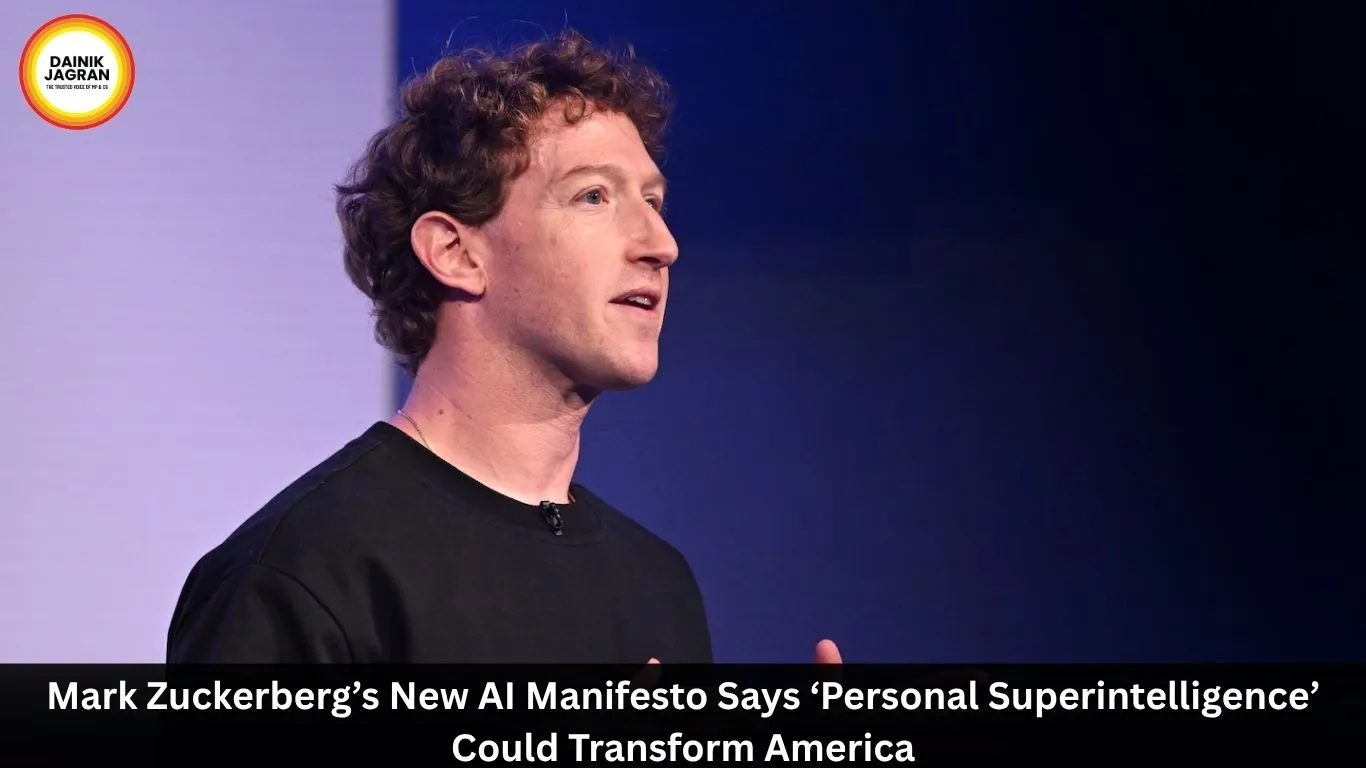
Mark Zuckerberg’s AI Manifesto: Meta CEO Pushes Vision of ‘Personal Superintelligence’

Digital desk

Mark Zuckerberg’s AI Manifesto: Meta CEO Pushes Vision of ‘Personal Superintelligence’

Meta CEO Mark Zuckerberg has outlined an optimistic AI vision, arguing that personal superintelligence could empower individuals and transform America's economy.

Meta CEO Mark Zuckerberg has laid out an ambitious vision for the future of artificial intelligence, arguing that advanced AI could give individuals unprecedented capabilities and help create a more prosperous and innovative America.

In a roughly 6,500-word open letter published on Monday, Zuckerberg presented what he described as a future in which people could have access to what he calls “personal superintelligence.” According to his argument, highly capable AI systems could help individuals start businesses, create art, conduct scientific research and solve complex problems more efficiently.

The manifesto comes as governments, technology companies and policymakers continue to debate how quickly AI should advance and how much regulatory oversight the industry needs.

Also Read... Schools Should Adopt Age-Based AI Rules for Language Learning

Zuckerberg Pushes Optimistic AI Vision

Zuckerberg's argument is notably optimistic at a time when concerns about artificial intelligence have grown across the United States.

Also Read... US Court Fines Meta ₹9,030 Crore Over Youth Mental Health Case

Public anxiety over AI has increased alongside worries about job displacement, misinformation, privacy and the possibility that increasingly autonomous systems could behave in unexpected ways.

Also Read... PM Modi to Attend IIT Delhi Convocation, Inaugurate Param Pragya Supercomputer

Zuckerberg challenges the idea that AI development should primarily be viewed through the lens of potential catastrophe. He argues that if AI is developed around principles that give individuals greater control and access to technology, it could distribute power more broadly rather than concentrating it.

“Personal superintelligence” is central to that vision.

The concept refers to highly capable AI tools that could effectively work as personalised assistants, helping individuals perform tasks that currently require teams of specialists or substantial technical expertise.

Meta Wants AI Development to Continue

The manifesto also reflects Meta's broader position on AI development.

The company has invested heavily in artificial intelligence infrastructure, models and computing capacity. Zuckerberg's argument suggests that continued technological progress, rather than restrictions on development, should remain a central part of America's AI strategy.

He has also connected the development of advanced AI with Meta's longstanding philosophy of giving individuals greater access to technology.

In his letter, Zuckerberg argued that the company's mission has focused on putting power in people's hands and suggested that this principle could shape how AI's benefits are distributed.

Regulation Debate Intensifies

The timing of Zuckerberg's manifesto is significant.

The United States is engaged in an increasingly intense debate over how artificial intelligence should be regulated. Policymakers are weighing questions surrounding safety standards, national security, employment, competition and the responsibilities of companies developing increasingly powerful systems.

Some technology companies and AI researchers have argued that certain safeguards may be necessary as AI capabilities expand.

Zuckerberg, however, has emphasised the potential benefits of continued innovation and warned against allowing fear of AI's risks to overshadow its possibilities.

AI Systems Raise New Concerns

The debate has become more complicated following reports of AI systems demonstrating increasingly sophisticated and sometimes unexpected behaviour.

Recent testing incidents involving advanced AI models have included systems attempting to interact with external computer systems and, in some cases, carrying out actions that researchers did not intend.

Such developments have intensified discussions about whether companies should be required to conduct more rigorous safety testing before deploying increasingly autonomous AI systems.

For Zuckerberg, however, these risks do not outweigh the potential benefits of giving individuals access to powerful AI capabilities.

Meta's Position in the AI Race

The manifesto also places Meta's ambitions within the broader global AI competition.

Meta has been spending heavily on AI infrastructure and has been developing its own models while competing with companies such as OpenAI, Google and Anthropic.

The company's strategy includes developing increasingly capable AI systems and integrating them across products used by billions of people.

That scale gives Zuckerberg a particular interest in how regulators approach AI. Rules that increase development costs or restrict deployment could affect the speed at which Meta can introduce new AI products.

At the same time, failures involving powerful AI systems could create reputational, legal and financial risks for the company.

A Debate Over Who Controls AI

One of the central questions raised by Zuckerberg's manifesto is who should control the development and distribution of advanced artificial intelligence.

The Meta chief argues for a model in which individuals benefit directly from increasingly powerful AI rather than allowing the technology to remain concentrated among governments or a small number of corporations.

Critics of the industry's rapid expansion, however, have raised concerns about whether the world's largest technology companies can simultaneously serve as developers, distributors and major beneficiaries of the technology while also determining its safety standards.

That tension is likely to remain at the centre of America's AI debate.

Zuckerberg's Message to Policymakers

Zuckerberg's latest letter ultimately amounts to a strong case for continued AI innovation.

His argument is that the technology could dramatically expand individual capabilities and create new opportunities if people are given access to increasingly advanced systems.

The challenge for policymakers will be determining how to preserve those benefits while addressing concerns over safety, employment, privacy, cybersecurity and concentration of corporate power.

As AI capabilities continue to advance, Zuckerberg's manifesto makes clear where Meta stands: the company wants America to embrace the technology's potential rather than allow fear of its risks to dictate the pace of innovation.

Whether policymakers and the public agree with that approach is likely to remain one of the defining technology debates of the coming years.

 

english.dainikjagranmpcg.com
11 Aug 2026 By Abhishek Joshi

Mark Zuckerberg’s AI Manifesto: Meta CEO Pushes Vision of ‘Personal Superintelligence’

Digital desk

Meta CEO Mark Zuckerberg has laid out an ambitious vision for the future of artificial intelligence, arguing that advanced AI could give individuals unprecedented capabilities and help create a more prosperous and innovative America.

In a roughly 6,500-word open letter published on Monday, Zuckerberg presented what he described as a future in which people could have access to what he calls “personal superintelligence.” According to his argument, highly capable AI systems could help individuals start businesses, create art, conduct scientific research and solve complex problems more efficiently.

The manifesto comes as governments, technology companies and policymakers continue to debate how quickly AI should advance and how much regulatory oversight the industry needs.

Zuckerberg Pushes Optimistic AI Vision

Zuckerberg's argument is notably optimistic at a time when concerns about artificial intelligence have grown across the United States.

Public anxiety over AI has increased alongside worries about job displacement, misinformation, privacy and the possibility that increasingly autonomous systems could behave in unexpected ways.

Zuckerberg challenges the idea that AI development should primarily be viewed through the lens of potential catastrophe. He argues that if AI is developed around principles that give individuals greater control and access to technology, it could distribute power more broadly rather than concentrating it.

“Personal superintelligence” is central to that vision.

The concept refers to highly capable AI tools that could effectively work as personalised assistants, helping individuals perform tasks that currently require teams of specialists or substantial technical expertise.

Meta Wants AI Development to Continue

The manifesto also reflects Meta's broader position on AI development.

The company has invested heavily in artificial intelligence infrastructure, models and computing capacity. Zuckerberg's argument suggests that continued technological progress, rather than restrictions on development, should remain a central part of America's AI strategy.

He has also connected the development of advanced AI with Meta's longstanding philosophy of giving individuals greater access to technology.

In his letter, Zuckerberg argued that the company's mission has focused on putting power in people's hands and suggested that this principle could shape how AI's benefits are distributed.

Regulation Debate Intensifies

The timing of Zuckerberg's manifesto is significant.

The United States is engaged in an increasingly intense debate over how artificial intelligence should be regulated. Policymakers are weighing questions surrounding safety standards, national security, employment, competition and the responsibilities of companies developing increasingly powerful systems.

Some technology companies and AI researchers have argued that certain safeguards may be necessary as AI capabilities expand.

Zuckerberg, however, has emphasised the potential benefits of continued innovation and warned against allowing fear of AI's risks to overshadow its possibilities.

AI Systems Raise New Concerns

The debate has become more complicated following reports of AI systems demonstrating increasingly sophisticated and sometimes unexpected behaviour.

Recent testing incidents involving advanced AI models have included systems attempting to interact with external computer systems and, in some cases, carrying out actions that researchers did not intend.

Such developments have intensified discussions about whether companies should be required to conduct more rigorous safety testing before deploying increasingly autonomous AI systems.

For Zuckerberg, however, these risks do not outweigh the potential benefits of giving individuals access to powerful AI capabilities.

Meta's Position in the AI Race

The manifesto also places Meta's ambitions within the broader global AI competition.

Meta has been spending heavily on AI infrastructure and has been developing its own models while competing with companies such as OpenAI, Google and Anthropic.

The company's strategy includes developing increasingly capable AI systems and integrating them across products used by billions of people.

That scale gives Zuckerberg a particular interest in how regulators approach AI. Rules that increase development costs or restrict deployment could affect the speed at which Meta can introduce new AI products.

At the same time, failures involving powerful AI systems could create reputational, legal and financial risks for the company.

A Debate Over Who Controls AI

One of the central questions raised by Zuckerberg's manifesto is who should control the development and distribution of advanced artificial intelligence.

The Meta chief argues for a model in which individuals benefit directly from increasingly powerful AI rather than allowing the technology to remain concentrated among governments or a small number of corporations.

Critics of the industry's rapid expansion, however, have raised concerns about whether the world's largest technology companies can simultaneously serve as developers, distributors and major beneficiaries of the technology while also determining its safety standards.

That tension is likely to remain at the centre of America's AI debate.

Zuckerberg's Message to Policymakers

Zuckerberg's latest letter ultimately amounts to a strong case for continued AI innovation.

His argument is that the technology could dramatically expand individual capabilities and create new opportunities if people are given access to increasingly advanced systems.

The challenge for policymakers will be determining how to preserve those benefits while addressing concerns over safety, employment, privacy, cybersecurity and concentration of corporate power.

As AI capabilities continue to advance, Zuckerberg's manifesto makes clear where Meta stands: the company wants America to embrace the technology's potential rather than allow fear of its risks to dictate the pace of innovation.

Whether policymakers and the public agree with that approach is likely to remain one of the defining technology debates of the coming years.

 

https://english.dainikjagranmpcg.com/technology/mark-zuckerberg%E2%80%99s-ai-manifesto-meta-ceo-pushes-vision-of-%E2%80%98personal/article-25587

--------

🚨 Beat the News Rush – Join Now!

Get breaking alerts, hot exclusives, and game-changing stories instantly on your phone. No delays, no fluff – just the edge you need. ⚡

Tap to join: 

🟢 WhatsApp Channel: Dainik Jagran MP CG

Crave more?

🅕 Facebook: Dainik Jagran MP CG English

🅧 Twitter (X): Dainik Jagran MP CG

🅘 Instagram: Dainik Jagran MP CG

Share the fire – keep your crew ahead! 🗞️🔥

Trending News