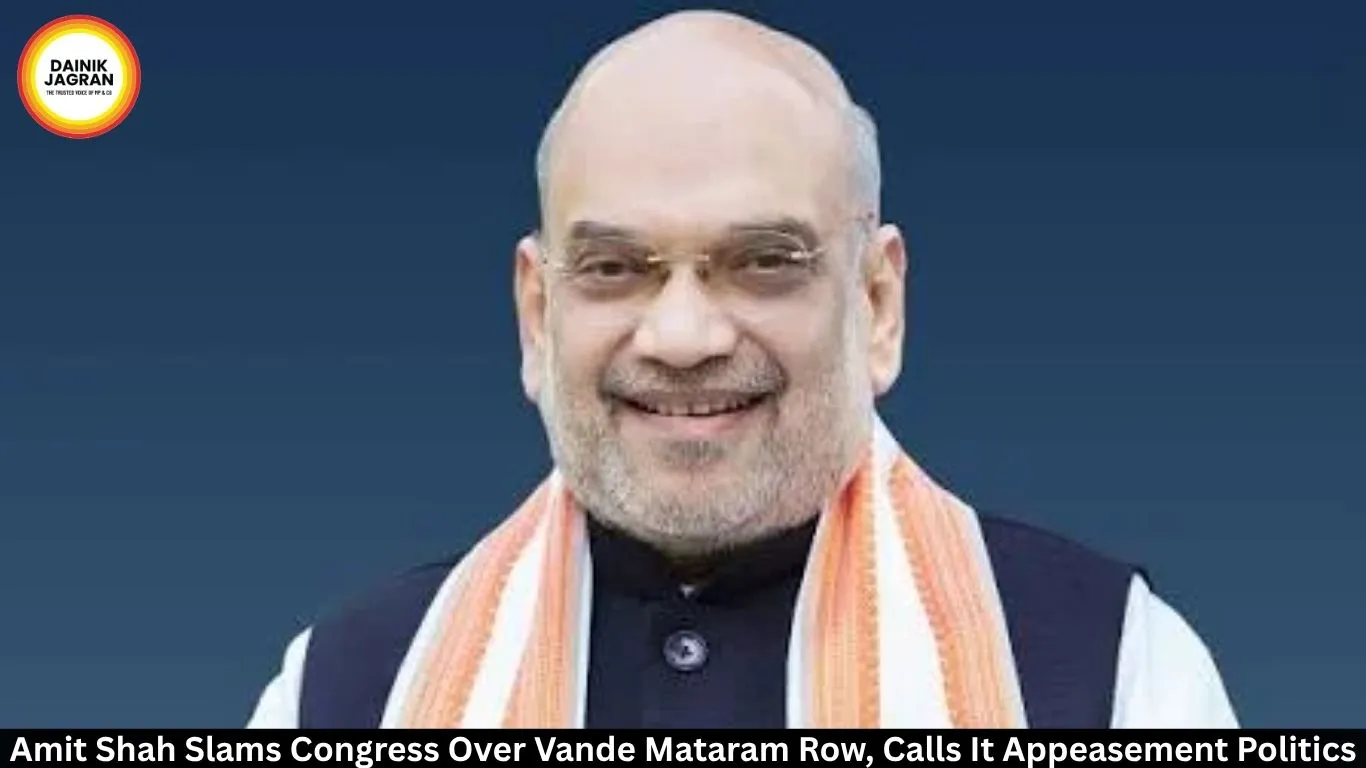
Amit Shah Slams Congress Over Vande Mataram Row, Calls It Appeasement Politics

Digital desk

Amit Shah Slams Congress Over Vande Mataram Row, Calls It Appeasement Politics

Amit Shah has criticised Congress over its decision to sing only two stanzas of Vande Mataram, citing the 1937 decision and accusing the party of appeasement politics.

Union Home Minister Amit Shah on Thursday criticised the Congress over its decision to continue singing only the first two stanzas of Vande Mataram at party events, accusing the opposition party of pursuing “appeasement and vote-bank politics”.

Shah said the Congress had repeated the position adopted by the party in 1937 and argued that Prime Minister Narendra Modi had now “corrected” that decision. He called on people to oppose any move against the full version of the national song and said the BJP would raise the issue publicly as well as in State Assemblies.

The remarks came a day after the Congress Working Committee reaffirmed its position to sing the first two stanzas of Vande Mataram at party programmes, citing the historical decision taken by Congress leaders in 1937. 

Also Read... PM Modi Independence Day 2026 Speech: ‘Dream Big’, 2047 Developed India Goal

Shah Targets Congress

Shah alleged that the Congress had divided Vande Mataram into two parts in 1937 and was now following the same approach.

Also Read... Former Bengal Deputy Speaker Ashish Banerjee Found Dead at TMC Office

He described the party's position as an example of appeasement politics and said such politics would not succeed in India. BJP president Nitin Nabin also criticised the Congress, alleging that its decision was motivated by vote-bank considerations. 

Also Read... Pawan Khera Slams RSS, BJP Amid Vande Mataram Row

The controversy has placed the national song at the centre of another political confrontation between the BJP and Congress, with both parties invoking different interpretations of its history and use at public events.

Congress Cites 1937 Decision

Congress general secretary K.C. Venugopal said the party would follow the position adopted by its senior leaders in 1937, including Mahatma Gandhi, Jawaharlal Nehru, Rabindranath Tagore, Subhas Chandra Bose and Sardar Vallabhbhai Patel.

Congress leader Jairam Ramesh has previously explained that the issue was discussed by the Congress Working Committee in October 1937. According to Ramesh, the decision followed discussions among several prominent leaders over the portions of the song that should be used at Congress gatherings. 

The Congress has maintained that singing the first two stanzas at its events follows this historical convention rather than representing disrespect towards the national song.

Row Over Independence Day Event

The latest confrontation follows a controversy at the Congress headquarters in New Delhi during the Independence Day celebrations on August 15.

The BJP had alleged that Sonia Gandhi appeared uncomfortable during a rendition of the full version of Vande Mataram and suggested that she wanted the song stopped. Congress rejected the allegation, with Jairam Ramesh saying there had been no attempt to interrupt the song. He said Sonia Gandhi had been standing for a long period and had asked for a chair.

The episode subsequently became a political issue, with BJP leaders accusing Congress of disrespecting the national song. 

Legal Protection Expanded

The political dispute comes weeks after Parliament passed the Prevention of Insults to National Honour (Amendment) Bill, 2026.

The legislation extends statutory protection under the Prevention of Insults to National Honour Act, 1971, to Vande Mataram. It makes intentional prevention of the national song's singing or causing disturbance to an assembly engaged in singing it punishable by imprisonment of up to three years, a fine, or both. 

The legislation was passed by Parliament at the end of July. 

Importantly, the legal provisions concern deliberate obstruction or disturbance of the singing. They should not automatically be read as making every instance of an individual choosing not to sing a criminal offence. 

History of Vande Mataram

Written by Bankim Chandra Chattopadhyay, Vande Mataram became one of the most recognisable symbols of India's freedom movement. Rabindranath Tagore famously sang it at an Indian National Congress session in 1896.

The song was later included in Chattopadhyay's novel Anandamath and came to occupy a significant place in India's nationalist movement.

The current political dispute, however, centres less on the song's historical importance and more on whether its full version should be routinely sung at political and public functions.

BJP-Congress Clash Continues

The disagreement over Vande Mataram has now developed into a broader political contest over nationalism, the Congress's historical decisions and the government's efforts to promote the complete rendition of the national song.

While the BJP has accused Congress of appeasement politics, the Congress has defended its position by referring to the decisions of leaders of the freedom movement.

With both parties preparing to take their respective positions to the public, the Vande Mataram controversy is likely to remain a prominent political issue in the coming days.



english.dainikjagranmpcg.com
20 Aug 2026 By Danik Jagran English

Amit Shah Slams Congress Over Vande Mataram Row, Calls It Appeasement Politics

Digital desk

Union Home Minister Amit Shah on Thursday criticised the Congress over its decision to continue singing only the first two stanzas of Vande Mataram at party events, accusing the opposition party of pursuing “appeasement and vote-bank politics”.

Shah said the Congress had repeated the position adopted by the party in 1937 and argued that Prime Minister Narendra Modi had now “corrected” that decision. He called on people to oppose any move against the full version of the national song and said the BJP would raise the issue publicly as well as in State Assemblies.

The remarks came a day after the Congress Working Committee reaffirmed its position to sing the first two stanzas of Vande Mataram at party programmes, citing the historical decision taken by Congress leaders in 1937. 

Shah Targets Congress

Shah alleged that the Congress had divided Vande Mataram into two parts in 1937 and was now following the same approach.

He described the party's position as an example of appeasement politics and said such politics would not succeed in India. BJP president Nitin Nabin also criticised the Congress, alleging that its decision was motivated by vote-bank considerations. 

The controversy has placed the national song at the centre of another political confrontation between the BJP and Congress, with both parties invoking different interpretations of its history and use at public events.

Congress Cites 1937 Decision

Congress general secretary K.C. Venugopal said the party would follow the position adopted by its senior leaders in 1937, including Mahatma Gandhi, Jawaharlal Nehru, Rabindranath Tagore, Subhas Chandra Bose and Sardar Vallabhbhai Patel.

Congress leader Jairam Ramesh has previously explained that the issue was discussed by the Congress Working Committee in October 1937. According to Ramesh, the decision followed discussions among several prominent leaders over the portions of the song that should be used at Congress gatherings. 

The Congress has maintained that singing the first two stanzas at its events follows this historical convention rather than representing disrespect towards the national song.

Row Over Independence Day Event

The latest confrontation follows a controversy at the Congress headquarters in New Delhi during the Independence Day celebrations on August 15.

The BJP had alleged that Sonia Gandhi appeared uncomfortable during a rendition of the full version of Vande Mataram and suggested that she wanted the song stopped. Congress rejected the allegation, with Jairam Ramesh saying there had been no attempt to interrupt the song. He said Sonia Gandhi had been standing for a long period and had asked for a chair.

The episode subsequently became a political issue, with BJP leaders accusing Congress of disrespecting the national song. 

Legal Protection Expanded

The political dispute comes weeks after Parliament passed the Prevention of Insults to National Honour (Amendment) Bill, 2026.

The legislation extends statutory protection under the Prevention of Insults to National Honour Act, 1971, to Vande Mataram. It makes intentional prevention of the national song's singing or causing disturbance to an assembly engaged in singing it punishable by imprisonment of up to three years, a fine, or both. 

The legislation was passed by Parliament at the end of July. 

Importantly, the legal provisions concern deliberate obstruction or disturbance of the singing. They should not automatically be read as making every instance of an individual choosing not to sing a criminal offence. 

History of Vande Mataram

Written by Bankim Chandra Chattopadhyay, Vande Mataram became one of the most recognisable symbols of India's freedom movement. Rabindranath Tagore famously sang it at an Indian National Congress session in 1896.

The song was later included in Chattopadhyay's novel Anandamath and came to occupy a significant place in India's nationalist movement.

The current political dispute, however, centres less on the song's historical importance and more on whether its full version should be routinely sung at political and public functions.

BJP-Congress Clash Continues

The disagreement over Vande Mataram has now developed into a broader political contest over nationalism, the Congress's historical decisions and the government's efforts to promote the complete rendition of the national song.

While the BJP has accused Congress of appeasement politics, the Congress has defended its position by referring to the decisions of leaders of the freedom movement.

With both parties preparing to take their respective positions to the public, the Vande Mataram controversy is likely to remain a prominent political issue in the coming days.


https://english.dainikjagranmpcg.com/top-stories/amit-shah-slams-congress-over-vande-mataram-row-calls-it/article-26816

--------

🚨 Beat the News Rush – Join Now!

Get breaking alerts, hot exclusives, and game-changing stories instantly on your phone. No delays, no fluff – just the edge you need. ⚡

Tap to join: 

🟢 WhatsApp Channel: Dainik Jagran MP CG

Crave more?

🅕 Facebook: Dainik Jagran MP CG English

🅧 Twitter (X): Dainik Jagran MP CG

🅘 Instagram: Dainik Jagran MP CG

Share the fire – keep your crew ahead! 🗞️🔥

Trending News