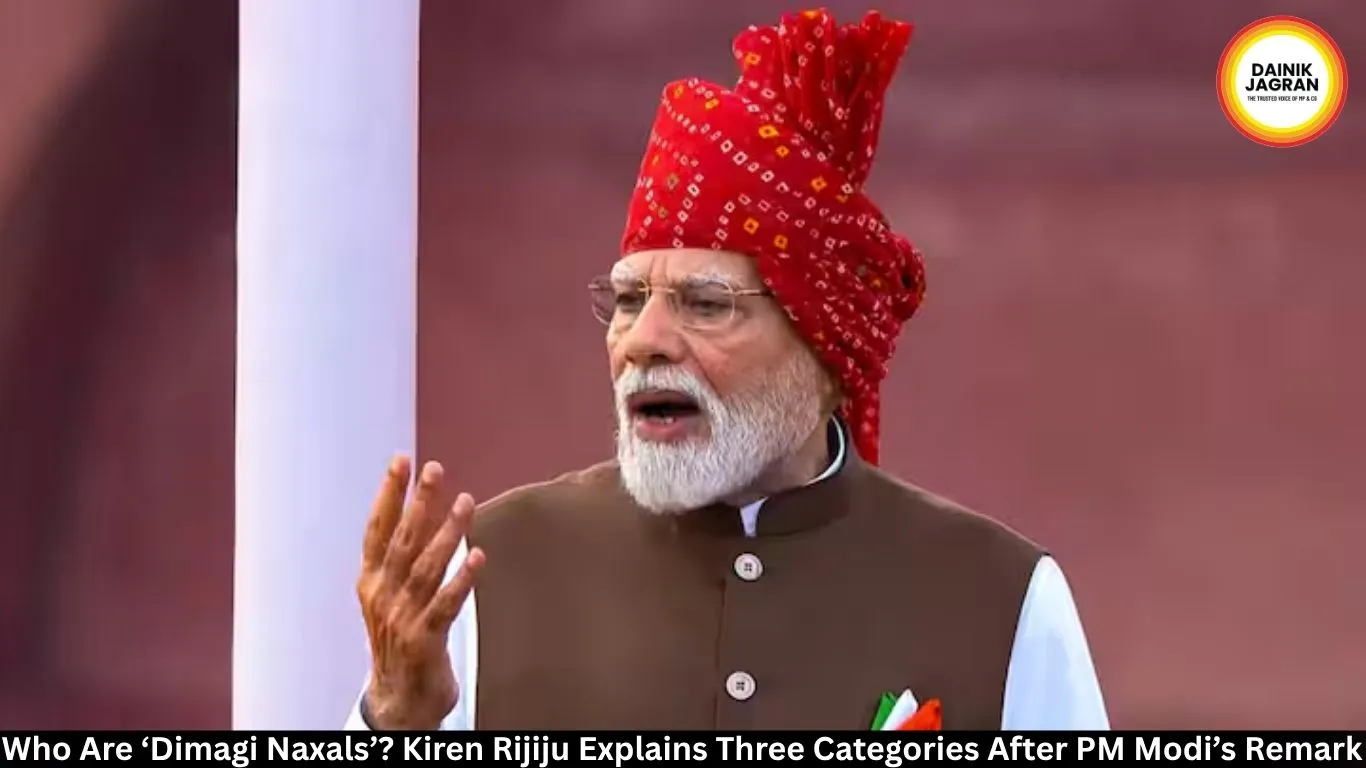
Dimagi Naxals Explained: Kiren Rijiju Lists Three Categories After PM Modi Remark
Digital desk
Kiren Rijiju explained the three categories he associates with the term “dimagi Naxal” after PM Modi's Independence Day remark triggered a political controversy.
The political controversy over Prime Minister Narendra Modi’s reference to “dimagi Naxals” intensified after Union Parliamentary Affairs Minister Kiren Rijiju sought to explain who the term was meant to describe.
Rijiju, in a post on X, said the expression was not aimed at Opposition leaders as a group and outlined three categories of people whom he said could fall under the description.
According to Rijiju, the term refers to people who support Maoists while rejecting the Constitution, those who back separatists and support Article 370, and individuals who advocate separating the Northeast from the rest of India through the Siliguri Corridor.
What Did PM Modi Say?
PM Modi used the expression during his Independence Day address, saying India had successfully weakened armed Naxalism but warning that its ideological influence could continue to pose a challenge.
The Prime Minister said people with a Maoist mindset had established themselves in positions of influence, including advisory roles connected with government institutions.
Modi also recalled the impact of decades of Naxal violence, saying the movement had damaged the lives and aspirations of young people and affected families across several parts of the country.
He said such ideological networks could seek opportunities to create violence and disorder and called for them to be identified and isolated.
Rijiju Defines ‘Dimagi Naxal’
Rijiju later provided a more detailed explanation of the expression.
The first category, according to the minister, consists of people who support Maoists while rejecting the Indian Constitution.
The second category includes people who support separatists and favour Article 370. The constitutional provision had provided special status to Jammu and Kashmir until the Centre's 2019 decision to remove its operative provisions and reorganise the former state into the Union Territories of Jammu and Kashmir and Ladakh.
The third category identified by Rijiju concerns those who allegedly seek to separate India's northeastern region from the rest of the country through the Siliguri Corridor.
Why Siliguri Corridor Matters
The Siliguri Corridor, popularly known as the “Chicken's Neck”, is a narrow stretch of territory in West Bengal that connects India's northeastern states with the rest of the country.
The corridor has significant strategic importance because of its geographical position and its role in maintaining connectivity with the Northeast.
Rijiju also shared a video featuring jailed activist Sharjeel Imam discussing the possibility of cutting off Assam and other northeastern areas through the Siliguri Corridor.
Opposition Pushes Back
Rijiju's clarification came amid criticism from Opposition leaders who questioned the Prime Minister's use of the term.
Congress leader and former Union minister P Chidambaram responded to the controversy by saying he was “proud” to be called a “dimagi Naxal”.
Rijiju criticised Chidambaram's response, calling it unfortunate and damaging. He reiterated that Modi had not described Opposition leaders collectively as “dimagi Naxals”.
The exchange has added another layer to the political debate over the government's use of labels linked to Maoism, separatism and national security.
Article 370 Reference Draws Attention
By including support for Article 370 in his explanation, Rijiju's definition extends the term beyond the traditional context of Maoist insurgency.
Article 370 had provided Jammu and Kashmir with special constitutional provisions. The Centre's 2019 decision effectively ended the region's special status and divided the former state into two Union Territories.
The issue remains politically sensitive, with the government's position on national integration continuing to differ sharply from that of several Opposition parties.
Government- Opposition Divide
The controversy reflects a broader disagreement over how political dissent and national security concerns should be discussed.
The government has framed the issue around Maoist ideology, separatism and territorial integrity, while Opposition leaders have questioned whether such terminology risks being applied too broadly to critics of the government.
Rijiju's clarification appears aimed at narrowing the meaning of “dimagi Naxal” to specific ideological and separatist positions rather than ordinary political disagreement.
The political debate is expected to continue, particularly as both the government and Opposition seek to present their positions in the context of constitutional values, national security and freedom of political expression.
Dimagi Naxals Explained: Kiren Rijiju Lists Three Categories After PM Modi Remark
Digital desk
The political controversy over Prime Minister Narendra Modi’s reference to “dimagi Naxals” intensified after Union Parliamentary Affairs Minister Kiren Rijiju sought to explain who the term was meant to describe.
Rijiju, in a post on X, said the expression was not aimed at Opposition leaders as a group and outlined three categories of people whom he said could fall under the description.
According to Rijiju, the term refers to people who support Maoists while rejecting the Constitution, those who back separatists and support Article 370, and individuals who advocate separating the Northeast from the rest of India through the Siliguri Corridor.
What Did PM Modi Say?
PM Modi used the expression during his Independence Day address, saying India had successfully weakened armed Naxalism but warning that its ideological influence could continue to pose a challenge.
The Prime Minister said people with a Maoist mindset had established themselves in positions of influence, including advisory roles connected with government institutions.
Modi also recalled the impact of decades of Naxal violence, saying the movement had damaged the lives and aspirations of young people and affected families across several parts of the country.
He said such ideological networks could seek opportunities to create violence and disorder and called for them to be identified and isolated.
Rijiju Defines ‘Dimagi Naxal’
Rijiju later provided a more detailed explanation of the expression.
The first category, according to the minister, consists of people who support Maoists while rejecting the Indian Constitution.
The second category includes people who support separatists and favour Article 370. The constitutional provision had provided special status to Jammu and Kashmir until the Centre's 2019 decision to remove its operative provisions and reorganise the former state into the Union Territories of Jammu and Kashmir and Ladakh.
The third category identified by Rijiju concerns those who allegedly seek to separate India's northeastern region from the rest of the country through the Siliguri Corridor.
Why Siliguri Corridor Matters
The Siliguri Corridor, popularly known as the “Chicken's Neck”, is a narrow stretch of territory in West Bengal that connects India's northeastern states with the rest of the country.
The corridor has significant strategic importance because of its geographical position and its role in maintaining connectivity with the Northeast.
Rijiju also shared a video featuring jailed activist Sharjeel Imam discussing the possibility of cutting off Assam and other northeastern areas through the Siliguri Corridor.
Opposition Pushes Back
Rijiju's clarification came amid criticism from Opposition leaders who questioned the Prime Minister's use of the term.
Congress leader and former Union minister P Chidambaram responded to the controversy by saying he was “proud” to be called a “dimagi Naxal”.
Rijiju criticised Chidambaram's response, calling it unfortunate and damaging. He reiterated that Modi had not described Opposition leaders collectively as “dimagi Naxals”.
The exchange has added another layer to the political debate over the government's use of labels linked to Maoism, separatism and national security.
Article 370 Reference Draws Attention
By including support for Article 370 in his explanation, Rijiju's definition extends the term beyond the traditional context of Maoist insurgency.
Article 370 had provided Jammu and Kashmir with special constitutional provisions. The Centre's 2019 decision effectively ended the region's special status and divided the former state into two Union Territories.
The issue remains politically sensitive, with the government's position on national integration continuing to differ sharply from that of several Opposition parties.
Government- Opposition Divide
The controversy reflects a broader disagreement over how political dissent and national security concerns should be discussed.
The government has framed the issue around Maoist ideology, separatism and territorial integrity, while Opposition leaders have questioned whether such terminology risks being applied too broadly to critics of the government.
Rijiju's clarification appears aimed at narrowing the meaning of “dimagi Naxal” to specific ideological and separatist positions rather than ordinary political disagreement.
The political debate is expected to continue, particularly as both the government and Opposition seek to present their positions in the context of constitutional values, national security and freedom of political expression.
Recommended For You
--------
🚨 Beat the News Rush – Join Now!
Get breaking alerts, hot exclusives, and game-changing stories instantly on your phone. No delays, no fluff – just the edge you need. ⚡
Tap to join:
🟢 WhatsApp Channel: Dainik Jagran MP CG
Crave more?
🅕 Facebook: Dainik Jagran MP CG English
🅧 Twitter (X): Dainik Jagran MP CG
🅘 Instagram: Dainik Jagran MP CG
Share the fire – keep your crew ahead! 🗞️🔥