IAEA to Remove Nuclear Material From Secret Syrian Site Under US-Brokered Deal: Report
Digital desk
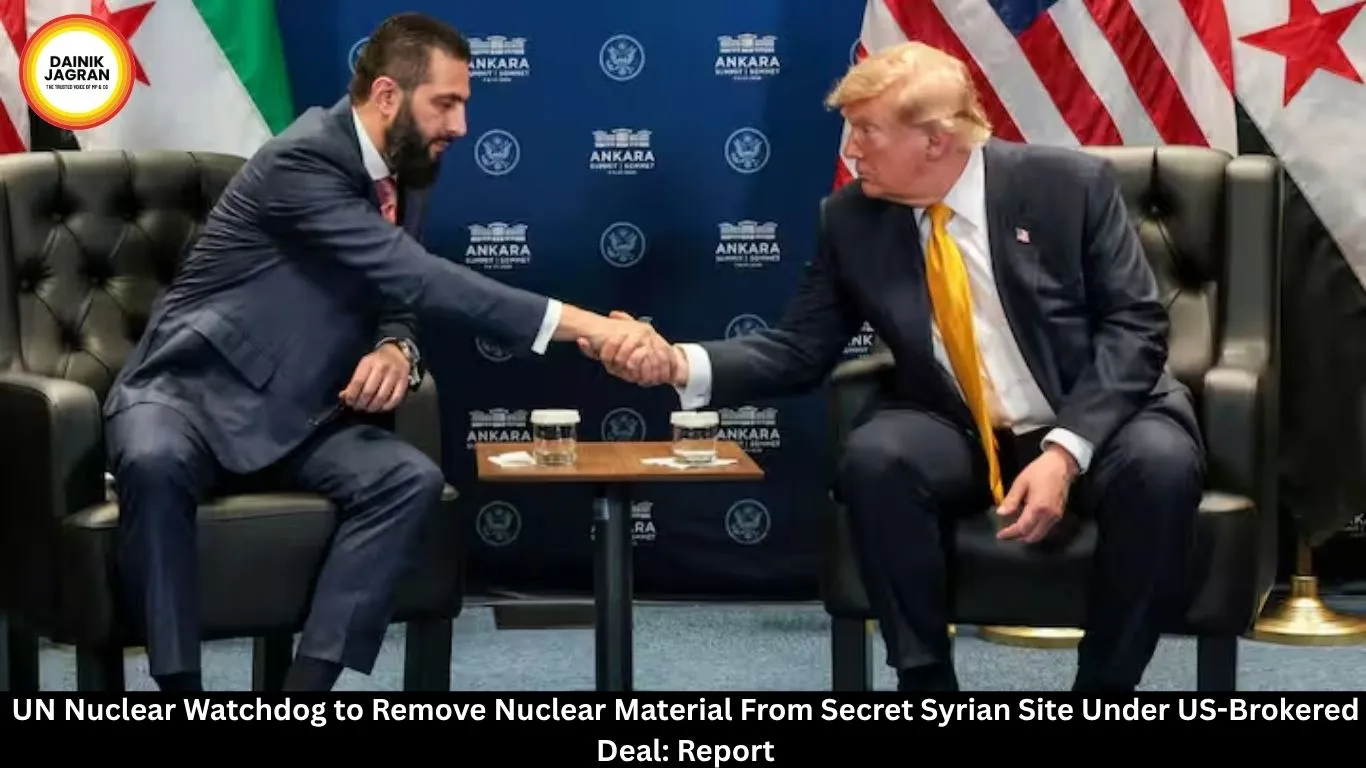
The IAEA is reportedly set to remove nuclear material from Syria's secret Site 99 under a US-brokered agreement involving Syria, Israel and the UN nuclear watchdog.
The International Atomic Energy Agency (IAEA) is reportedly preparing to remove nuclear material from a secret Syrian site under an agreement brokered by the administration of US President Donald Trump, according to a report by Axios. The material is believed to be remnants of Syria's former nuclear programme under Bashar al-Assad and has raised concerns over the possibility of radioactive material being used in a so-called dirty bomb.
The reported agreement involves the United States, Syria, Israel and the UN nuclear watchdog and is aimed at addressing concerns surrounding nuclear-related material left behind at an undisclosed facility known as “Site 99.”
Nuclear Material at Secret Site
According to the report, the material at Site 99 includes yellowcake, a uranium-bearing powder produced during the processing of uranium ore. Yellowcake itself is not a nuclear weapon, but it can be further processed and enriched for nuclear purposes.
The presence of such material at an inactive Syrian facility has been a longstanding security concern, particularly because of the history of Syria's covert nuclear activities.
The IAEA is expected to oversee the removal of the material as part of the reported arrangement. The move could reduce concerns over the material falling into the hands of groups capable of using radioactive substances for malicious purposes.
Syria's Former Nuclear Programme
Syria's nuclear ambitions came under international scrutiny after Israel destroyed the Al-Kibar nuclear reactor in 2007. The facility, located in eastern Syria, was widely assessed to have been part of a covert nuclear programme.
The Israeli strike severely damaged Syria's suspected nuclear infrastructure. However, according to the reports cited in the development, nuclear-related material remained at other locations.
The discovery and continued presence of such material became an issue of concern following the collapse of the Assad government and the political transition in Syria.
Risk of a Dirty Bomb
One of the concerns surrounding the material is its potential use in a dirty bomb. Unlike a conventional nuclear weapon, a dirty bomb combines conventional explosives with radioactive material. Its primary danger comes from spreading radioactive contamination rather than producing a nuclear explosion.
Experts have long warned that unsecured radioactive material can pose a serious security and public-safety risk, particularly in conflict zones where state institutions and security arrangements may be disrupted.
The reported US-brokered agreement therefore represents an attempt to secure and ultimately remove material that could otherwise remain a potential source of concern.
IAEA Access to Syrian Sites
After Ahmed al-Sharaa's government came to power, the IAEA reportedly reached an understanding with the new Syrian authorities that allowed its inspectors to visit the Al-Kibar reactor and other locations associated with the country's former nuclear programme.
The access has provided the agency with an opportunity to assess sites that were previously difficult to inspect.
Site 99 is reportedly among the locations that attracted particular attention because of the presence of yellowcake. The proposed removal of the material would mark a significant step in efforts to address the unresolved nuclear legacy of the Assad era.
US Role in the Agreement
The United States reportedly played a central role in bringing Syria, Israel and the IAEA together for the arrangement. Negotiations continued for several months amid broader regional tensions.
According to the report, Israel had considered taking military action against the site because of concerns over the nuclear material and uncertainty surrounding Syria's handling of it.
The US-brokered arrangement could therefore help prevent another military escalation while allowing the IAEA to address the material through an international monitoring mechanism.
Syria's Changing Regional Position
The development comes as Syria's new leadership seeks to rebuild relations with Western countries after years of civil war and international isolation.
President Ahmed al-Sharaa has sought greater international engagement as his government attempts to stabilise the country and improve its diplomatic standing. At the same time, Israel continues to closely monitor developments in Syria, particularly because of the country's evolving relationships with regional powers.
If implemented, the reported agreement would remove a sensitive remnant of Syria's former nuclear programme while strengthening international oversight of nuclear-related material in the country.
The IAEA's involvement is expected to remain central to ensuring that the material is safely handled and removed, reducing the risk of proliferation or misuse.

IAEA to Remove Nuclear Material From Secret Syrian Site Under US-Brokered Deal: Report
Digital desk
The International Atomic Energy Agency (IAEA) is reportedly preparing to remove nuclear material from a secret Syrian site under an agreement brokered by the administration of US President Donald Trump, according to a report by Axios. The material is believed to be remnants of Syria's former nuclear programme under Bashar al-Assad and has raised concerns over the possibility of radioactive material being used in a so-called dirty bomb.
The reported agreement involves the United States, Syria, Israel and the UN nuclear watchdog and is aimed at addressing concerns surrounding nuclear-related material left behind at an undisclosed facility known as “Site 99.”
Nuclear Material at Secret Site
According to the report, the material at Site 99 includes yellowcake, a uranium-bearing powder produced during the processing of uranium ore. Yellowcake itself is not a nuclear weapon, but it can be further processed and enriched for nuclear purposes.
The presence of such material at an inactive Syrian facility has been a longstanding security concern, particularly because of the history of Syria's covert nuclear activities.
The IAEA is expected to oversee the removal of the material as part of the reported arrangement. The move could reduce concerns over the material falling into the hands of groups capable of using radioactive substances for malicious purposes.
Syria's Former Nuclear Programme
Syria's nuclear ambitions came under international scrutiny after Israel destroyed the Al-Kibar nuclear reactor in 2007. The facility, located in eastern Syria, was widely assessed to have been part of a covert nuclear programme.
The Israeli strike severely damaged Syria's suspected nuclear infrastructure. However, according to the reports cited in the development, nuclear-related material remained at other locations.
The discovery and continued presence of such material became an issue of concern following the collapse of the Assad government and the political transition in Syria.
Risk of a Dirty Bomb
One of the concerns surrounding the material is its potential use in a dirty bomb. Unlike a conventional nuclear weapon, a dirty bomb combines conventional explosives with radioactive material. Its primary danger comes from spreading radioactive contamination rather than producing a nuclear explosion.
Experts have long warned that unsecured radioactive material can pose a serious security and public-safety risk, particularly in conflict zones where state institutions and security arrangements may be disrupted.
The reported US-brokered agreement therefore represents an attempt to secure and ultimately remove material that could otherwise remain a potential source of concern.
IAEA Access to Syrian Sites
After Ahmed al-Sharaa's government came to power, the IAEA reportedly reached an understanding with the new Syrian authorities that allowed its inspectors to visit the Al-Kibar reactor and other locations associated with the country's former nuclear programme.
The access has provided the agency with an opportunity to assess sites that were previously difficult to inspect.
Site 99 is reportedly among the locations that attracted particular attention because of the presence of yellowcake. The proposed removal of the material would mark a significant step in efforts to address the unresolved nuclear legacy of the Assad era.
US Role in the Agreement
The United States reportedly played a central role in bringing Syria, Israel and the IAEA together for the arrangement. Negotiations continued for several months amid broader regional tensions.
According to the report, Israel had considered taking military action against the site because of concerns over the nuclear material and uncertainty surrounding Syria's handling of it.
The US-brokered arrangement could therefore help prevent another military escalation while allowing the IAEA to address the material through an international monitoring mechanism.
Syria's Changing Regional Position
The development comes as Syria's new leadership seeks to rebuild relations with Western countries after years of civil war and international isolation.
President Ahmed al-Sharaa has sought greater international engagement as his government attempts to stabilise the country and improve its diplomatic standing. At the same time, Israel continues to closely monitor developments in Syria, particularly because of the country's evolving relationships with regional powers.
If implemented, the reported agreement would remove a sensitive remnant of Syria's former nuclear programme while strengthening international oversight of nuclear-related material in the country.
The IAEA's involvement is expected to remain central to ensuring that the material is safely handled and removed, reducing the risk of proliferation or misuse.
Recommended For You
--------
🚨 Beat the News Rush – Join Now!
Get breaking alerts, hot exclusives, and game-changing stories instantly on your phone. No delays, no fluff – just the edge you need. ⚡
Tap to join:
🟢 WhatsApp Channel: Dainik Jagran MP CG
Crave more?
🅕 Facebook: Dainik Jagran MP CG English
🅧 Twitter (X): Dainik Jagran MP CG
🅘 Instagram: Dainik Jagran MP CG
Share the fire – keep your crew ahead! 🗞️🔥