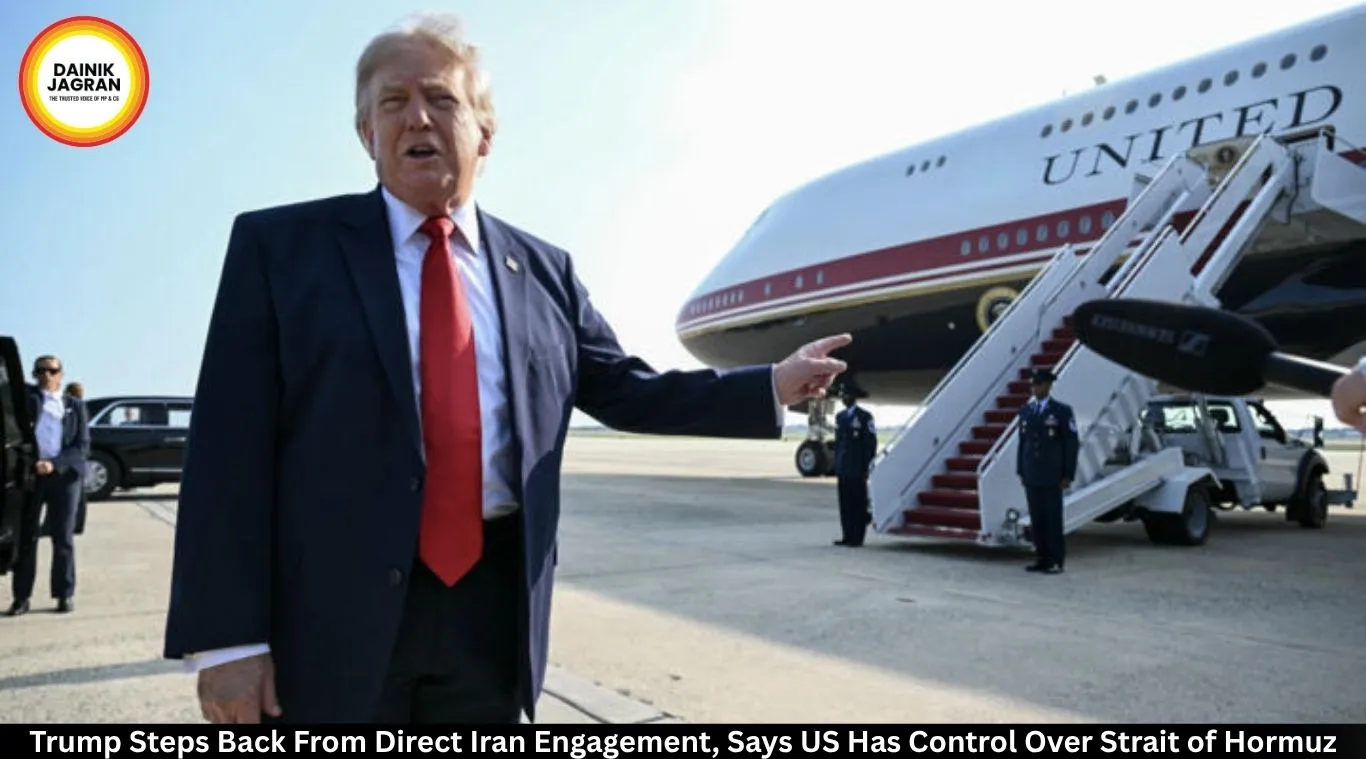
Trump Claims US Control Over Strait of Hormuz as Iran Standoff Deepens

Digital desk

Trump Claims US Control Over Strait of Hormuz as Iran Standoff Deepens

US President Donald Trump has stepped up pressure on Iran over the Strait of Hormuz, while Tehran rejects US claims and stalled talks raise concerns over global oil supplies.

 US President Donald Trump has signalled a tougher but potentially less direct approach towards Iran, as Washington seeks to maintain pressure on Tehran while reducing the risk of prolonged American military involvement in the region.

The Strait of Hormuz has become the centre of the latest US-Iran standoff, with Trump repeatedly claiming that the United States has control over the strategic waterway. On August 18, Trump went further by sharing an image on social media depicting the Strait as “NEW U.S. Territory”. Iran rejected the claim and warned that Tehran would continue to challenge Washington's position. (Moneycontrol)

Trump’s Two-Track Approach

Trump has previously described a two-stage approach to resolving the crisis, with reopening the Strait of Hormuz as the immediate priority and negotiations over Iran's nuclear programme forming a second phase.

Also Read... Trump Plane Switch: Why Rubio and Bessent Stayed on Decoy Aircraft in Ankara

However, the diplomatic track now appears uncertain. Trump said on August 18 that there were no talks taking place with Iran and that no negotiations were currently scheduled. The statement came amid conflicting signals from Washington about the status of possible back-channel contacts with Tehran. (Reuters)

Also Read... Trump Threatens to Declare Strait of Hormuz US Territory Amid Iran Tensions

The latest position suggests that the administration is seeking to keep economic, maritime and political pressure on Iran while avoiding a major expansion of direct US military operations.

Also Read... Iraqi Kurdistan Says Iran Attacked Masrour Barzani’s Office With Drones

Hormuz Becomes Key Flashpoint

The Strait of Hormuz, located between Iran and Oman, is one of the world's most important energy corridors. Any sustained disruption to shipping through the waterway can have a direct impact on crude oil supplies and international energy markets.

Trump has repeatedly asserted that the United States has control over the strait. On August 12, he said the US had “total control” of the waterway even as vessel traffic had fallen sharply amid the conflict and stalled diplomatic efforts. (Al Jazeera)

Iran, meanwhile, has maintained that the waterway cannot be fully reopened without concessions from Washington.

Iran Rejects US Claims

Iranian officials have strongly rejected Trump's claims regarding the Strait of Hormuz.

Iranian Deputy Foreign Minister Kazem Gharibabadi criticised Trump's latest position, saying that his claims about the waterway would be “corrected”. Iranian security officials have also questioned Washington's ability to exercise the level of control claimed by the US president. (India Gazette)

Iran's position has added another obstacle to efforts to restore normal shipping through the strait.

Shipping Traffic Remains Under Pressure

Despite Trump's assertion that the waterway is open and operating, uncertainty among shipping companies remains high. Preliminary shipping data indicated that traffic through the Strait of Hormuz slowed as shipowners continued to avoid the route because of uncertainty over its security and reopening. (mint)

The disruption is also being reflected in global energy markets. Oil prices rose for a fourth consecutive day on Wednesday, with Brent crude trading above $91 a barrel as investors assessed the risk to exports through the waterway. (Reuters)

Diplomatic Breakthrough Uncertain

The latest developments indicate that the immediate focus remains on securing maritime traffic rather than announcing a fresh diplomatic agreement.

Iran has demanded concessions from Washington, including the lifting of restrictions affecting Iranian ports and oil exports and the release of frozen assets. Tehran has also rejected the US position on the future management of the Strait.

At the same time, Washington faces pressure to prevent the Hormuz crisis from developing into a wider regional confrontation while ensuring that Iran does not regain the ability to use the waterway as strategic leverage.

Global Energy Markets Watch

The standoff has implications well beyond the Middle East. The Strait of Hormuz is a critical route for global energy shipments, meaning prolonged uncertainty could keep crude prices elevated and increase transportation and insurance costs.

For the Trump administration, the challenge will be to maintain pressure on Tehran without triggering a broader military confrontation. For Iran, control over access to the waterway remains an important source of strategic leverage.

The coming days are likely to determine whether Washington and Tehran return to negotiations or remain locked in a confrontation centred on the Strait of Hormuz and Iran's nuclear programme.
 

english.dainikjagranmpcg.com
19 Aug 2026 By Abhishek Joshi

Trump Claims US Control Over Strait of Hormuz as Iran Standoff Deepens

Digital desk

 US President Donald Trump has signalled a tougher but potentially less direct approach towards Iran, as Washington seeks to maintain pressure on Tehran while reducing the risk of prolonged American military involvement in the region.

The Strait of Hormuz has become the centre of the latest US-Iran standoff, with Trump repeatedly claiming that the United States has control over the strategic waterway. On August 18, Trump went further by sharing an image on social media depicting the Strait as “NEW U.S. Territory”. Iran rejected the claim and warned that Tehran would continue to challenge Washington's position. (Moneycontrol)

Trump’s Two-Track Approach

Trump has previously described a two-stage approach to resolving the crisis, with reopening the Strait of Hormuz as the immediate priority and negotiations over Iran's nuclear programme forming a second phase.

However, the diplomatic track now appears uncertain. Trump said on August 18 that there were no talks taking place with Iran and that no negotiations were currently scheduled. The statement came amid conflicting signals from Washington about the status of possible back-channel contacts with Tehran. (Reuters)

The latest position suggests that the administration is seeking to keep economic, maritime and political pressure on Iran while avoiding a major expansion of direct US military operations.

Hormuz Becomes Key Flashpoint

The Strait of Hormuz, located between Iran and Oman, is one of the world's most important energy corridors. Any sustained disruption to shipping through the waterway can have a direct impact on crude oil supplies and international energy markets.

Trump has repeatedly asserted that the United States has control over the strait. On August 12, he said the US had “total control” of the waterway even as vessel traffic had fallen sharply amid the conflict and stalled diplomatic efforts. (Al Jazeera)

Iran, meanwhile, has maintained that the waterway cannot be fully reopened without concessions from Washington.

Iran Rejects US Claims

Iranian officials have strongly rejected Trump's claims regarding the Strait of Hormuz.

Iranian Deputy Foreign Minister Kazem Gharibabadi criticised Trump's latest position, saying that his claims about the waterway would be “corrected”. Iranian security officials have also questioned Washington's ability to exercise the level of control claimed by the US president. (India Gazette)

Iran's position has added another obstacle to efforts to restore normal shipping through the strait.

Shipping Traffic Remains Under Pressure

Despite Trump's assertion that the waterway is open and operating, uncertainty among shipping companies remains high. Preliminary shipping data indicated that traffic through the Strait of Hormuz slowed as shipowners continued to avoid the route because of uncertainty over its security and reopening. (mint)

The disruption is also being reflected in global energy markets. Oil prices rose for a fourth consecutive day on Wednesday, with Brent crude trading above $91 a barrel as investors assessed the risk to exports through the waterway. (Reuters)

Diplomatic Breakthrough Uncertain

The latest developments indicate that the immediate focus remains on securing maritime traffic rather than announcing a fresh diplomatic agreement.

Iran has demanded concessions from Washington, including the lifting of restrictions affecting Iranian ports and oil exports and the release of frozen assets. Tehran has also rejected the US position on the future management of the Strait.

At the same time, Washington faces pressure to prevent the Hormuz crisis from developing into a wider regional confrontation while ensuring that Iran does not regain the ability to use the waterway as strategic leverage.

Global Energy Markets Watch

The standoff has implications well beyond the Middle East. The Strait of Hormuz is a critical route for global energy shipments, meaning prolonged uncertainty could keep crude prices elevated and increase transportation and insurance costs.

For the Trump administration, the challenge will be to maintain pressure on Tehran without triggering a broader military confrontation. For Iran, control over access to the waterway remains an important source of strategic leverage.

The coming days are likely to determine whether Washington and Tehran return to negotiations or remain locked in a confrontation centred on the Strait of Hormuz and Iran's nuclear programme.
 

https://english.dainikjagranmpcg.com/top-stories/trump-claims-us-control-over-strait-of-hormuz-as-iran/article-26632

--------

🚨 Beat the News Rush – Join Now!

Get breaking alerts, hot exclusives, and game-changing stories instantly on your phone. No delays, no fluff – just the edge you need. ⚔

Tap to join:Ā 

🟢 WhatsApp Channel: Dainik Jagran MP CG

Crave more?

šŸ…• Facebook: Dainik Jagran MP CG English

šŸ…§ Twitter (X): Dainik Jagran MP CG

šŸ…˜ Instagram: Dainik Jagran MP CG

Share the fire – keep your crew ahead! šŸ—žļøšŸ”„

Trending News