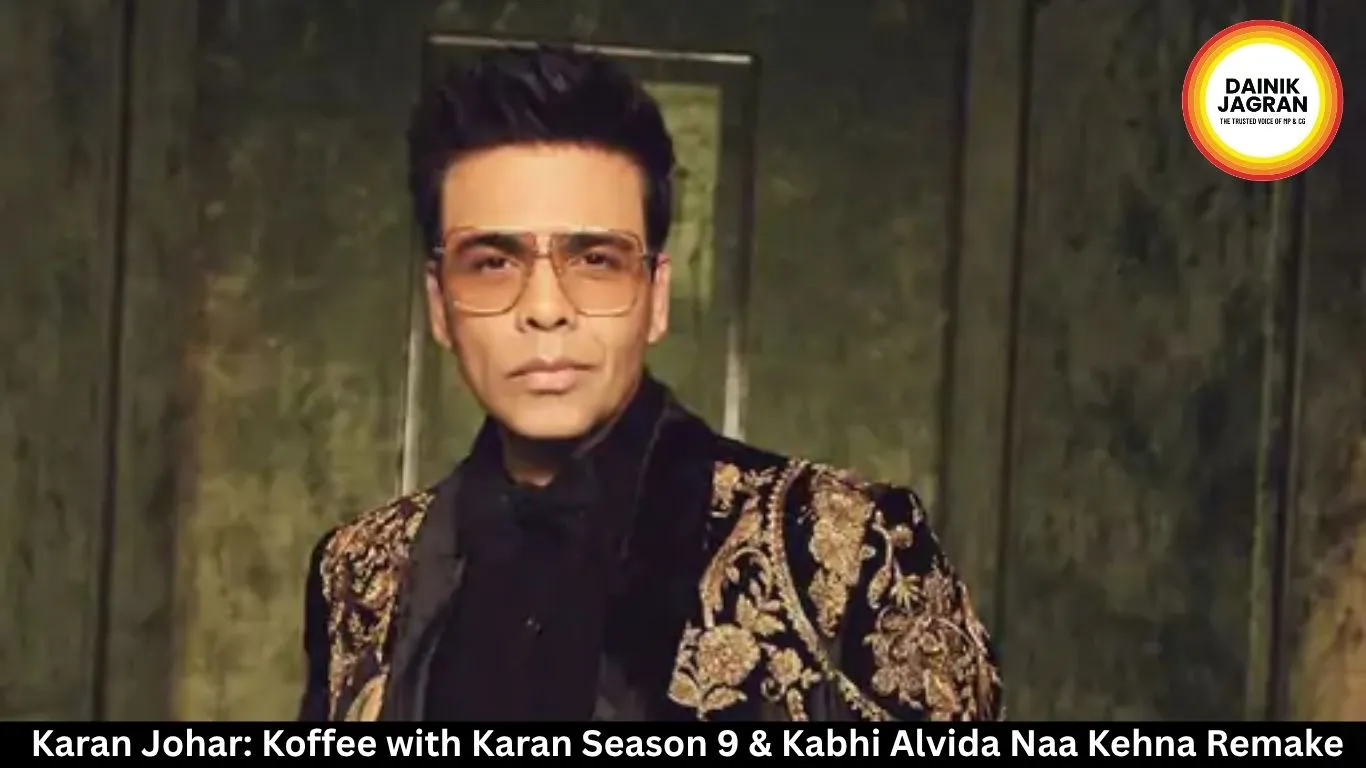
Karan Johar: Koffee with Karan Season 9 & Kabhi Alvida Naa Kehna Remake
Digital Desk
Karan Johar confirms Koffee with Karan Season 9 returns this Diwali while Kabhi Alvida Naa Kehna gets a Gen Z web series remake. Details inside.
Karan Johar Bets Big: Koffee with Karan Returns This Diwali, Kabhi Alvida Naa Kehna Gets Gen Z Remake
Filmmaker reimagines 2006 drama as web series while celebrity chat show prepares for ninth season comeback
Filmmaker Karan Johar has fired up anticipation in the entertainment circuit with two simultaneous announcements. The director confirmed that his talk show Koffee with Karan will launch Season 9 during the Diwali season, while his 2006 relationship drama Kabhi Alvida Naa Kehna is being reimagined as a web series with younger talent replacing the original star-studded cast.
The dual move reflects Johar's ongoing strategy to straddle both traditional and digital entertainment formats, keeping his production house relevant across platforms and generational audiences.
The Web Series Reimagining
Kabhi Alvida Naa Kehna—originally anchored by Shah Rukh Khan and Rani Mukerji—will see a complete cast overhaul when it transitions to streaming. Johar's intention is to introduce the film's complex narrative of infidelity and emotional entanglement to Gen Z viewers through actors who reflect their own age group.
The 2006 original was bold for its time. Set in New York, it broke ground by exploring extramarital emotions in mainstream Bollywood, a rarity when emotional storytelling remained largely confined to the traditional hero-heroine formula. The film's non-linear approach to love and marriage—coupled with its refusal to offer simplistic resolution—divided audiences but earned critical appreciation over the years.
The web format allows for deeper character exploration. A longer narrative arc typical of series television could expand on the psychological dimensions that Johar's original two-hour runtime could only hint at. Whether the updated version will mirror contemporary dating culture or maintain thematic fidelity to the source material remains unclear.
Controversy That Defined the Original
When Kabhi Alvida Naa Kehna first released, it sparked significant backlash. Critics argued the film romanticized infidelity rather than condemning it, making audiences uncomfortable with its morally grey characters. Some viewers reportedly left theatres midway, unprepared for such uncompromising emotional weight.
The decision to set the story in New York, away from India's domestic sphere, was itself provocative. Urban cosmopolitanism was a rarity in Bollywood narratives at that time, and the film's portrayal of modern relationships challenged conservative expectations around marriage and fidelity.
Over time, the film has been reassessed as prescient—anticipating conversations about emotional complexity that mainstream cinema would only normalize much later.
Koffee with Karan's Ninth Season Approaches
The announcement of Season 9 marks yet another iteration of the talk show that debuted in 2004. The series has evolved from early controversies—particularly the 2016 episode featuring cricketers Hardik Pandya and KL Rahul, whose comments about women triggered BCCI action and widespread backlash—into a carefully calibrated entertainment vehicle.
The show's rapid-fire segment remains its standout feature, designed to catch celebrities off-guard and extract candid responses. Over the years, moments from the couch have become watershed cultural events: Kangana Ranaut's "flagbearer of nepotism" remark about Johar himself sparked years of industry debate, while lighter moments—like Alia Bhatt's geography mishap—went viral as memes.
Why the Show Endures
Koffee with Karan has survived multiple seasons and format changes because its core appeal remains intact. Johar's interviewing style balances genuine curiosity with sharp humour, creating an environment where celebrities often reveal more than they intend. The show functions as an unofficial barometer of Bollywood relationships, feuds, and alliances.
Recent seasons have seen the format adapt to streaming platforms, adjusting episode length and celebrity combinations to maintain discoverability. The Diwali timing—a major festive viewing window—suggests the producers are banking on consolidated family and group viewing during the holiday break.
Looking Ahead
For Johar, these parallel ventures represent different strategic bets. The web series targets global streaming audiences and the younger demographic that now dominates OTT consumption, while Koffee with Karan remains positioned as event television, dropping during peak seasons to maximise cultural conversation.
Whether the Gen Z version of Kabhi Alvida Naa Kehna will capture the original's nuanced examination of emotional infidelity, or whether it will pivot toward contemporary relationship anxieties, will define its reception. The talk show, meanwhile, enters its ninth season with declining novelty but accumulated cultural weight—a recurring fixture that viewers return to almost ritualistically during festivals.
--------
๐จ Beat the News Rush โ Join Now!
Get breaking alerts, hot exclusives, and game-changing stories instantly on your phone. No delays, no fluff โ just the edge you need. โก
Tap to join:ย
๐ข WhatsApp Channel: Dainik Jagran MP CG
Crave more?
๐ Facebook: Dainik Jagran MP CG English
๐ ง Twitter (X): Dainik Jagran MP CG
๐ Instagram: Dainik Jagran MP CG
Share the fire โ keep your crew ahead! ๐๏ธ๐ฅ
Karan Johar: Koffee with Karan Season 9 & Kabhi Alvida Naa Kehna Remake
Digital Desk
Karan Johar Bets Big: Koffee with Karan Returns This Diwali, Kabhi Alvida Naa Kehna Gets Gen Z Remake
Filmmaker reimagines 2006 drama as web series while celebrity chat show prepares for ninth season comeback
Filmmaker Karan Johar has fired up anticipation in the entertainment circuit with two simultaneous announcements. The director confirmed that his talk show Koffee with Karan will launch Season 9 during the Diwali season, while his 2006 relationship drama Kabhi Alvida Naa Kehna is being reimagined as a web series with younger talent replacing the original star-studded cast.
The dual move reflects Johar's ongoing strategy to straddle both traditional and digital entertainment formats, keeping his production house relevant across platforms and generational audiences.
The Web Series Reimagining
Kabhi Alvida Naa Kehna—originally anchored by Shah Rukh Khan and Rani Mukerji—will see a complete cast overhaul when it transitions to streaming. Johar's intention is to introduce the film's complex narrative of infidelity and emotional entanglement to Gen Z viewers through actors who reflect their own age group.
The 2006 original was bold for its time. Set in New York, it broke ground by exploring extramarital emotions in mainstream Bollywood, a rarity when emotional storytelling remained largely confined to the traditional hero-heroine formula. The film's non-linear approach to love and marriage—coupled with its refusal to offer simplistic resolution—divided audiences but earned critical appreciation over the years.
The web format allows for deeper character exploration. A longer narrative arc typical of series television could expand on the psychological dimensions that Johar's original two-hour runtime could only hint at. Whether the updated version will mirror contemporary dating culture or maintain thematic fidelity to the source material remains unclear.
Controversy That Defined the Original
When Kabhi Alvida Naa Kehna first released, it sparked significant backlash. Critics argued the film romanticized infidelity rather than condemning it, making audiences uncomfortable with its morally grey characters. Some viewers reportedly left theatres midway, unprepared for such uncompromising emotional weight.
The decision to set the story in New York, away from India's domestic sphere, was itself provocative. Urban cosmopolitanism was a rarity in Bollywood narratives at that time, and the film's portrayal of modern relationships challenged conservative expectations around marriage and fidelity.
Over time, the film has been reassessed as prescient—anticipating conversations about emotional complexity that mainstream cinema would only normalize much later.
Koffee with Karan's Ninth Season Approaches
The announcement of Season 9 marks yet another iteration of the talk show that debuted in 2004. The series has evolved from early controversies—particularly the 2016 episode featuring cricketers Hardik Pandya and KL Rahul, whose comments about women triggered BCCI action and widespread backlash—into a carefully calibrated entertainment vehicle.
The show's rapid-fire segment remains its standout feature, designed to catch celebrities off-guard and extract candid responses. Over the years, moments from the couch have become watershed cultural events: Kangana Ranaut's "flagbearer of nepotism" remark about Johar himself sparked years of industry debate, while lighter moments—like Alia Bhatt's geography mishap—went viral as memes.
Why the Show Endures
Koffee with Karan has survived multiple seasons and format changes because its core appeal remains intact. Johar's interviewing style balances genuine curiosity with sharp humour, creating an environment where celebrities often reveal more than they intend. The show functions as an unofficial barometer of Bollywood relationships, feuds, and alliances.
Recent seasons have seen the format adapt to streaming platforms, adjusting episode length and celebrity combinations to maintain discoverability. The Diwali timing—a major festive viewing window—suggests the producers are banking on consolidated family and group viewing during the holiday break.
Looking Ahead
For Johar, these parallel ventures represent different strategic bets. The web series targets global streaming audiences and the younger demographic that now dominates OTT consumption, while Koffee with Karan remains positioned as event television, dropping during peak seasons to maximise cultural conversation.
Whether the Gen Z version of Kabhi Alvida Naa Kehna will capture the original's nuanced examination of emotional infidelity, or whether it will pivot toward contemporary relationship anxieties, will define its reception. The talk show, meanwhile, enters its ninth season with declining novelty but accumulated cultural weight—a recurring fixture that viewers return to almost ritualistically during festivals.