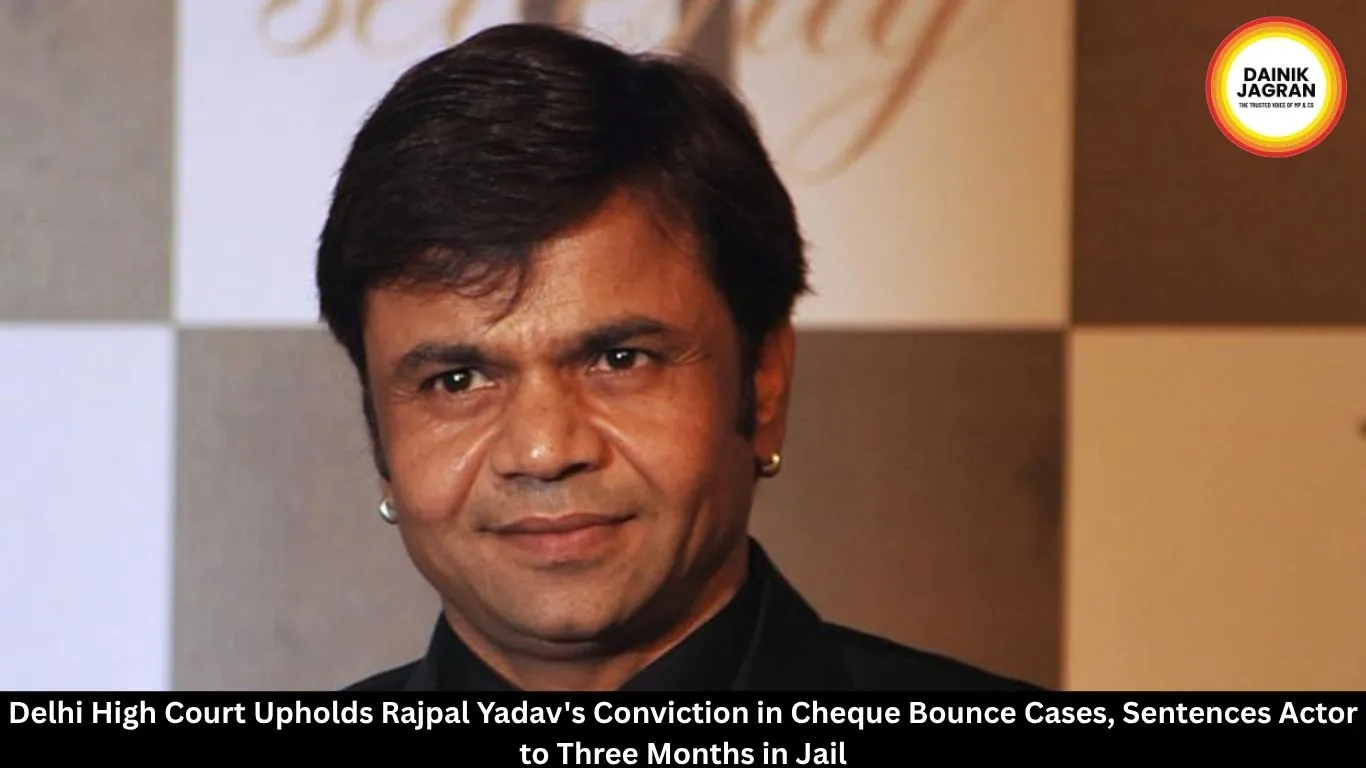
Delhi High Court Upholds Rajpal Yadav Conviction, Sentences Actor to Three Months in Jail
Digital Desk
The Delhi High Court has upheld Bollywood actor Rajpal Yadav's conviction in seven cheque bounce cases, sentencing him to three months' simple imprisonment with concurrent jail terms.
The Delhi High Court on Friday upheld Bollywood actor Rajpal Yadav's conviction in seven cheque bounce cases and sentenced him to three months' simple imprisonment. The court directed that all seven sentences would run concurrently, meaning the actor will serve a total of three months in jail.
Justice Swarana Kanta Sharma dismissed the revision petitions filed by Yadav and other accused challenging the trial court's verdict, observing that the actor had repeatedly failed to honour settlement commitments despite being granted multiple opportunities by the court.
Court Rejects Plea for Relief
The High Court noted that it had earlier extended relief to Yadav after he expressed willingness to settle the dispute amicably. However, despite several extensions and assurances given before the court, the promised payments were not made within the stipulated timelines.
According to the judgment, the court found no merit in the explanations offered for the repeated delays in complying with settlement terms. It held that the trial court had correctly appreciated the evidence and there was no reason to interfere with the conviction under the Negotiable Instruments Act.
Compensation Directions Issued
Apart from the jail sentence, the High Court directed Rajpal Yadav to pay compensation to the complainant in all seven cheque dishonour cases. The court observed that the compensation had been calculated after taking into account the amounts already deposited by the actor during earlier proceedings.
The judgment also clarified that the payments already made by Yadav would be adjusted while determining his remaining financial liability.
Case Linked to Film Financing
The legal dispute dates back to 2010, when Rajpal Yadav borrowed approximately ₹5 crore from Murli Projects Pvt. Ltd. to finance his directorial debut film, Ata Pata Laapata. The film failed commercially, leaving the actor unable to repay the loan as agreed.
Over the years, interest, penalties and delayed payments reportedly increased the outstanding liability to around ₹9 crore. Cheques issued towards repayment were dishonoured due to insufficient funds, resulting in multiple criminal complaints under the Negotiable Instruments Act.
Previous Opportunities Not Utilised
Court records show that Yadav had earlier secured interim relief after assuring the High Court that he would settle the dispute. The matter was even referred for mediation, and several deadlines were granted to facilitate an amicable resolution.
However, the High Court observed that despite repeated opportunities, the settlement could not be completed. The court also rejected arguments citing technical issues in payment instruments, stating that such explanations could not justify continued non-compliance with judicial directions.
Legal Battle Continues
The verdict marks the latest development in a legal battle that has continued for several years. The High Court's decision affirms the trial court's findings while reducing the effective imprisonment to three months, with all sentences running simultaneously.
The ruling also reinforces the legal principle that repeated failure to honour court-approved settlement commitments can attract criminal consequences under the provisions governing cheque dishonour cases.
--------
🚨 Beat the News Rush – Join Now!
Get breaking alerts, hot exclusives, and game-changing stories instantly on your phone. No delays, no fluff – just the edge you need. ⚡
Tap to join:
🟢 WhatsApp Channel: Dainik Jagran MP CG
Crave more?
🅕 Facebook: Dainik Jagran MP CG English
🅧 Twitter (X): Dainik Jagran MP CG
🅘 Instagram: Dainik Jagran MP CG
Share the fire – keep your crew ahead! 🗞️🔥
Delhi High Court Upholds Rajpal Yadav Conviction, Sentences Actor to Three Months in Jail
Digital Desk
The Delhi High Court on Friday upheld Bollywood actor Rajpal Yadav's conviction in seven cheque bounce cases and sentenced him to three months' simple imprisonment. The court directed that all seven sentences would run concurrently, meaning the actor will serve a total of three months in jail.
Justice Swarana Kanta Sharma dismissed the revision petitions filed by Yadav and other accused challenging the trial court's verdict, observing that the actor had repeatedly failed to honour settlement commitments despite being granted multiple opportunities by the court.
Court Rejects Plea for Relief
The High Court noted that it had earlier extended relief to Yadav after he expressed willingness to settle the dispute amicably. However, despite several extensions and assurances given before the court, the promised payments were not made within the stipulated timelines.
According to the judgment, the court found no merit in the explanations offered for the repeated delays in complying with settlement terms. It held that the trial court had correctly appreciated the evidence and there was no reason to interfere with the conviction under the Negotiable Instruments Act.
Compensation Directions Issued
Apart from the jail sentence, the High Court directed Rajpal Yadav to pay compensation to the complainant in all seven cheque dishonour cases. The court observed that the compensation had been calculated after taking into account the amounts already deposited by the actor during earlier proceedings.
The judgment also clarified that the payments already made by Yadav would be adjusted while determining his remaining financial liability.
Case Linked to Film Financing
The legal dispute dates back to 2010, when Rajpal Yadav borrowed approximately ₹5 crore from Murli Projects Pvt. Ltd. to finance his directorial debut film, Ata Pata Laapata. The film failed commercially, leaving the actor unable to repay the loan as agreed.
Over the years, interest, penalties and delayed payments reportedly increased the outstanding liability to around ₹9 crore. Cheques issued towards repayment were dishonoured due to insufficient funds, resulting in multiple criminal complaints under the Negotiable Instruments Act.
Previous Opportunities Not Utilised
Court records show that Yadav had earlier secured interim relief after assuring the High Court that he would settle the dispute. The matter was even referred for mediation, and several deadlines were granted to facilitate an amicable resolution.
However, the High Court observed that despite repeated opportunities, the settlement could not be completed. The court also rejected arguments citing technical issues in payment instruments, stating that such explanations could not justify continued non-compliance with judicial directions.
Legal Battle Continues
The verdict marks the latest development in a legal battle that has continued for several years. The High Court's decision affirms the trial court's findings while reducing the effective imprisonment to three months, with all sentences running simultaneously.
The ruling also reinforces the legal principle that repeated failure to honour court-approved settlement commitments can attract criminal consequences under the provisions governing cheque dishonour cases.