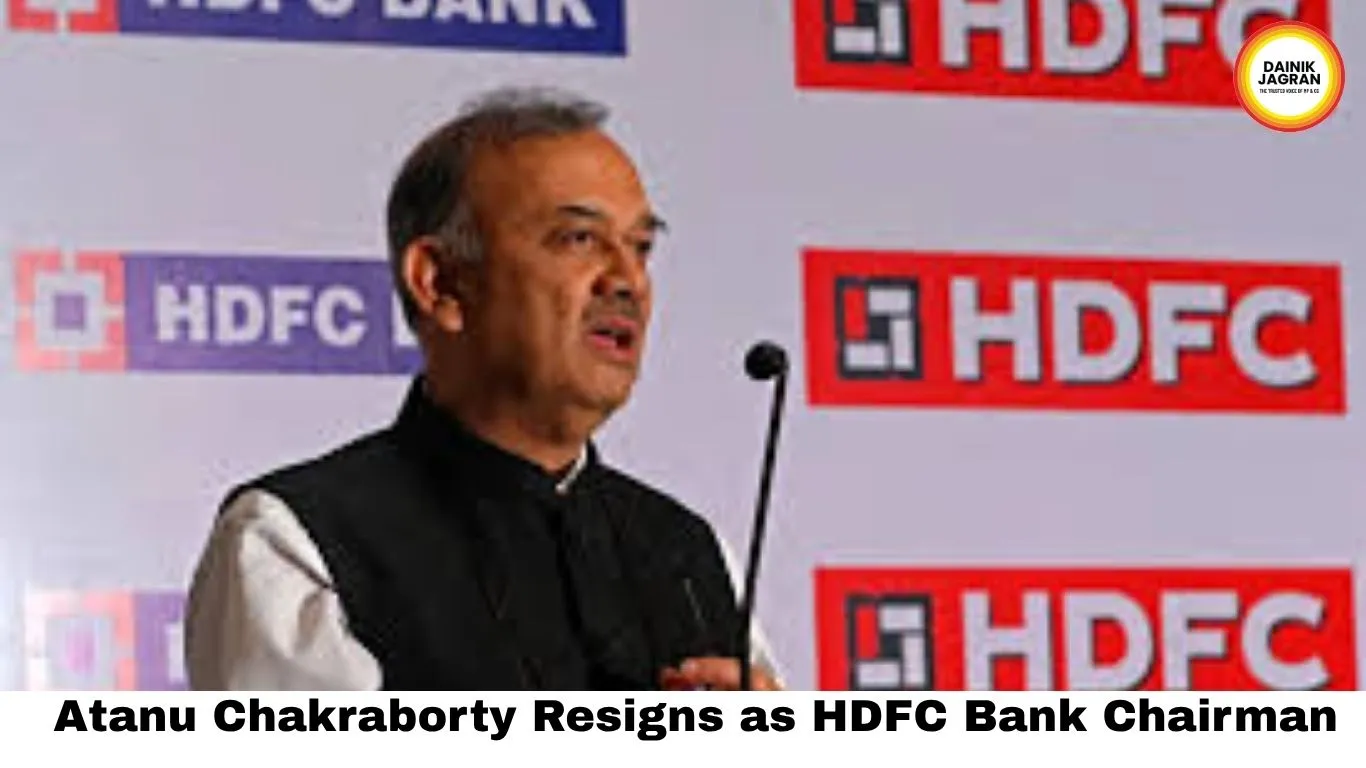
Atanu Chakraborty Resigns as HDFC Bank Chairman — Full Story 2026

Digital Desk

 Atanu Chakraborty Resigns as HDFC Bank Chairman — Full Story 2026

HDFC Bank chairman Atanu Chakraborty resigns citing ethical concerns — ₹1 lakh crore wiped off markets, RBI intervenes, Keki Mistry appointed interim chairman. Full investigation.

'Not in Congruence With My Values': HDFC Bank Chairman Atanu Chakraborty's Shock Resignation Wipes ₹1 Lakh Crore Off Markets — The Full Story

Chakraborty's one-line ethical bombshell letter dated March 17 triggered an unprecedented mid-term exit, a 9% single-day stock crash, RBI intervention, and questions about HDFC Bank's governance that its board has been unable to fully answer — even five days later.


The Letter That Shook India's Largest Private Bank

On the evening of March 18, 2026, HDFC Bank filed a stock exchange disclosure that no one in India's banking sector expected. Atanu Chakraborty — part-time Chairman and Independent Director of India's second-largest bank, a 1985-batch IAS officer from the Gujarat cadre who had oversaw the bank's landmark ₹40 billion merger with HDFC Ltd — had resigned. With immediate effect. His resignation letter, dated March 17 and received by the bank on March 18 at 3:17 PM IST, gave a reason that was simultaneously definitive and opaque.

"Certain happenings and practices within the bank, that I have observed over the last two years, are not in congruence with my personal values and ethics. This is the basis of my aforementioned decision. I confirm that there are no other material reasons for my resignation other than those stated above."

That was it. Twelve months before his extended term was due to end — in May 2027 — the chairman of a bank with a balance sheet exceeding ₹40.89 lakh crore and over 120 million customers walked out, citing ethics, without specifying what those ethics concerns were. India's banking ecosystem has not stopped talking about it since.


The Market's Immediate Verdict — ₹1 Lakh Crore Gone

The stock market delivered its verdict with brutal efficiency on March 19. HDFC Bank shares opened at ₹770 — down sharply from the previous close — and hit a 52-week low shortly after trading began. By the end of the session, the stock had crashed 5.11 percent on the BSE, later extending losses to approximately 9 percent at intraday depth. HDFC Bank's American Depository Receipts in New York closed 7.5 percent lower. In aggregate, the resignation wiped approximately ₹1 lakh crore — $7 billion — off HDFC Bank's market capitalisation in a single session.

The fall was steeper and more sustained than the broader market decline already underway from Iran war pressures — confirming that investors were reacting specifically to the governance signal embedded in Chakraborty's letter, not merely to general market headwinds.


Who Is Atanu Chakraborty — And Why His Exit Matters

Chakraborty is not a figurehead. A 1985-batch IAS officer of the Gujarat cadre, he retired in April 2020 as Secretary of the Department of Economic Affairs — one of the most consequential roles in India's financial bureaucracy. Before that, he served as Secretary of the Department of Investment and Public Asset Management — the body that oversees government disinvestments. He joined HDFC Bank's board in May 2021 and was reappointed for a further three years in 2024, with his term extended to May 2027.

His tenure saw one of the most significant corporate events in Indian banking history — the reverse merger of HDFC Ltd with HDFC Bank, which became effective on July 1, 2023, creating a combined balance sheet exceeding ₹18 lakh crore at the time of merger. In his resignation letter, Chakraborty acknowledged this milestone while simultaneously signalling his discomfort with what the bank had become since: "The benefits of merger are yet to fully fructify."

A man of his standing, with his institutional knowledge and nothing financially to gain from a noisy exit, does not use the language of ethical non-congruence lightly. That is precisely why the market reacted the way it did.


The Board's Response — Bafflement, Then Damage Control

The HDFC Bank board's response to the resignation was a mix of genuine confusion and rapid damage control. CEO and Managing Director Sashidhar Jagdishan told analysts and journalists in an early morning conference call on March 19: "We are not sure what triggered the resignation." He confirmed that every board member — including two wholetime and two independent directors — had tried personally to persuade Chakraborty to reconsider, elaborate on his concerns, or at minimum moderate the language in his letter. The board had also engaged the RBI directly, with four senior members briefing the regulator around 7 PM on March 18.

Chakraborty declined to elaborate. He declined to soften the language. He resigned.

Interim Chairman Keki Mistry — the former Vice Chairman and CEO of HDFC Ltd before its merger — told analysts: "Based on our discussions, there were no specific operational or other issues that have been highlighted." He dismissed speculation about an ongoing investigation into the bank's Dubai operations, stating the matter was closed and no regulatory action had been flagged. He said he would not have accepted the interim chairman role if he had any doubts about the governance issues raised.

But the critical question — what specifically did Chakraborty observe over two years that conflicted with his values? — remains unanswered.


The Dubai Investigation Angle

One theory circulating in banking circles is that Chakraborty's resignation is connected to an ongoing regulatory examination of HDFC Bank's Dubai operations. The bank's interim chairman specifically addressed and dismissed this angle — but the very fact that he felt compelled to do so publicly suggests it is being taken seriously by investors and analysts. No specific details about the nature or status of any Dubai-related regulatory matter have been officially confirmed.


What RBI Said — And What It Didn't

The Reserve Bank of India intervened publicly in an unusual way — issuing a statement confirming that HDFC Bank has "sound financials" and is run by a "professional board and competent management." The RBI approved the bank's requested transition arrangement, appointing Keki Mistry as interim part-time chairman for three months from March 19. The regulator said it would continue to engage with the board and management.

The RBI's public statement was itself a signal — central banks rarely issue reassurance statements unless investor confidence is at a level of deterioration that requires official intervention. The fact that India's banking regulator felt compelled to publicly vouch for HDFC Bank within 24 hours of the chairman's exit tells you everything about how seriously the resignation was taken at the highest levels of Indian financial governance.


Who Is Keki Mistry — The Man Holding the Chair for 90 Days

Keki Mistry, appointed interim part-time chairman for three months, is a familiar and respected figure in Indian housing finance. He spent decades at HDFC Ltd — the mortgage company that merged with HDFC Bank — serving as its Vice Chairman and CEO before the merger. He joined the HDFC Bank board as a non-executive, non-independent director after the merger. His appointment is designed to provide institutional continuity and market confidence during a search for a permanent chairman — a process that, under RBI guidelines, requires regulatory approval for senior bank appointments.


The Question That Hangs Over Everything

Five days after the resignation, the question that Chakraborty's letter raised has not been answered. What did he see over two years that conflicted with his ethics? A governance expert quoted in market analysis noted: "The absence of detail keeps the resignation in the realm of speculation." An independent director's resignation citing ethics without specifics is — in corporate governance terms — among the most damaging possible signals a company can send to its investors. It invites the imagination to fill in gaps that official communication leaves empty.

HDFC Bank's board has argued there is nothing material to disclose. Chakraborty has maintained silence since the letter. The RBI has vouched for the bank's soundness. And the market — which has lost confidence at a level not seen since the bank's post-merger integration struggles — continues to wait for a more complete answer than any of the principals have so far provided.


 

english.dainikjagranmpcg.com
23 Mar 2026 By Jiya.S

Atanu Chakraborty Resigns as HDFC Bank Chairman — Full Story 2026

Digital Desk

'Not in Congruence With My Values': HDFC Bank Chairman Atanu Chakraborty's Shock Resignation Wipes ₹1 Lakh Crore Off Markets — The Full Story

Chakraborty's one-line ethical bombshell letter dated March 17 triggered an unprecedented mid-term exit, a 9% single-day stock crash, RBI intervention, and questions about HDFC Bank's governance that its board has been unable to fully answer — even five days later.


The Letter That Shook India's Largest Private Bank

On the evening of March 18, 2026, HDFC Bank filed a stock exchange disclosure that no one in India's banking sector expected. Atanu Chakraborty — part-time Chairman and Independent Director of India's second-largest bank, a 1985-batch IAS officer from the Gujarat cadre who had oversaw the bank's landmark ₹40 billion merger with HDFC Ltd — had resigned. With immediate effect. His resignation letter, dated March 17 and received by the bank on March 18 at 3:17 PM IST, gave a reason that was simultaneously definitive and opaque.

"Certain happenings and practices within the bank, that I have observed over the last two years, are not in congruence with my personal values and ethics. This is the basis of my aforementioned decision. I confirm that there are no other material reasons for my resignation other than those stated above."

That was it. Twelve months before his extended term was due to end — in May 2027 — the chairman of a bank with a balance sheet exceeding ₹40.89 lakh crore and over 120 million customers walked out, citing ethics, without specifying what those ethics concerns were. India's banking ecosystem has not stopped talking about it since.


The Market's Immediate Verdict — ₹1 Lakh Crore Gone

The stock market delivered its verdict with brutal efficiency on March 19. HDFC Bank shares opened at ₹770 — down sharply from the previous close — and hit a 52-week low shortly after trading began. By the end of the session, the stock had crashed 5.11 percent on the BSE, later extending losses to approximately 9 percent at intraday depth. HDFC Bank's American Depository Receipts in New York closed 7.5 percent lower. In aggregate, the resignation wiped approximately ₹1 lakh crore — $7 billion — off HDFC Bank's market capitalisation in a single session.

The fall was steeper and more sustained than the broader market decline already underway from Iran war pressures — confirming that investors were reacting specifically to the governance signal embedded in Chakraborty's letter, not merely to general market headwinds.


Who Is Atanu Chakraborty — And Why His Exit Matters

Chakraborty is not a figurehead. A 1985-batch IAS officer of the Gujarat cadre, he retired in April 2020 as Secretary of the Department of Economic Affairs — one of the most consequential roles in India's financial bureaucracy. Before that, he served as Secretary of the Department of Investment and Public Asset Management — the body that oversees government disinvestments. He joined HDFC Bank's board in May 2021 and was reappointed for a further three years in 2024, with his term extended to May 2027.

His tenure saw one of the most significant corporate events in Indian banking history — the reverse merger of HDFC Ltd with HDFC Bank, which became effective on July 1, 2023, creating a combined balance sheet exceeding ₹18 lakh crore at the time of merger. In his resignation letter, Chakraborty acknowledged this milestone while simultaneously signalling his discomfort with what the bank had become since: "The benefits of merger are yet to fully fructify."

A man of his standing, with his institutional knowledge and nothing financially to gain from a noisy exit, does not use the language of ethical non-congruence lightly. That is precisely why the market reacted the way it did.


The Board's Response — Bafflement, Then Damage Control

The HDFC Bank board's response to the resignation was a mix of genuine confusion and rapid damage control. CEO and Managing Director Sashidhar Jagdishan told analysts and journalists in an early morning conference call on March 19: "We are not sure what triggered the resignation." He confirmed that every board member — including two wholetime and two independent directors — had tried personally to persuade Chakraborty to reconsider, elaborate on his concerns, or at minimum moderate the language in his letter. The board had also engaged the RBI directly, with four senior members briefing the regulator around 7 PM on March 18.

Chakraborty declined to elaborate. He declined to soften the language. He resigned.

Interim Chairman Keki Mistry — the former Vice Chairman and CEO of HDFC Ltd before its merger — told analysts: "Based on our discussions, there were no specific operational or other issues that have been highlighted." He dismissed speculation about an ongoing investigation into the bank's Dubai operations, stating the matter was closed and no regulatory action had been flagged. He said he would not have accepted the interim chairman role if he had any doubts about the governance issues raised.

But the critical question — what specifically did Chakraborty observe over two years that conflicted with his values? — remains unanswered.


The Dubai Investigation Angle

One theory circulating in banking circles is that Chakraborty's resignation is connected to an ongoing regulatory examination of HDFC Bank's Dubai operations. The bank's interim chairman specifically addressed and dismissed this angle — but the very fact that he felt compelled to do so publicly suggests it is being taken seriously by investors and analysts. No specific details about the nature or status of any Dubai-related regulatory matter have been officially confirmed.


What RBI Said — And What It Didn't

The Reserve Bank of India intervened publicly in an unusual way — issuing a statement confirming that HDFC Bank has "sound financials" and is run by a "professional board and competent management." The RBI approved the bank's requested transition arrangement, appointing Keki Mistry as interim part-time chairman for three months from March 19. The regulator said it would continue to engage with the board and management.

The RBI's public statement was itself a signal — central banks rarely issue reassurance statements unless investor confidence is at a level of deterioration that requires official intervention. The fact that India's banking regulator felt compelled to publicly vouch for HDFC Bank within 24 hours of the chairman's exit tells you everything about how seriously the resignation was taken at the highest levels of Indian financial governance.


Who Is Keki Mistry — The Man Holding the Chair for 90 Days

Keki Mistry, appointed interim part-time chairman for three months, is a familiar and respected figure in Indian housing finance. He spent decades at HDFC Ltd — the mortgage company that merged with HDFC Bank — serving as its Vice Chairman and CEO before the merger. He joined the HDFC Bank board as a non-executive, non-independent director after the merger. His appointment is designed to provide institutional continuity and market confidence during a search for a permanent chairman — a process that, under RBI guidelines, requires regulatory approval for senior bank appointments.


The Question That Hangs Over Everything

Five days after the resignation, the question that Chakraborty's letter raised has not been answered. What did he see over two years that conflicted with his ethics? A governance expert quoted in market analysis noted: "The absence of detail keeps the resignation in the realm of speculation." An independent director's resignation citing ethics without specifics is — in corporate governance terms — among the most damaging possible signals a company can send to its investors. It invites the imagination to fill in gaps that official communication leaves empty.

HDFC Bank's board has argued there is nothing material to disclose. Chakraborty has maintained silence since the letter. The RBI has vouched for the bank's soundness. And the market — which has lost confidence at a level not seen since the bank's post-merger integration struggles — continues to wait for a more complete answer than any of the principals have so far provided.

 

https://english.dainikjagranmpcg.com/business/-atanu-chakraborty-resigns-as-hdfc-bank-chairman-%E2%80%94-full/article-15866

Related Posts

Advertisement

Latest News