


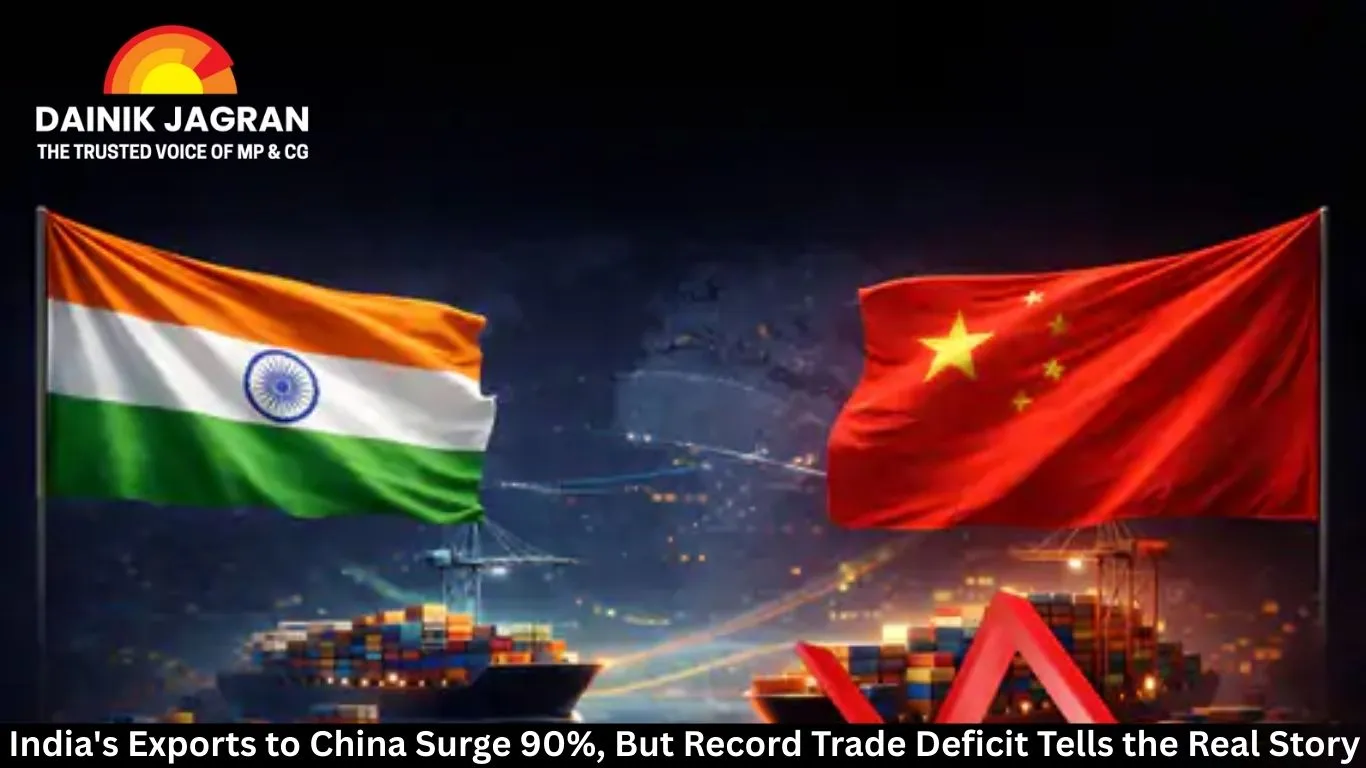
India's Exports to China Surge 90%, But Record Trade Deficit Tells the Real Story
Digital Desk
The recent export boom, driven by a volatile mix of petroleum products and electronics, is not broad-based and does little to offset India's overwhelming dependence on Chinese machinery, electronics, and chemicals.
The Narrow Drivers of the Export Spike
The headline growth is concentrated in just a few products, rather than signaling a diversified expansion of India's export basket to China.
Naphtha Dominance: The petrochemical feedstock was the largest contributor, with exports soaring 512% in October and 172% over the April-October period to $1.4 billion. This reflects specific Chinese demand rather than a strategic export success.
Peculiar Electronics Boom: Exports of printed circuit boards (PCBs) saw an astronomical 8,577% year-on-year jump in October. Mobile phone component exports also grew by 82% to $362 million—an unusual trend given India is a major importer of these same items from China.
In contrast, traditional exports like iron ore fell by 30% from April to October, and shrimp shipments showed only modest growth. Analysts at the Global Trade Research Initiative (GTRI) warn this "uneven pattern" shows India's key exports rise or fall with Chinese demand and policy, not from stable market access.
Deep-Seated Import Dependence
While exports are volatile, India's imports from China are massive, concentrated, and structurally embedded. Nearly 80% of imports fall into just four categories: electronics, machinery, organic chemicals, and plastics.
Electronics ($38 billion Jan-Oct 2025): Includes critical components like mobile phone parts ($8.6B), integrated circuits ($6.2B), and solar cells.
Machinery ($25.9 billion): Essential for power and industrial projects, including $2.1 billion worth of transformers alone.
Critical Inputs: The import bill includes pharmaceuticals (like $1.7B in antibiotics), plastics, and specialty steel.
This reliance is difficult to substitute quickly and feeds directly into India's own manufacturing and export sectors.
A Widening Chasm and Data Discrepancies
The fundamental imbalance is stark. While exports have struggled to regain past highs, imports have climbed steadily, pushing the trade deficit from $64.7 billion in 2021 to a projected $106 billion in 2025.
Intriguingly, Chinese customs data suggests an even wider deficit of $115.2 billion. Normally, a country's reported import values are higher than its trading partner's reported export values due to insurance and freight costs.
The fact that India reports lower imports from China than China claims to export is unusual. GTRI founder Ajay Srivastava notes this "may point to under-invoicing of imports to reduce customs duties—an issue that warrants investigation".
Expert Call for a Strategic Overhaul
Experts agree that short-term spikes will not rebalance the relationship. The solution lies in building competitive scale and securing better market access in China for India's strengths, like pharmaceuticals and agricultural products.
"Without a sustained strategy to expand competitive manufacturing, reduce import dependence in key sectors, and strengthen trade monitoring, short-term export spikes will do little to alter the fundamentally imbalanced nature of India–China trade," concludes the GTRI report.
The path forward requires moving beyond reacting to Chinese demand and toward creating a stable, diversified export strategy.




.jpg)




