


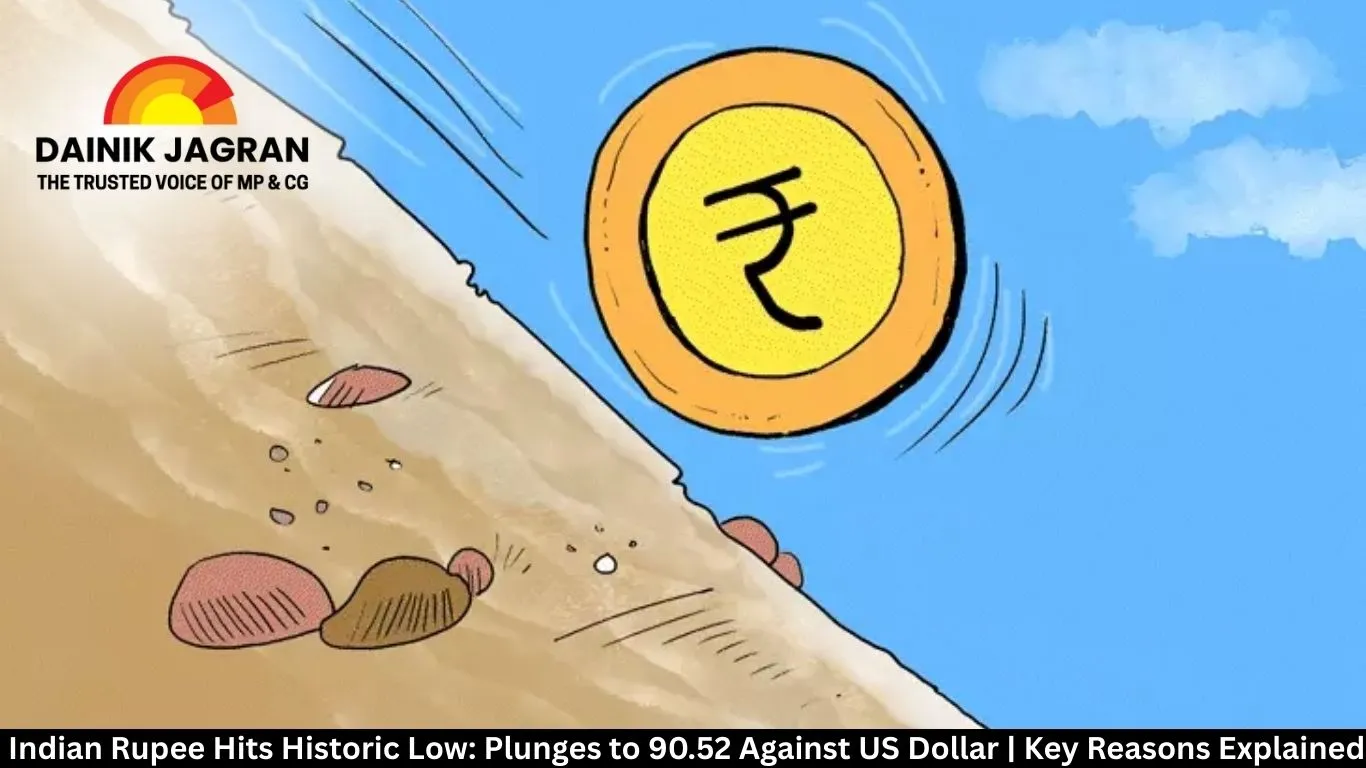
Indian Rupee Hits Historic Low: Plunges to 90.52 Against US Dollar | Key Reasons Explained
Digital Desk
Rupee Crashes to Unprecedented 90.52 Against US Dollar; Down 5.5% in 2025
The Indian rupee touched a devastating, all-time low against the US dollar on Friday, December 12, 2025, signaling sustained pressure on the domestic currency. As per reports, the rupee fell by 20 paise to close at a historic low of 90.52 per US dollar.
This collapse marks a sharp decline from the level of 85.70 at the start of the year, representing a depreciation of approximately 5.5% in 2025 alone. Analysts point to relentless foreign fund withdrawals and global trade tensions as the core culprits.
Immediate Impact: Costlier Imports and Education
A weaker rupee directly translates to higher costs for India. Importing essential items like crude oil, electronics, and chemicals will become more expensive, potentially fueling inflation. For Indian students abroad and overseas travelers, the pinch is immediate. With the rupee at 90.52, funding education and living expenses in dollars requires significantly more rupees, stretching family budgets.
Three Key Reasons Behind the Rupee's Fall
Financial experts cite a trio of interconnected factors for this sharp decline:
1. US Trade Tariffs: President Donald Trump's imposition of 50% tariffs on Indian imports is a major blow. This policy is expected to reduce India's GDP growth and widen the fiscal deficit, dampening export prospects and reducing foreign currency inflow.
2. Foreign Investor Flight: Since July 2025, Foreign Institutional Investors (FIIs) have sold over ₹1.03 lakh crore in Indian markets, spooked by US trade policies. This massive sell-off increases demand for dollars as investors repatriate funds, dragging the rupee down.
3. Dollar Stockpiling by Importers: Indian companies, especially in oil and gold, are aggressively buying dollars to hedge against future volatility and the tariff uncertainty, creating persistent demand for the US currency.
Limited RBI Action Accelerates Decline
Unlike past episodes, the Reserve Bank of India's (RBI) intervention to support the rupee has been notably subdued this time. Jatin Trivedi, VP Research Analyst at LKP Securities, stated, "The main reason for the rupee crossing 90 is the lack of concrete news on the India-US trade deal and continuous delays."
Trivedi added that record-high gold and metal prices have inflated India's import bill, while US tariffs have hurt export competitiveness. "RBI's intervention has also been quite limited this time, which accelerated the decline," he explained.
How is a Currency's Value Determined?
The rupee's fall is an example of currency depreciation in a floating exchange rate system. A currency's value is influenced by the demand and supply of foreign reserves (like dollars). If India's dollar reserves decrease relative to demand, the rupee weakens. Conversely, if reserves grow or dollar demand falls, the rupee can strengthen. This system constantly adjusts based on trade, investment flows, and economic policies.
As uncertainty around global trade persists, the rupee's trajectory remains under close watch, with implications for every Indian's wallet.

.jpg)


.jpg)




