India Hosts BRICS Heads of Anti-Drug Agencies Meeting in Guwahati
Digital Desk
India is hosting the BRICS Heads of Anti-Drug Agencies Meeting in Guwahati on July 6-7 to strengthen cooperation against synthetic drugs, narcotics trafficking and transnational organised crime.
India will host the BRICS Heads of Anti-Drug Agencies Meeting in Guwahati, Assam, on July 6 and 7, bringing together senior anti-narcotics officials from BRICS member countries to strengthen international cooperation against the growing threat of drug trafficking and synthetic narcotics.
The two-day meeting, organised by the Narcotics Control Bureau (NCB) under the Ministry of Home Affairs (MHA), aims to enhance institutional collaboration, intelligence sharing and coordinated enforcement among BRICS nations as transnational drug networks become increasingly sophisticated.
According to the Ministry of Home Affairs, the global narcotics landscape has witnessed significant changes in recent years, with the rapid proliferation of synthetic drugs, New Psychoactive Substances (NPS), darknet-enabled trafficking and cryptocurrency-based financial transactions creating new challenges for law enforcement agencies worldwide.
Officials said the meeting will focus on transforming BRICS cooperation from dialogue-oriented engagement to a more structured and action-driven partnership. The discussions are expected to strengthen operational coordination, improve intelligence exchange and promote joint capacity-building initiatives among member countries.
Three major priority areas have been identified for the meeting. These include combating synthetic drugs and precursor chemical diversion, strengthening intelligence sharing and operational coordination, and enhancing institutional cooperation through capacity building and knowledge exchange.
The event is also expected to explore the use of advanced technologies such as data analytics, financial intelligence and modern interdiction tools to detect and disrupt international drug trafficking networks. Delegates will discuss emerging trends in organised crime and strategies to counter cross-border narcotics smuggling more effectively.
Officials believe the Guwahati meeting will reinforce India's commitment to combating drug trafficking while promoting closer cooperation among BRICS countries in addressing evolving narcotics-related threats. The platform is expected to facilitate practical collaboration and coordinated enforcement efforts against transnational criminal organisations involved in the illegal drug trade.
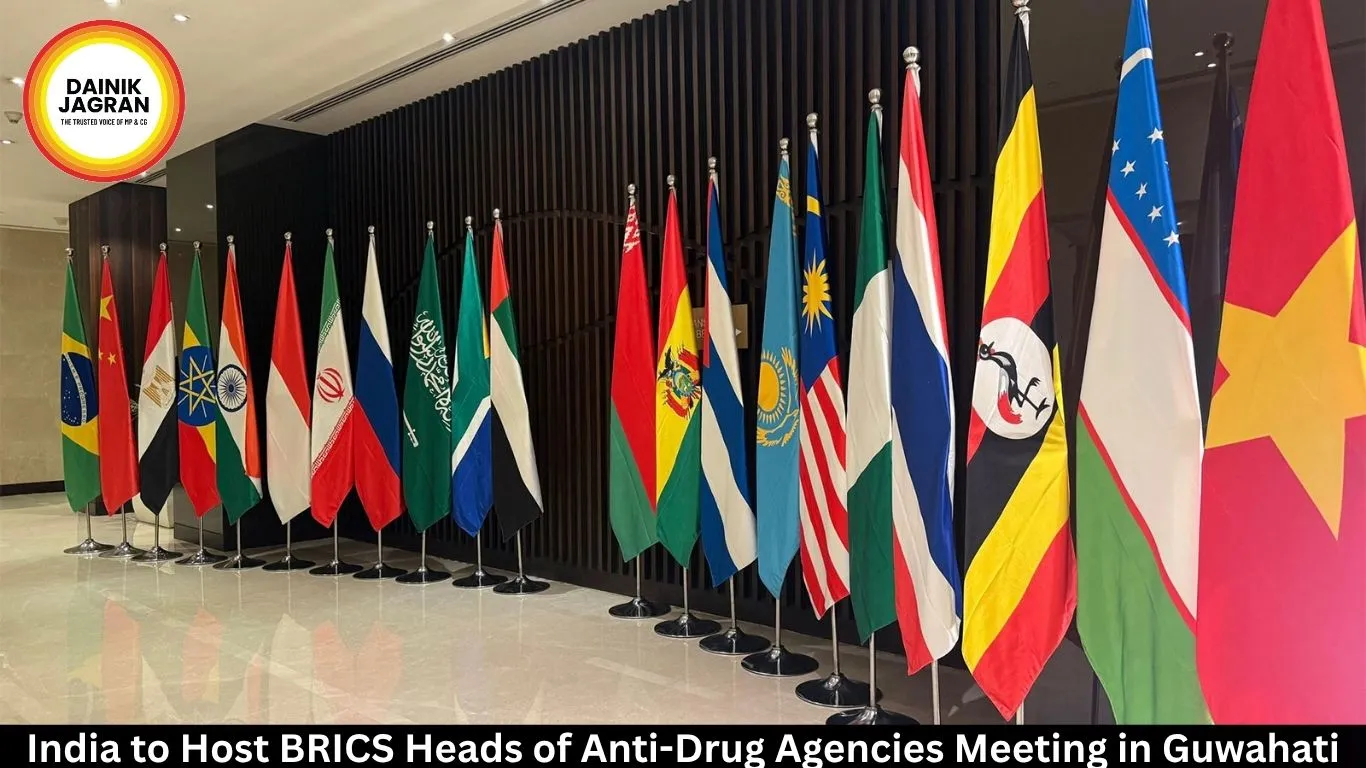
BRICS currently comprises 11 member countries—Brazil, China, Egypt, Ethiopia, India, Indonesia, Iran, Russia, Saudi Arabia, South Africa and the United Arab Emirates. As drug trafficking continues to pose serious public health and security challenges globally, cooperation among these major economies is considered increasingly important.
The outcomes of the meeting are expected to contribute to stronger regional and international mechanisms for tackling illicit narcotics trafficking, improving information exchange and enhancing collective efforts to safeguard public health and security.
--------
π¨ Beat the News Rush β Join Now!
Get breaking alerts, hot exclusives, and game-changing stories instantly on your phone. No delays, no fluff β just the edge you need. β‘
Tap to join:Β
π’ WhatsApp Channel: Dainik Jagran MP CG
Crave more?
π Facebook: Dainik Jagran MP CG English
π § Twitter (X): Dainik Jagran MP CG
π Instagram: Dainik Jagran MP CG
Share the fire β keep your crew ahead! ποΈπ₯
India Hosts BRICS Heads of Anti-Drug Agencies Meeting in Guwahati
Digital Desk
India will host the BRICS Heads of Anti-Drug Agencies Meeting in Guwahati, Assam, on July 6 and 7, bringing together senior anti-narcotics officials from BRICS member countries to strengthen international cooperation against the growing threat of drug trafficking and synthetic narcotics.
The two-day meeting, organised by the Narcotics Control Bureau (NCB) under the Ministry of Home Affairs (MHA), aims to enhance institutional collaboration, intelligence sharing and coordinated enforcement among BRICS nations as transnational drug networks become increasingly sophisticated.
According to the Ministry of Home Affairs, the global narcotics landscape has witnessed significant changes in recent years, with the rapid proliferation of synthetic drugs, New Psychoactive Substances (NPS), darknet-enabled trafficking and cryptocurrency-based financial transactions creating new challenges for law enforcement agencies worldwide.
Officials said the meeting will focus on transforming BRICS cooperation from dialogue-oriented engagement to a more structured and action-driven partnership. The discussions are expected to strengthen operational coordination, improve intelligence exchange and promote joint capacity-building initiatives among member countries.
Three major priority areas have been identified for the meeting. These include combating synthetic drugs and precursor chemical diversion, strengthening intelligence sharing and operational coordination, and enhancing institutional cooperation through capacity building and knowledge exchange.
The event is also expected to explore the use of advanced technologies such as data analytics, financial intelligence and modern interdiction tools to detect and disrupt international drug trafficking networks. Delegates will discuss emerging trends in organised crime and strategies to counter cross-border narcotics smuggling more effectively.
Officials believe the Guwahati meeting will reinforce India's commitment to combating drug trafficking while promoting closer cooperation among BRICS countries in addressing evolving narcotics-related threats. The platform is expected to facilitate practical collaboration and coordinated enforcement efforts against transnational criminal organisations involved in the illegal drug trade.
BRICS currently comprises 11 member countries—Brazil, China, Egypt, Ethiopia, India, Indonesia, Iran, Russia, Saudi Arabia, South Africa and the United Arab Emirates. As drug trafficking continues to pose serious public health and security challenges globally, cooperation among these major economies is considered increasingly important.
The outcomes of the meeting are expected to contribute to stronger regional and international mechanisms for tackling illicit narcotics trafficking, improving information exchange and enhancing collective efforts to safeguard public health and security.