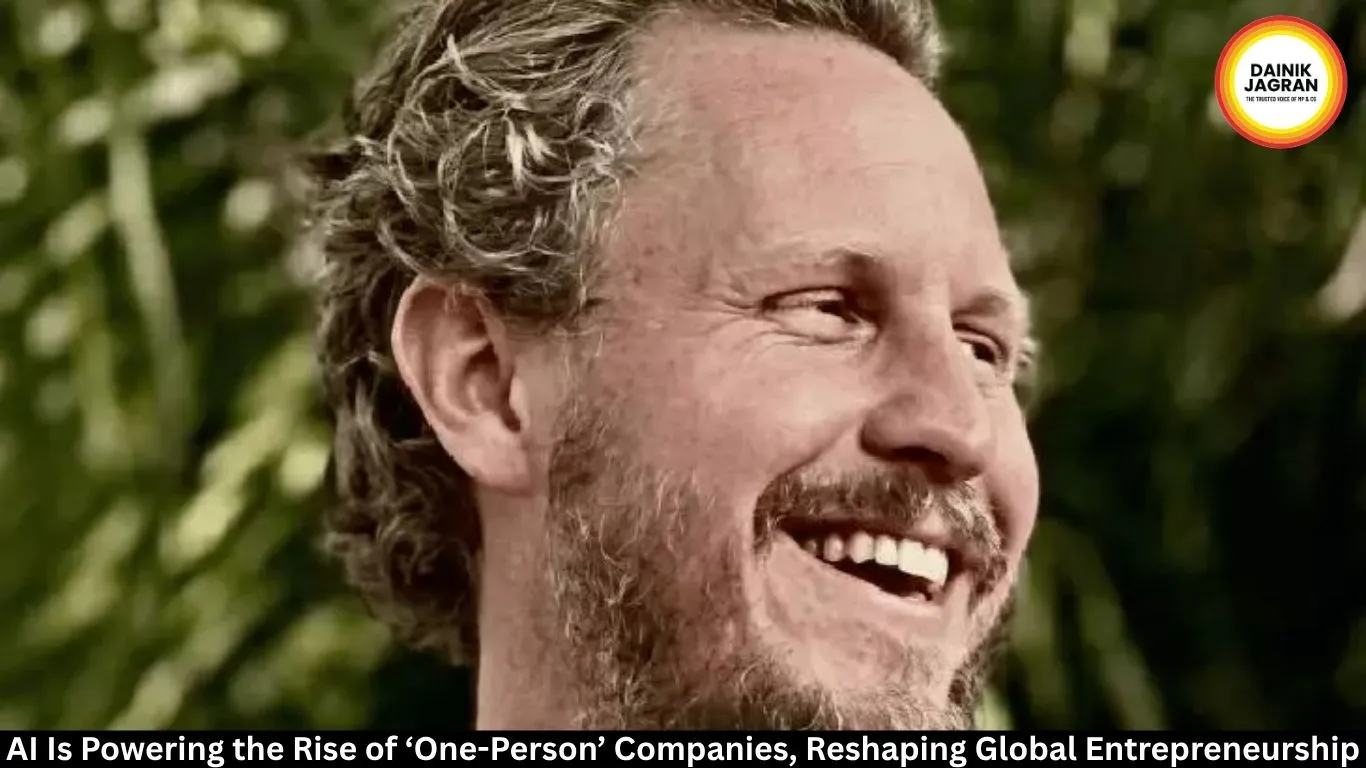
AI Fuels Rise of One-Person Companies as Solo Entrepreneurs Build Multi-Crore Businesses
Digital Desk
AI-powered automation is driving the rapid growth of one-person companies worldwide, enabling solo founders to build multi-crore businesses while reducing hiring needs.
The global startup landscape is undergoing a dramatic transformation as artificial intelligence enables entrepreneurs to build and scale businesses without traditional teams. From software development and customer support to marketing and operations, AI tools are allowing solo founders to run companies that generate millions in revenue, giving rise to a new generation of “one-person companies.”
A recent analysis by payment technology company Stripe suggests that the trend has accelerated sharply between 2023 and 2025. In the United States, the number of one-person businesses generating annual revenue of up to $10 million (around ₹95 crore) has doubled in just two years, while companies exceeding that revenue threshold have tripled.
AI Becoming a ‘Built-In Business Partner’
According to Ernie Tedeschi, artificial intelligence is increasingly functioning as an entrepreneur’s “built-in business partner,” handling tasks that previously required dedicated teams. AI-powered coding assistants, content generation platforms, customer service chatbots and automation tools have significantly reduced the cost and complexity of launching and managing a business.
While these technologies are helping founders grow faster, they are also reducing the need for large workforces in many technology-driven ventures.
Solo Founders Scaling Businesses Rapidly
Several entrepreneurs are already demonstrating how AI is transforming business creation.
US-based entrepreneur Ben Broca launched an AI tools company for entrepreneurs in December 2025. Operating without a single employee, he reportedly acquired more than 10,000 customers within eight months. The company is projected to generate around ₹95 crore in revenue this year and has already secured approximately ₹287 crore in investor funding.
Similarly, entrepreneur Claire Wo developed an affordable documentation application priced at just $1 per month. After running the venture alone for the first nine months, she hired only one engineer. The platform now serves nearly 100,000 users and is expected to earn close to ₹10 crore in profit this year.
Another solo entrepreneur, Troy Johnston, runs a credit card benefits application independently from Orlando, reportedly earning around $3,000 (approximately ₹2.9 lakh) in monthly profits.
Business Formation Rising, Hiring Slowing
The AI-driven shift is also reflected in broader business trends.
According to Bank of America Institute> economist Taylor Bowley, applications to start businesses in the information technology sector increased by around 45% within a year, marking the fastest growth among all industries. However, the proportion of founders planning to hire employees has declined significantly during the same period.
Research by **Harvard Business School> professor Rembrand Koning further found that AI-focused startups employ around 25% fewer people on average compared to similar companies without heavy AI integration.
Opportunities Come With New Risks
Despite the rapid growth, entrepreneurs acknowledge that AI has also intensified competition.
Troy Johnston noted that while AI provides powerful business capabilities, it also makes it easier for competitors to replicate successful products and ideas. The technology has significantly lowered entry barriers, allowing new businesses to emerge much faster than before.
Not every solo venture succeeds, however. Sameer Ahmed, after leaving a two-decade-long career to launch a solo coaching and consulting business, was forced to shut it down within months, highlighting the challenges of sustaining independent ventures despite AI support.
A New Era of Entrepreneurship
Industry observers believe AI is fundamentally changing the economics of starting a business. Entrepreneurs who once needed developers, marketers, designers and customer support teams can now rely on AI-powered platforms to perform many of those functions.
While the rise of one-person companies promises greater innovation, efficiency and lower startup costs, economists also caution that the trend could reshape employment patterns as businesses increasingly prioritize automation over workforce expansion.

--------
🚨 Beat the News Rush – Join Now!
Get breaking alerts, hot exclusives, and game-changing stories instantly on your phone. No delays, no fluff – just the edge you need. ⚡
Tap to join:
🟢 WhatsApp Channel: Dainik Jagran MP CG
Crave more?
🅕 Facebook: Dainik Jagran MP CG English
🅧 Twitter (X): Dainik Jagran MP CG
🅘 Instagram: Dainik Jagran MP CG
Share the fire – keep your crew ahead! 🗞️🔥
AI Fuels Rise of One-Person Companies as Solo Entrepreneurs Build Multi-Crore Businesses
Digital Desk
The global startup landscape is undergoing a dramatic transformation as artificial intelligence enables entrepreneurs to build and scale businesses without traditional teams. From software development and customer support to marketing and operations, AI tools are allowing solo founders to run companies that generate millions in revenue, giving rise to a new generation of “one-person companies.”
A recent analysis by payment technology company Stripe suggests that the trend has accelerated sharply between 2023 and 2025. In the United States, the number of one-person businesses generating annual revenue of up to $10 million (around ₹95 crore) has doubled in just two years, while companies exceeding that revenue threshold have tripled.
AI Becoming a ‘Built-In Business Partner’
According to Ernie Tedeschi, artificial intelligence is increasingly functioning as an entrepreneur’s “built-in business partner,” handling tasks that previously required dedicated teams. AI-powered coding assistants, content generation platforms, customer service chatbots and automation tools have significantly reduced the cost and complexity of launching and managing a business.
While these technologies are helping founders grow faster, they are also reducing the need for large workforces in many technology-driven ventures.
Solo Founders Scaling Businesses Rapidly
Several entrepreneurs are already demonstrating how AI is transforming business creation.
US-based entrepreneur Ben Broca launched an AI tools company for entrepreneurs in December 2025. Operating without a single employee, he reportedly acquired more than 10,000 customers within eight months. The company is projected to generate around ₹95 crore in revenue this year and has already secured approximately ₹287 crore in investor funding.
Similarly, entrepreneur Claire Wo developed an affordable documentation application priced at just $1 per month. After running the venture alone for the first nine months, she hired only one engineer. The platform now serves nearly 100,000 users and is expected to earn close to ₹10 crore in profit this year.
Another solo entrepreneur, Troy Johnston, runs a credit card benefits application independently from Orlando, reportedly earning around $3,000 (approximately ₹2.9 lakh) in monthly profits.
Business Formation Rising, Hiring Slowing
The AI-driven shift is also reflected in broader business trends.
According to Bank of America Institute> economist Taylor Bowley, applications to start businesses in the information technology sector increased by around 45% within a year, marking the fastest growth among all industries. However, the proportion of founders planning to hire employees has declined significantly during the same period.
Research by **Harvard Business School> professor Rembrand Koning further found that AI-focused startups employ around 25% fewer people on average compared to similar companies without heavy AI integration.
Opportunities Come With New Risks
Despite the rapid growth, entrepreneurs acknowledge that AI has also intensified competition.
Troy Johnston noted that while AI provides powerful business capabilities, it also makes it easier for competitors to replicate successful products and ideas. The technology has significantly lowered entry barriers, allowing new businesses to emerge much faster than before.
Not every solo venture succeeds, however. Sameer Ahmed, after leaving a two-decade-long career to launch a solo coaching and consulting business, was forced to shut it down within months, highlighting the challenges of sustaining independent ventures despite AI support.
A New Era of Entrepreneurship
Industry observers believe AI is fundamentally changing the economics of starting a business. Entrepreneurs who once needed developers, marketers, designers and customer support teams can now rely on AI-powered platforms to perform many of those functions.
While the rise of one-person companies promises greater innovation, efficiency and lower startup costs, economists also caution that the trend could reshape employment patterns as businesses increasingly prioritize automation over workforce expansion.