


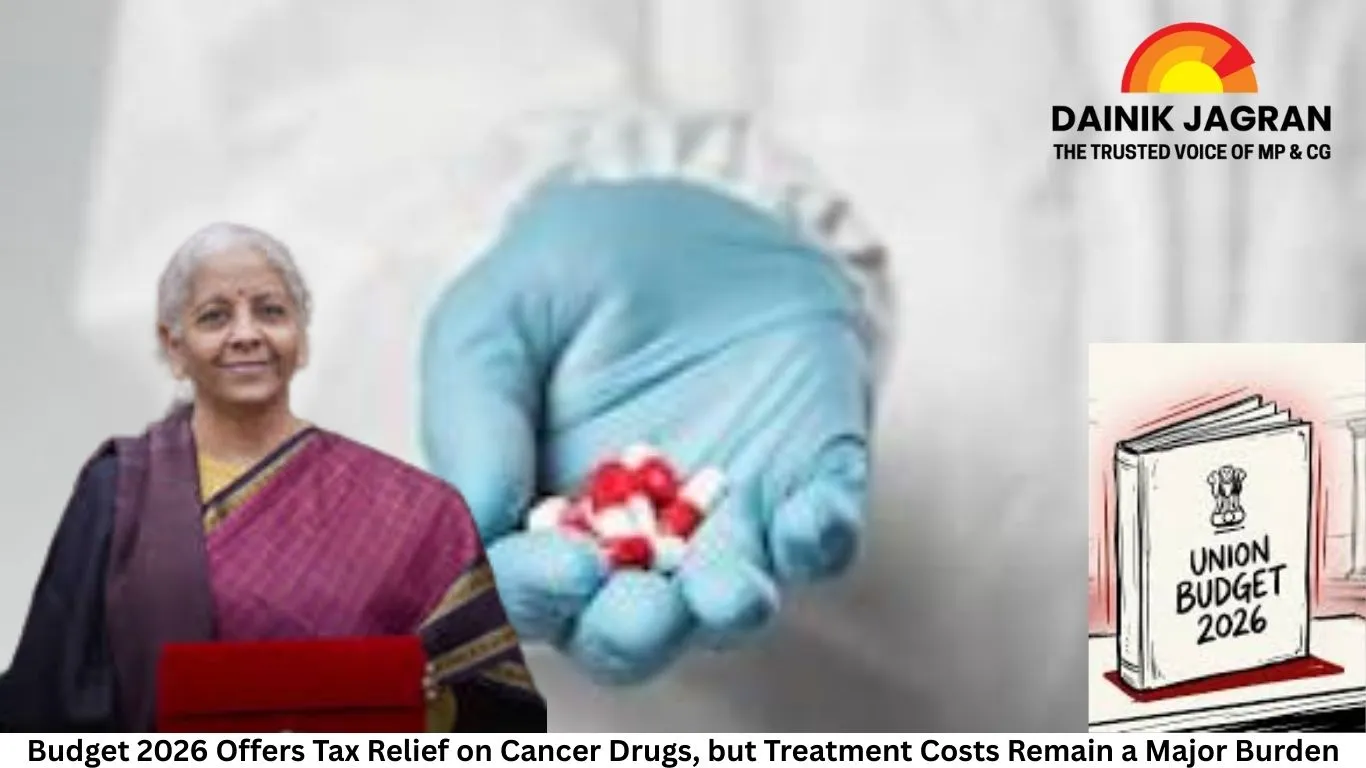
Budget 2026 Offers Tax Relief on Cancer Drugs, but Treatment Costs Remain a Major Burden
Digital Desk
According to government and health sector estimates, India records nearly 1.4 million new cancer cases every year. Studies show that more than 50 percent of affected families slip below the poverty line, not because of the disease itself but due to the high cost of treatment. The latest budget announcement aims to ease this pressure, but experts caution that drug prices are only one component of cancer care.
Finance Minister Nirmala Sitharaman announced that basic customs duty has been reduced to zero on 17 cancer medicines, including advanced drugs such as Ribociclib, Abemaciclib and Ipilimumab. These medicines are commonly used in immunotherapy and targeted therapy, which attack cancer cells while sparing healthy tissue. The government has also exempted customs duty on select drugs used for seven rare diseases.
Health officials estimate that the tax exemption could save patients between 5 to 10 percent on the cost of imported medicines. For a patient spending ₹50 lakh on such drugs, the direct saving could be around ₹5 lakh. However, oncologists point out that medicines typically account for only 40 to 50 percent of the total treatment cost.
A comprehensive cancer treatment package for an advanced-stage patient can cost close to ₹1 crore. Hospitalisation, surgery and specialist fees account for nearly 20 to 25 percent of expenses, while diagnostic tests such as PET scans, MRIs, biopsies and genetic testing add another 15 percent. Radiation therapy and chemotherapy sessions make up the remaining cost.
“Cheaper medicines provide some relief, but affordable treatment is a much bigger challenge,” said a senior oncologist at a Delhi-based cancer institute. Experts stress that early detection can dramatically reduce costs, bringing treatment expenses down to ₹5–10 lakh if cancer is diagnosed in its initial stages.
The budget has also reiterated the government’s push to strengthen domestic pharmaceutical innovation through initiatives such as the proposed Biopharma Shakti Hub. The aim is to develop indigenous biologics and biosimilars, potentially reducing the price of high-end cancer injections from lakhs to a few thousand rupees in the long term.
Public health specialists say that policy measures must be complemented by lifestyle changes, regular screening and wider insurance coverage. The World Health Organization estimates that 30 to 50 percent of cancers are preventable through tobacco control, healthier diets and early screening.
As India marks World Cancer Day 2026, the budget signals intent, but the challenge remains clear: making comprehensive cancer care accessible and affordable for every household.
.jpg)




