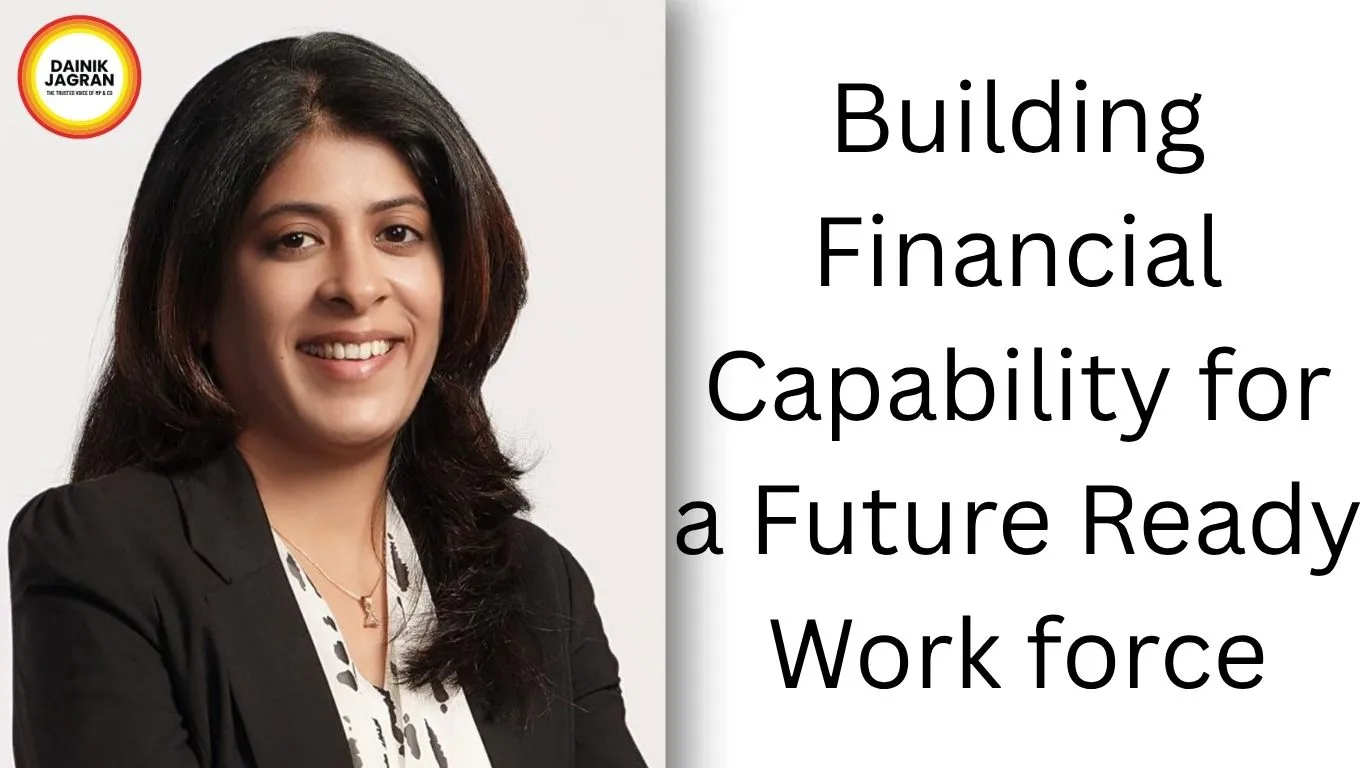
Building Financial Capability for a Future Ready Work force
By Vidhi Parikh, Whole Time Director and Chief Financial Officer, Jainam
India is home to the world's largest youth population, with 371 million people between the age group of 15 and 29 . As more young Indians enter the workforce, they begin earning, spending, saving and investing independently. The financial choices made during these early years often shape long-term financial wellbeing. Building financial capability from the start of a professional journey can help young people make these decisions with greater confidence and awareness.
The financial landscape young professionals enter today is very different from that of previous generations. Opening a bank account, investing in mutual funds, buying insurance or accessing credit can all be done within minutes through digital platforms. Financial information is equally accessible, with advice available across social media, online platforms and financial publications. In such an environment, the ability to understand information, evaluate different viewpoints and make informed decisions becomes important.
Financial Capability Grows with Every Career Stage
Financial priorities change as careers evolve. In the early years, the focus may be on managing monthly expenses, building savings and starting long-term investments. As responsibilities grow, attention shifts towards purchasing a home, protecting one's family through insurance, planning children's education or preparing for retirement. Every stage calls for a different set of financial decisions, making financial capability a skill that develops throughout one's working life.
The same principle applies to entrepreneurship and self-employment. Running a business requires decisions on cash flow, capital allocation, borrowing and expansion. Financial capability enables entrepreneurs to make informed choices that support sustainable growth over the long term.
Why Financial Capability Matters Beyond the Individual
Individual financial decisions have a wider impact on the economy. Households that save regularly, invest with a long-term perspective and use credit responsibly contribute to a stronger financial system. As participation in formal financial markets continues to grow, informed decision-making supports efficient capital allocation and strengthens confidence across the financial ecosystem.
Financial capability also supports economic activity by encouraging entrepreneurship and responsible business growth. Enterprises built on sound financial planning are better positioned to invest, generate employment and navigate periods of volatility. Over time, these outcomes contribute to a stronger and more resilient economy.
Building Financial Capability is a Shared Responsibility
Financial capability is developed gradually through experience, learning and access to reliable guidance. Families often lay the foundation by introducing basic financial habits early in life. Educational institutions can strengthen practical financial understanding before students begin their careers. Financial institutions have an important role in making financial instruments easier to understand through clear communication and greater transparency. Policymakers and regulators continue to expand financial inclusion while strengthening consumer protection, creating an environment that encourages informed participation.
Conclusion
India's financial ecosystem will continue to evolve, bringing greater participation and a wider range of opportunities. As the volume of financial information continues to grow, the ability to interpret it thoughtfully will become valuable.
Building financial capability is about enabling people to approach financial decisions with clarity, perspective and confidence. These qualities will help young professionals navigate a dynamic financial environment while contributing to India's long-term economic progress.
Disclaimer: Disclaimer: Investments in securities market are subject to market risks, read all the related documents carefully before investing. This post is for educational purposes only.For more detail click on https://www.jainam.in/disclaimer/
Source: https://www.unicef.org/india/economic-opportunities-young-people

--------
🚨 Beat the News Rush – Join Now!
Get breaking alerts, hot exclusives, and game-changing stories instantly on your phone. No delays, no fluff – just the edge you need. ⚡
Tap to join:
🟢 WhatsApp Channel: Dainik Jagran MP CG
Crave more?
🅕 Facebook: Dainik Jagran MP CG English
🅧 Twitter (X): Dainik Jagran MP CG
🅘 Instagram: Dainik Jagran MP CG
Share the fire – keep your crew ahead! 🗞️🔥
Building Financial Capability for a Future Ready Work force
By Vidhi Parikh, Whole Time Director and Chief Financial Officer, Jainam
The financial landscape young professionals enter today is very different from that of previous generations. Opening a bank account, investing in mutual funds, buying insurance or accessing credit can all be done within minutes through digital platforms. Financial information is equally accessible, with advice available across social media, online platforms and financial publications. In such an environment, the ability to understand information, evaluate different viewpoints and make informed decisions becomes important.
Financial Capability Grows with Every Career Stage
Financial priorities change as careers evolve. In the early years, the focus may be on managing monthly expenses, building savings and starting long-term investments. As responsibilities grow, attention shifts towards purchasing a home, protecting one's family through insurance, planning children's education or preparing for retirement. Every stage calls for a different set of financial decisions, making financial capability a skill that develops throughout one's working life.
The same principle applies to entrepreneurship and self-employment. Running a business requires decisions on cash flow, capital allocation, borrowing and expansion. Financial capability enables entrepreneurs to make informed choices that support sustainable growth over the long term.
Why Financial Capability Matters Beyond the Individual
Individual financial decisions have a wider impact on the economy. Households that save regularly, invest with a long-term perspective and use credit responsibly contribute to a stronger financial system. As participation in formal financial markets continues to grow, informed decision-making supports efficient capital allocation and strengthens confidence across the financial ecosystem.
Financial capability also supports economic activity by encouraging entrepreneurship and responsible business growth. Enterprises built on sound financial planning are better positioned to invest, generate employment and navigate periods of volatility. Over time, these outcomes contribute to a stronger and more resilient economy.
Building Financial Capability is a Shared Responsibility
Financial capability is developed gradually through experience, learning and access to reliable guidance. Families often lay the foundation by introducing basic financial habits early in life. Educational institutions can strengthen practical financial understanding before students begin their careers. Financial institutions have an important role in making financial instruments easier to understand through clear communication and greater transparency. Policymakers and regulators continue to expand financial inclusion while strengthening consumer protection, creating an environment that encourages informed participation.
Conclusion
India's financial ecosystem will continue to evolve, bringing greater participation and a wider range of opportunities. As the volume of financial information continues to grow, the ability to interpret it thoughtfully will become valuable.
Building financial capability is about enabling people to approach financial decisions with clarity, perspective and confidence. These qualities will help young professionals navigate a dynamic financial environment while contributing to India's long-term economic progress.
Disclaimer: Disclaimer: Investments in securities market are subject to market risks, read all the related documents carefully before investing. This post is for educational purposes only.For more detail click on https://www.jainam.in/disclaimer/
Source: https://www.unicef.org/india/economic-opportunities-young-people