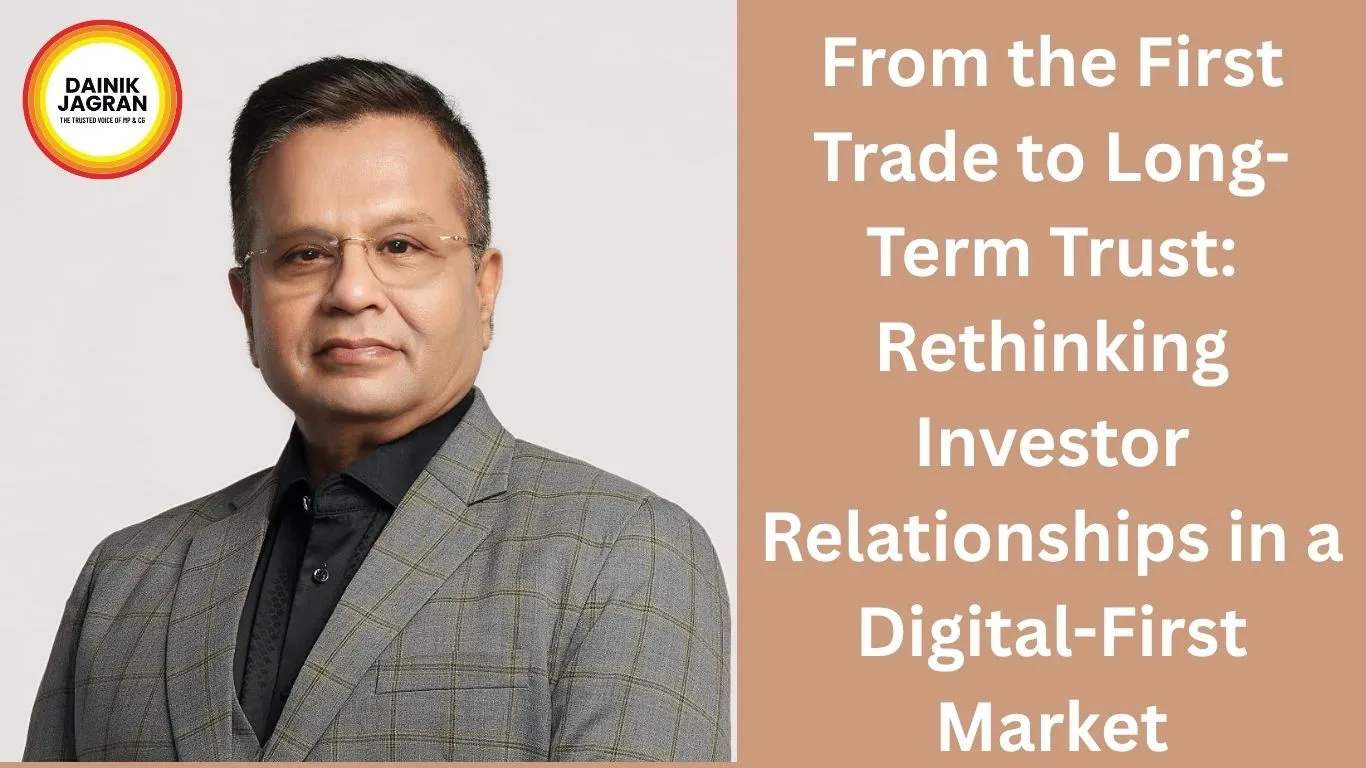
From the First Trade to Long-Term Trust: Rethinking Investor Relationships in a Digital-First Market
~ By Milan Parikh, Chairman & Managing Director, Jainam
The way individuals in India engage with financial services has evolved rapidly. Investing today sits within a broader digital behaviour pattern where immediacy, control, and visibility are expected. According to Reserve Bank of India, digital payment volumes have continued to expand at a pace exceeding 40 percent annually over the past few years, shaping a consumer mindset that expects financial actions to be seamless, responsive, and always accessible.
As these expectations carry into investing, the relationship between the investor and the intermediary is no longer defined by execution alone. It extends into an ongoing experience, where clarity, continuity, and responsiveness influence how investors engage with markets over time.
The First Trade and the Formation of Behaviour
Early interactions with any financial platform tend to leave a lasting imprint. Recent consumer studies indicates that decision-making is shaped by assisted and digital-first journeys, with consumers relying more on platforms and tools to evaluate choices rather than acting in isolation.
In investing, the first trade introduces the investor to the market, yet the larger impact lies in how that experience is processed. The way information is consumed, the pace of engagement, and the response to market movements all begin to take form in this phase. Over time, these patterns influence how investors approach decisions, more than any single outcome.
Navigating Information in a High-Exposure Environment
The environment in which investors operate today is shaped by multiple layers of influence. A BCG report indicates that digital ecosystems already influence over $350 billion in consumer spending, highlighting how trust and decision-making are increasingly distributed across platforms, communities, and content.
This shift is also visible in how individuals approach financial decisions. Recent research shows that a large proportion of younger consumers report higher confidence in choices influenced by digital content, suggesting that discovery and validation are no longer linear processes.
For investors, this creates a more complex decision-making environment where inputs are continuous and varied. The need therefore moves towards building clarity, so that decisions are anchored in relevance rather than immediacy.
Evolving Expectations and the Role of the Intermediary
As investors spend more time in the markets, their expectations begin to change. Initial participation is often driven by access and curiosity. With experience, the focus gradually shifts towards consistency, alignment with goals, and a more structured approach to decision-making.
Consumer outlook studies indicate that a majority of Indian consumers expect to increase their financial activity in the near term, reflecting both confidence and a greater willingness to engage with financial products. This shift brings with it a higher expectation of clarity, continuity, and support.
For intermediaries, relevance cannot remain tied to moments of activity alone. It requires an engagement model that adapts as the investor’s understanding evolves, providing context when needed and remaining steady across different phases of the market.
The next phase of broking will be shaped less by access and more by the quality of engagement. Consumer expectations across sectors are increasingly influenced by experiences that are intuitive, personalised, and continuous. In investing, this translates into a model where technology supports scale and efficiency, while the engagement layer provides context and reassurance.
Trust as the Foundation of Long-Term Relationships
In financial services, long-term relationships are shaped through experience. Investors tend to remain engaged where their interactions contribute to a clearer understanding of markets, and where their approach becomes more structured over time.
As participation deepens, the focus naturally moves towards continuity. The value of the relationship lies in how effectively it supports the investor through different stages, whether during active decision-making or in periods of observation.
The first trade introduces the investor to the market. What sustains that engagement is the confidence that develops gradually, through consistent and meaningful interactions over time.
--------
🚨 Beat the News Rush – Join Now!
Get breaking alerts, hot exclusives, and game-changing stories instantly on your phone. No delays, no fluff – just the edge you need. ⚡
Tap to join:
🟢 WhatsApp Channel: Dainik Jagran MP CG
Crave more?
🅕 Facebook: Dainik Jagran MP CG English
🅧 Twitter (X): Dainik Jagran MP CG
🅘 Instagram: Dainik Jagran MP CG
Share the fire – keep your crew ahead! 🗞️🔥
From the First Trade to Long-Term Trust: Rethinking Investor Relationships in a Digital-First Market
~ By Milan Parikh, Chairman & Managing Director, Jainam
As these expectations carry into investing, the relationship between the investor and the intermediary is no longer defined by execution alone. It extends into an ongoing experience, where clarity, continuity, and responsiveness influence how investors engage with markets over time.
The First Trade and the Formation of Behaviour
Early interactions with any financial platform tend to leave a lasting imprint. Recent consumer studies indicates that decision-making is shaped by assisted and digital-first journeys, with consumers relying more on platforms and tools to evaluate choices rather than acting in isolation.
In investing, the first trade introduces the investor to the market, yet the larger impact lies in how that experience is processed. The way information is consumed, the pace of engagement, and the response to market movements all begin to take form in this phase. Over time, these patterns influence how investors approach decisions, more than any single outcome.
Navigating Information in a High-Exposure Environment
The environment in which investors operate today is shaped by multiple layers of influence. A BCG report indicates that digital ecosystems already influence over $350 billion in consumer spending, highlighting how trust and decision-making are increasingly distributed across platforms, communities, and content.
This shift is also visible in how individuals approach financial decisions. Recent research shows that a large proportion of younger consumers report higher confidence in choices influenced by digital content, suggesting that discovery and validation are no longer linear processes.
For investors, this creates a more complex decision-making environment where inputs are continuous and varied. The need therefore moves towards building clarity, so that decisions are anchored in relevance rather than immediacy.
Evolving Expectations and the Role of the Intermediary
As investors spend more time in the markets, their expectations begin to change. Initial participation is often driven by access and curiosity. With experience, the focus gradually shifts towards consistency, alignment with goals, and a more structured approach to decision-making.
Consumer outlook studies indicate that a majority of Indian consumers expect to increase their financial activity in the near term, reflecting both confidence and a greater willingness to engage with financial products. This shift brings with it a higher expectation of clarity, continuity, and support.
For intermediaries, relevance cannot remain tied to moments of activity alone. It requires an engagement model that adapts as the investor’s understanding evolves, providing context when needed and remaining steady across different phases of the market.
The next phase of broking will be shaped less by access and more by the quality of engagement. Consumer expectations across sectors are increasingly influenced by experiences that are intuitive, personalised, and continuous. In investing, this translates into a model where technology supports scale and efficiency, while the engagement layer provides context and reassurance.
Trust as the Foundation of Long-Term Relationships
In financial services, long-term relationships are shaped through experience. Investors tend to remain engaged where their interactions contribute to a clearer understanding of markets, and where their approach becomes more structured over time.
As participation deepens, the focus naturally moves towards continuity. The value of the relationship lies in how effectively it supports the investor through different stages, whether during active decision-making or in periods of observation.
The first trade introduces the investor to the market. What sustains that engagement is the confidence that develops gradually, through consistent and meaningful interactions over time.