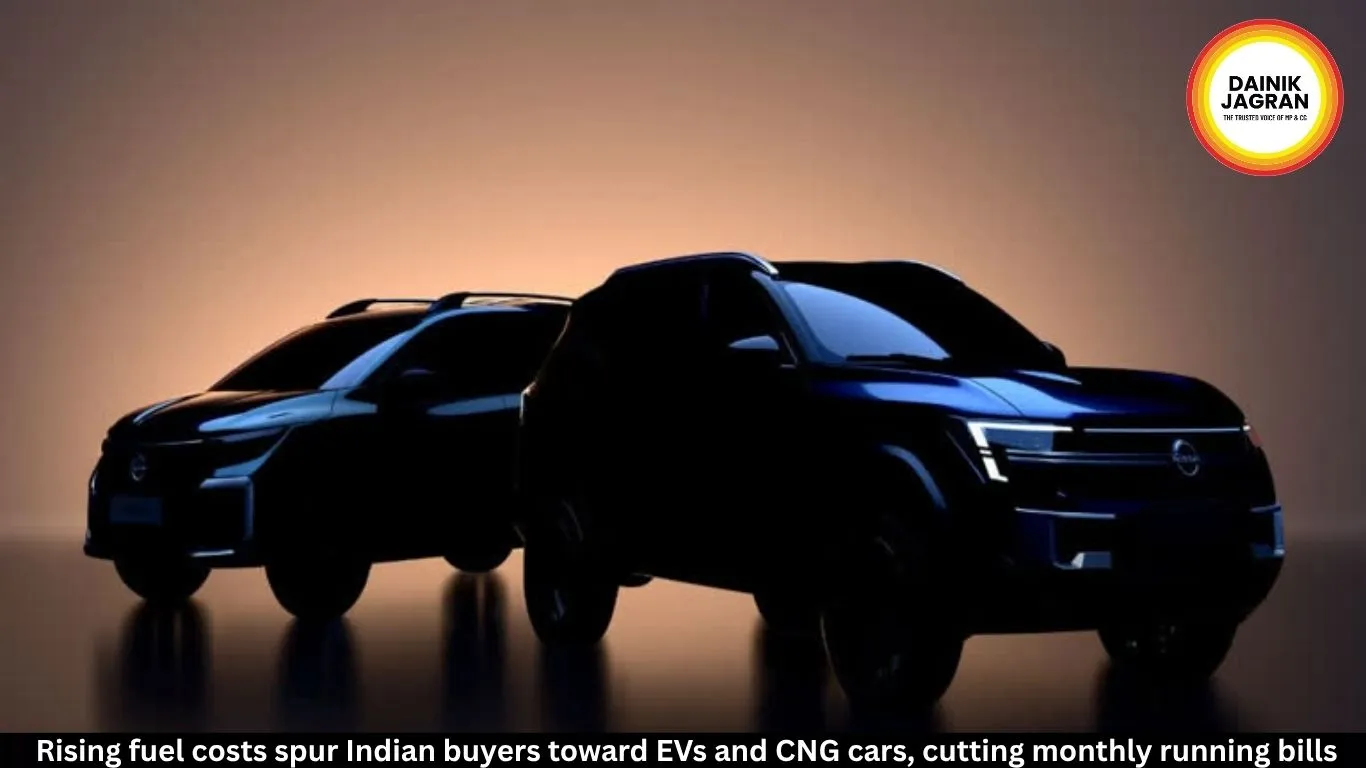
Fuel rise pushes Indians to EVs, CNG; monthly savings

Digital Desk

Fuel rise pushes Indians to EVs, CNG; monthly savings

High petrol and diesel prices drive Indians toward EVs and CNG cars, cutting monthly running costs; FADA data shows rising market shares for both.


High petrol and diesel rates push consumers to electric and CNG models; FADA data shows market share gains for CNG and EVs

Petrol, diesel price hikes and demand

 A sharp run-up in petrol and diesel prices over recent months has nudged many Indian car buyers toward electric vehicles (EVs) and compressed natural gas (CNG) models, dealers and industry data show. The Federation of Automobile Dealers Associations (FADA) reported a notable rise in enquiries for EVs and CNG cars as retail fuel costs climbed after the escalation in crude oil rates linked to the Iran conflict.

“EVs and CNG vehicles are getting more traction right now because of the fuel price hike. We are getting extremely high enquiries for such vehicles,” Saharsh Damani, CEO of FADA, told reporters. Initial dealer reports indicate showroom visits and online leads for alternative-fuel models have jumped in major markets such as Delhi, Mumbai and Bengaluru over the past two months.

How much prices rose

Oil marketing companies raised petrol by about ₹7.40 per litre and diesel by around ₹7.52 per litre since the Iran-related tensions intensified, according to industry price trackers. CNG prices increased by roughly ₹6 per kilogram in the same period. Although all three fuels saw hikes, CNG remains marginally cheaper per unit compared with petrol and diesel.

Mileage and running-cost advantage

Buyers are weighing running costs more heavily now. A typical petrol car returns about 17–20 km per litre, whereas factory-fitted or converted CNG cars commonly deliver 26–34 km per kg, dealers say. EVs, which run on electricity, are evaluated by range per charge; many mainstream EVs in India now offer 250–350 km on a single full charge, narrowing range anxiety for urban users.

Practical savings calculations used by dealers show the financial pull. FADA and independent cost comparisons estimate that a New Delhi driver covering 1,000 km monthly could save an estimated ₹5,207 each month by switching from a petrol car to an EV under current energy prices. Annualised, that amounts to nearly ₹62,500. CNG ownership also halves typical monthly fuel bills compared with petrol for similar usage patterns, industry sources said.

Sales shift in May

Market numbers reflect the shifting preference. In May 2026, CNG vehicles captured a 23.34% share of passenger car retail sales, up from 19.93% a year earlier. EVs climbed to a 6.63% share, from 4.51% in May last year. Overall passenger car retail sales surged 23.25% year-on-year to 4,02,591 units, indicating that the market expansion is not limited to one segment but that cleaner and cheaper-running options are growing faster than before.

Ground-level signals

On city streets, the trend is visible. At a petrol pump in south Delhi late on Tuesday, several motorists asked attendants about nearest EV charging points, while CNG stations in parts of the NCR reported longer queues on busy mornings. Dealers in Tier-2 cities — where daily running for work or businesses can be higher — said customer interest is particularly strong for compact CNG vehicles and affordable EV hatchbacks.

Policy and infrastructure caveats

Industry experts and dealers caution that the shift will depend on charging and CNG-refuelling infrastructure. “Cost savings are evident, but sustained adoption requires more public chargers, faster home-charging solutions, and deeper CNG network penetration beyond metros,” a senior dealer in Pune said on condition of anonymity. Officials at state transport departments have acknowledged plans to expand CNG outlets and fast-charge corridors, but implementation timelines vary.

What to watch next

Analysts will watch June and the monsoon months for whether the enquiry-to-sale conversion holds. Automakers have already reported higher production runs for popular CNG and EV models to meet rising demand. With pump prices remaining elevated and crude oil volatility unresolved, dealers expect enquiries to stay strong, but long-term sales growth will depend on total cost of ownership metrics, incentives and infrastructure rollout.


 

--------

🚨 Beat the News Rush – Join Now!

Get breaking alerts, hot exclusives, and game-changing stories instantly on your phone. No delays, no fluff – just the edge you need. ⚡

Tap to join: 

🟢 WhatsApp Channel: Dainik Jagran MP CG

Crave more?

🅕 Facebook: Dainik Jagran MP CG English

🅧 Twitter (X): Dainik Jagran MP CG

🅘 Instagram: Dainik Jagran MP CG

Share the fire – keep your crew ahead! 🗞️🔥

english.dainikjagranmpcg.com
10 Jun 2026 By Abhishek Joshi

Fuel rise pushes Indians to EVs, CNG; monthly savings

Digital Desk

High petrol and diesel rates push consumers to electric and CNG models; FADA data shows market share gains for CNG and EVs

Petrol, diesel price hikes and demand

 A sharp run-up in petrol and diesel prices over recent months has nudged many Indian car buyers toward electric vehicles (EVs) and compressed natural gas (CNG) models, dealers and industry data show. The Federation of Automobile Dealers Associations (FADA) reported a notable rise in enquiries for EVs and CNG cars as retail fuel costs climbed after the escalation in crude oil rates linked to the Iran conflict.

“EVs and CNG vehicles are getting more traction right now because of the fuel price hike. We are getting extremely high enquiries for such vehicles,” Saharsh Damani, CEO of FADA, told reporters. Initial dealer reports indicate showroom visits and online leads for alternative-fuel models have jumped in major markets such as Delhi, Mumbai and Bengaluru over the past two months.

How much prices rose

Oil marketing companies raised petrol by about ₹7.40 per litre and diesel by around ₹7.52 per litre since the Iran-related tensions intensified, according to industry price trackers. CNG prices increased by roughly ₹6 per kilogram in the same period. Although all three fuels saw hikes, CNG remains marginally cheaper per unit compared with petrol and diesel.

Mileage and running-cost advantage

Buyers are weighing running costs more heavily now. A typical petrol car returns about 17–20 km per litre, whereas factory-fitted or converted CNG cars commonly deliver 26–34 km per kg, dealers say. EVs, which run on electricity, are evaluated by range per charge; many mainstream EVs in India now offer 250–350 km on a single full charge, narrowing range anxiety for urban users.

Practical savings calculations used by dealers show the financial pull. FADA and independent cost comparisons estimate that a New Delhi driver covering 1,000 km monthly could save an estimated ₹5,207 each month by switching from a petrol car to an EV under current energy prices. Annualised, that amounts to nearly ₹62,500. CNG ownership also halves typical monthly fuel bills compared with petrol for similar usage patterns, industry sources said.

Sales shift in May

Market numbers reflect the shifting preference. In May 2026, CNG vehicles captured a 23.34% share of passenger car retail sales, up from 19.93% a year earlier. EVs climbed to a 6.63% share, from 4.51% in May last year. Overall passenger car retail sales surged 23.25% year-on-year to 4,02,591 units, indicating that the market expansion is not limited to one segment but that cleaner and cheaper-running options are growing faster than before.

Ground-level signals

On city streets, the trend is visible. At a petrol pump in south Delhi late on Tuesday, several motorists asked attendants about nearest EV charging points, while CNG stations in parts of the NCR reported longer queues on busy mornings. Dealers in Tier-2 cities — where daily running for work or businesses can be higher — said customer interest is particularly strong for compact CNG vehicles and affordable EV hatchbacks.

Policy and infrastructure caveats

Industry experts and dealers caution that the shift will depend on charging and CNG-refuelling infrastructure. “Cost savings are evident, but sustained adoption requires more public chargers, faster home-charging solutions, and deeper CNG network penetration beyond metros,” a senior dealer in Pune said on condition of anonymity. Officials at state transport departments have acknowledged plans to expand CNG outlets and fast-charge corridors, but implementation timelines vary.

What to watch next

Analysts will watch June and the monsoon months for whether the enquiry-to-sale conversion holds. Automakers have already reported higher production runs for popular CNG and EV models to meet rising demand. With pump prices remaining elevated and crude oil volatility unresolved, dealers expect enquiries to stay strong, but long-term sales growth will depend on total cost of ownership metrics, incentives and infrastructure rollout.

 

https://english.dainikjagranmpcg.com/special-news/fuel-rise-pushes-indians-to-evs-cng-monthly-savings/article-19971

Related Posts

Latest News