


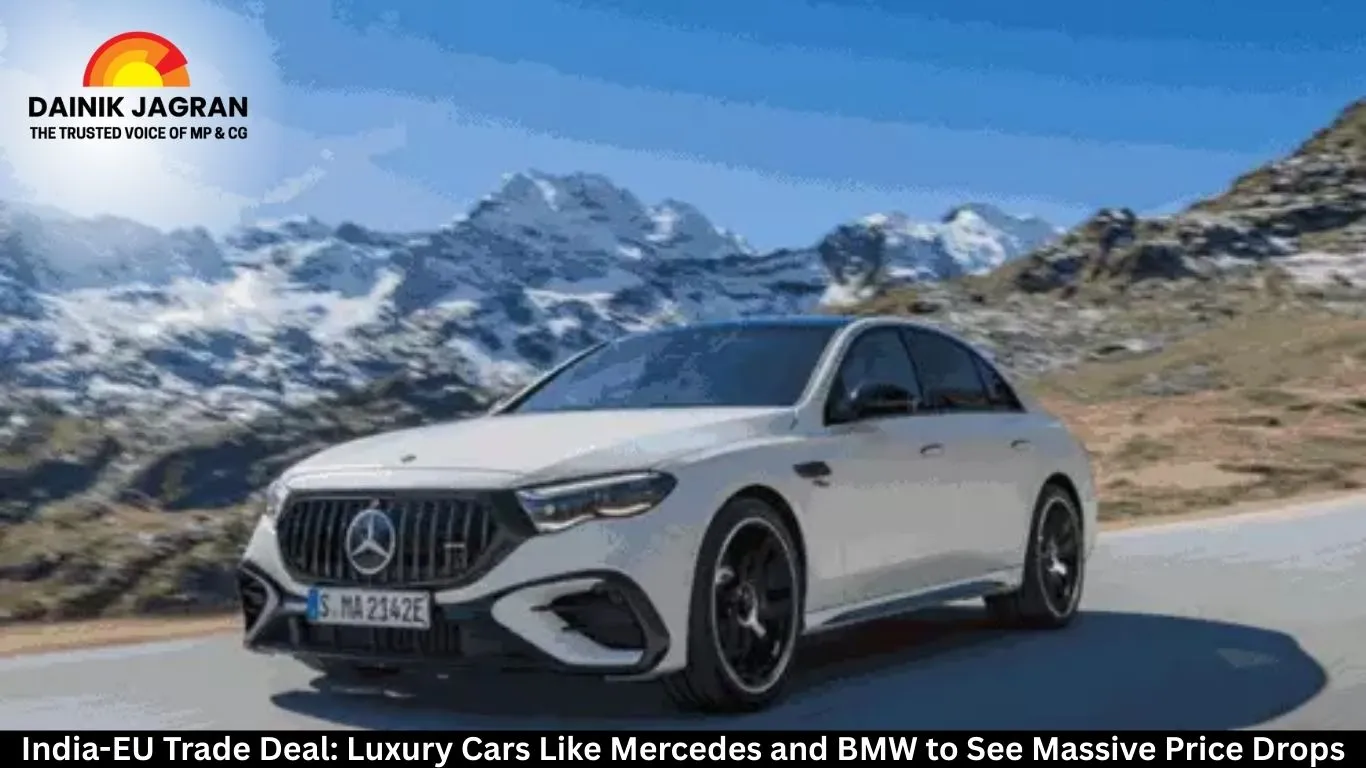
India-EU Trade Deal: Luxury Cars Like Mercedes and BMW to See Massive Price Drops
Digital Desk
In a landmark move that is set to redefine the Indian automotive landscape, the Government of India and the European Union officially announced a Free Trade Agreement (FTA) on January 27, 2026. After 18 years of intense negotiations, this "mother of all deals" will see the sky-high import duty on cars imported from Europe slashed from a staggering 110% to just 10%.
The announcement, made during the high-profile India-EU Summit, marks a historic shift for India—currently the world’s third-largest car market. For car enthusiasts and luxury buyers, this means the dream of owning a European-built machine just became significantly more affordable.
The 10% Reality: How Much Will You Save?
Currently, any car imported as a Completely Built Unit (CBU) with a value exceeding $40,000 (approx. ₹36 lakh) is slapped with a 110% customs duty. Under the new India-EU Free Trade Agreement, this will be phased down to 10% over the coming years.
To put this into perspective, let’s look at the numbers for a popular luxury icon:
| Model | Estimated Current Price (110% Duty) | Estimated Future Price (10% Duty) | Potential Savings |
| Mercedes-Benz G-Wagon | ₹4.00 Crore+ | ₹1.99 Crore | ~₹2.01 Crore |
| BMW M4 Competition | ₹1.55 Crore | ₹1.08 Crore | ~₹47 Lakh |
| Audi RS Q8 | ₹2.30 Crore | ₹1.60 Crore | ~₹70 Lakh |
Note: These price drops apply specifically to cars fully manufactured in Europe and imported to India.
Understanding the "2.5 Lakh" Quota System
While the news is groundbreaking, it comes with a strategic "Tariff Rate Quota" (TRQ) system. The reduced 10% duty will only apply to the first 250,000 vehicles imported from Europe annually.
-
Monitoring: This quota will be strictly managed by the Directorate General of Foreign Trade (DGFT) and the Customs Department.
-
Protection: This cap ensures that the domestic market isn't suddenly flooded, giving Indian manufacturers time to adapt.
-
Implementation: The duty won't drop to 10% overnight. It will be a phased reduction starting late 2026 or early 2027.
Which Cars Won't Get Cheaper?
It is important to manage expectations regarding "Made in India" luxury cars. Most high-volume models from Mercedes-Benz, BMW, and Audi are already assembled locally (CKD - Completely Knocked Down).
Since these kits already attract a lower duty of roughly 15-16.5%, the FTA will not significantly impact their showroom prices. The real winners of this deal are "niche" models—performance cars, supercars, and flagship SUVs like the Porsche 911, Ferrari Roma, and Lamborghini Urus.
What About Electric Vehicles (EVs)?
To protect "Make in India" pioneers like Tata Motors and Mahindra & Mahindra, Electric Vehicles have been excluded from this duty cut for the first five years. The government aims to allow the domestic EV ecosystem to mature before opening the floodgates to European electric imports.
Why This Matters Now
This agreement is more than just about cheaper cars; it represents a deepening of bilateral trade which has already crossed $190 billion. For the EU, it’s a chance to grow their measly 4% market share in India. For India, it’s a step toward becoming a global automotive hub with better access to European technology and defense strategic plans.
.jpg)




