India Unlikely to Boost Iranian Oil Purchases Under US Waiver

Digital Desk

India Unlikely to Boost Iranian Oil Purchases Under US Waiver

 Indian refiners are unlikely to surge Iranian crude imports despite a 60-day US sanctions waiver, citing pre-booked Russian supply and short timelines.


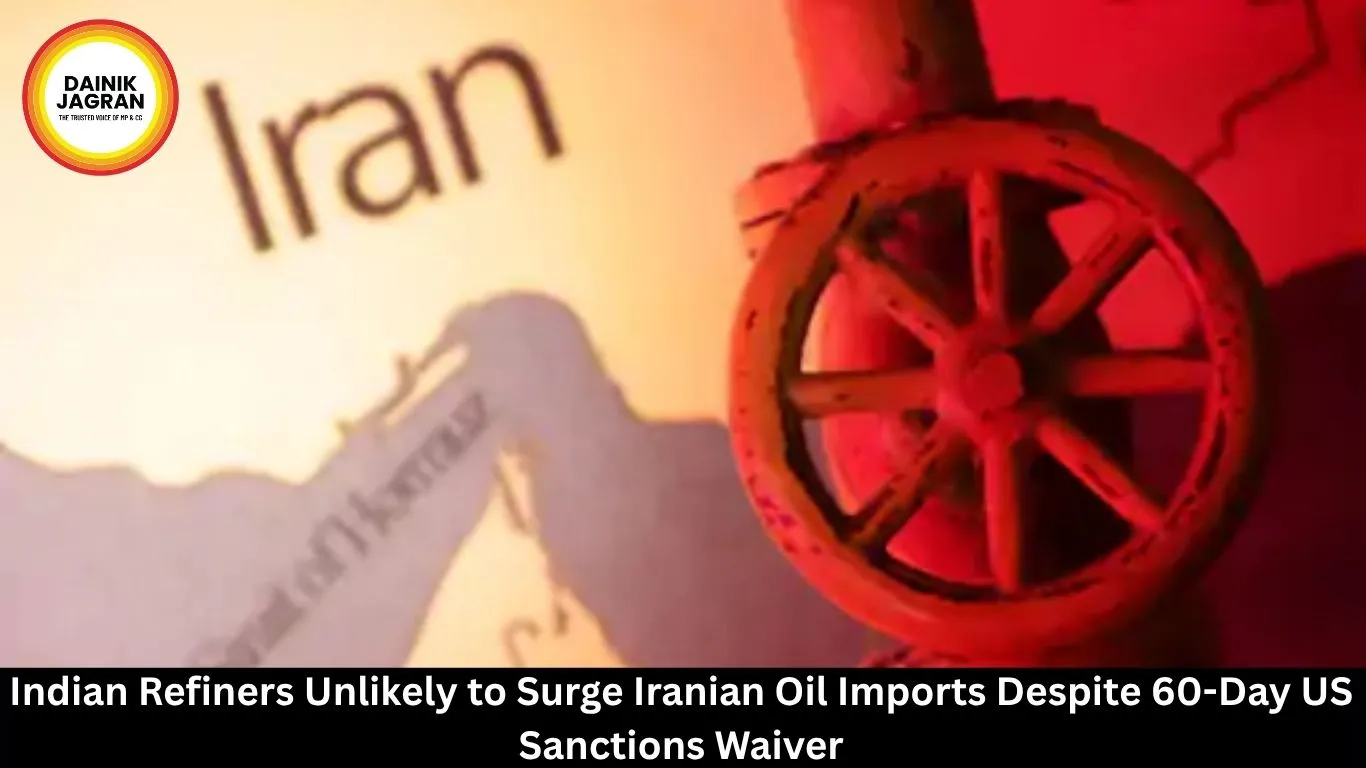
Indian oil refiners are highly unlikely to aggressively scale up imports of Iranian crude despite Washington’s surprise announcement of a temporary, 60-day sanctions waiver. Market analytics suggest that structural factors—including a highly compressed waiver window, deep systemic payment bottlenecks, and pre-existing long-term supply commitments—will heavily restrict any immediate pivot back to Tehran.

The critical policy update follows a diplomatic easing between the United States and Iran, which opened a brief two-month window for global oil markets. However, energy analysts predict that the policy relaxation will fail to spark a broad-based return of traditional buyers outside of China.

Procurement Windows for August-September Already Sealed

State-run and private domestic refiners typically operate on a highly rigid, forward-looking procurement calendar, finalizing crude cargo slates two to three months in advance.

Sumit Ritolia, a refinery and oil market analyst at commodity intelligence firm Kpler, noted that Indian refiners have already locked in the vast majority of their processing requirements for the immediate future.

"State-run and private refiners are currently sourcing and finalizing cargoes for late August and September. Russian and Middle Eastern grades continue to heavily dominate these purchases, alongside a growing market share for Venezuelan crude," Ritolia told news agency PTI.

While opportunistic buying remains a distinct possibility if Iran undercuts current market rates, the abundant availability of heavily discounted Russian Urals and stable Middle Eastern term contracts reduces the operational urgency for Indian refiners to scramble for Iranian barrels.

Historical Peak: Iran Once Held 11.5% of India’s Crude Basket

The current geopolitical landscape stands in stark contrast to India’s historical trading ties with Tehran. Prior to the severe tightening of Washington's secondary sanctions framework under the Trump administration in 2018, India stood as one of the largest global consumers of Iranian energy.

India's Crude Import Evolution:

β”œβ”€β”€ Pre-May 2019 : Iranian Light & Heavy maxed out at 11.5% of total import basket

β”œβ”€β”€ Post-May 2019: Imports dropped to zero under secondary sanctions pressure

└── 2022–2026    : Void aggressively filled by Russian Urals & US crude grades


The high compatibility of Indian complex refinery configurations with Iranian Light and Iranian Heavy grades, paired with favorable commercial terms such as ultra-low shipping freights and extended credit windows, previously made Tehran an indispensable trading partner. Following the total cessation of imports in May 2019, Indian procurement desks successfully shifted their baseline reliance to the US Gulf Coast and alternative Middle Eastern producers, and more recently, heavily discounted Russian crude.

Deep Discounts Mandatory to Counter Sovereign Risk

Experts emphasize that unless National Iranian Oil Company (NIOC) officials offer unprecedented, aggressive price discounts that comfortably offset the compliance and logistical risks of the 60-day window, Indian state refiners will remain on the sidelines.

Apart from the short operational timeframe, establishing clear banking channels for rupee-rial or third-currency clearing mechanisms takes time—a luxury not afforded by a 60-day clock. Consequently, while the diplomatic waiver has technically reopened a closed door for Iranian oil exports, it is unlikely to translate into a flurry of tankers heading toward Indian ports anytime soon.
 

--------

🚨 Beat the News Rush – Join Now!

Get breaking alerts, hot exclusives, and game-changing stories instantly on your phone. No delays, no fluff – just the edge you need. ⚑

Tap to join:Β 

🟒 WhatsApp Channel: Dainik Jagran MP CG

Crave more?

πŸ…• Facebook: Dainik Jagran MP CG English

πŸ…§ Twitter (X): Dainik Jagran MP CG

πŸ…˜ Instagram: Dainik Jagran MP CG

Share the fire – keep your crew ahead! πŸ—žοΈπŸ”₯

english.dainikjagranmpcg.com
27 Jun 2026 By Abhishek Joshi

India Unlikely to Boost Iranian Oil Purchases Under US Waiver

Digital Desk

Indian oil refiners are highly unlikely to aggressively scale up imports of Iranian crude despite Washington’s surprise announcement of a temporary, 60-day sanctions waiver. Market analytics suggest that structural factors—including a highly compressed waiver window, deep systemic payment bottlenecks, and pre-existing long-term supply commitments—will heavily restrict any immediate pivot back to Tehran.

The critical policy update follows a diplomatic easing between the United States and Iran, which opened a brief two-month window for global oil markets. However, energy analysts predict that the policy relaxation will fail to spark a broad-based return of traditional buyers outside of China.

Procurement Windows for August-September Already Sealed

State-run and private domestic refiners typically operate on a highly rigid, forward-looking procurement calendar, finalizing crude cargo slates two to three months in advance.

Sumit Ritolia, a refinery and oil market analyst at commodity intelligence firm Kpler, noted that Indian refiners have already locked in the vast majority of their processing requirements for the immediate future.

"State-run and private refiners are currently sourcing and finalizing cargoes for late August and September. Russian and Middle Eastern grades continue to heavily dominate these purchases, alongside a growing market share for Venezuelan crude," Ritolia told news agency PTI.

While opportunistic buying remains a distinct possibility if Iran undercuts current market rates, the abundant availability of heavily discounted Russian Urals and stable Middle Eastern term contracts reduces the operational urgency for Indian refiners to scramble for Iranian barrels.

Historical Peak: Iran Once Held 11.5% of India’s Crude Basket

The current geopolitical landscape stands in stark contrast to India’s historical trading ties with Tehran. Prior to the severe tightening of Washington's secondary sanctions framework under the Trump administration in 2018, India stood as one of the largest global consumers of Iranian energy.

India's Crude Import Evolution:

β”œβ”€β”€ Pre-May 2019 : Iranian Light & Heavy maxed out at 11.5% of total import basket

β”œβ”€β”€ Post-May 2019: Imports dropped to zero under secondary sanctions pressure

└── 2022–2026    : Void aggressively filled by Russian Urals & US crude grades


The high compatibility of Indian complex refinery configurations with Iranian Light and Iranian Heavy grades, paired with favorable commercial terms such as ultra-low shipping freights and extended credit windows, previously made Tehran an indispensable trading partner. Following the total cessation of imports in May 2019, Indian procurement desks successfully shifted their baseline reliance to the US Gulf Coast and alternative Middle Eastern producers, and more recently, heavily discounted Russian crude.

Deep Discounts Mandatory to Counter Sovereign Risk

Experts emphasize that unless National Iranian Oil Company (NIOC) officials offer unprecedented, aggressive price discounts that comfortably offset the compliance and logistical risks of the 60-day window, Indian state refiners will remain on the sidelines.

Apart from the short operational timeframe, establishing clear banking channels for rupee-rial or third-currency clearing mechanisms takes time—a luxury not afforded by a 60-day clock. Consequently, while the diplomatic waiver has technically reopened a closed door for Iranian oil exports, it is unlikely to translate into a flurry of tankers heading toward Indian ports anytime soon.
 

https://english.dainikjagranmpcg.com/business/india-unlikely-to-boost-iranian-oil-purchases-under-us-waiver/article-20661

Latest News