India's First Private Orbital Rocket Vikram-1 Set for Historic Launch Today

Digital Desk

India's First Private Orbital Rocket Vikram-1 Set for Historic Launch Today

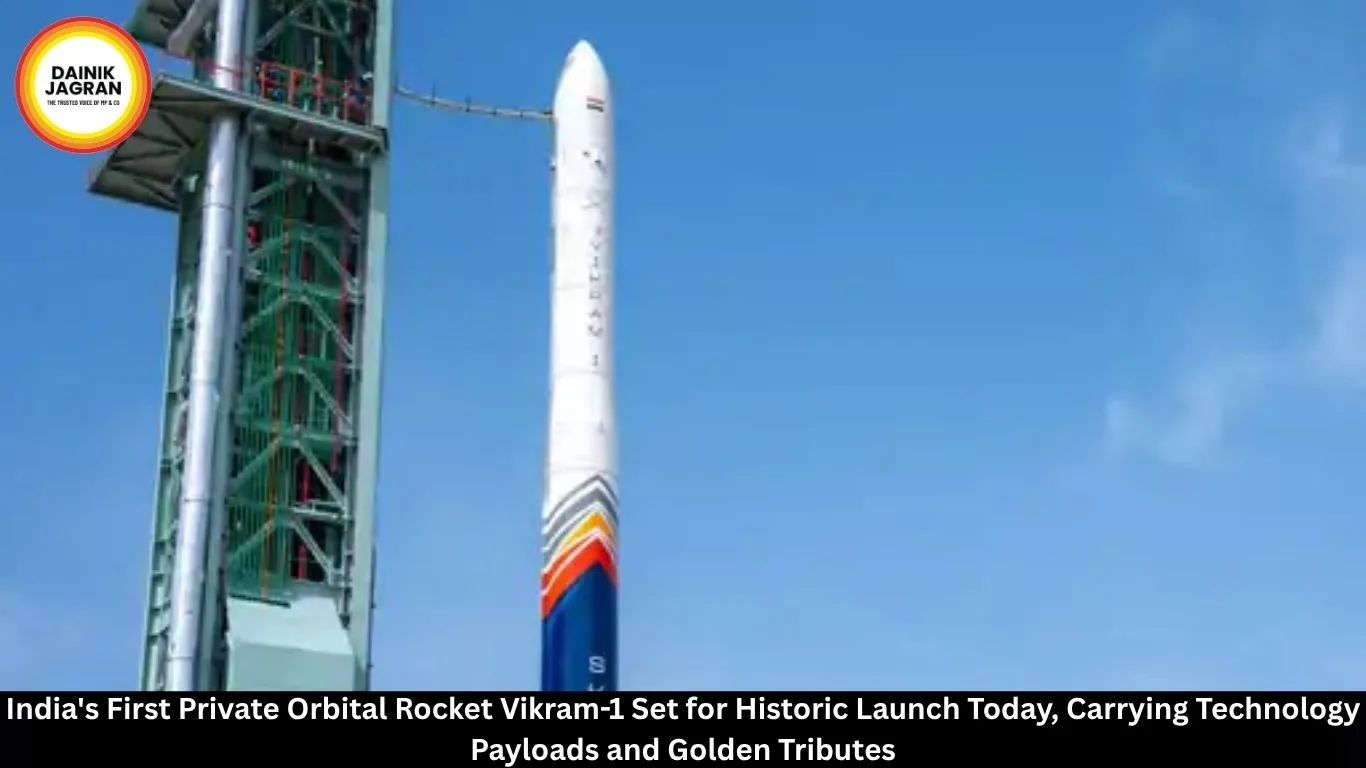
Skyroot Aerospace will launch Vikram-1, India's first private orbital rocket, from Sriharikota. The mission will deploy payloads into a 450-km orbit and carry a unique 18-carat gold tribute to India's scientific pioneers.

India's private space sector is set to achieve a major milestone on Saturday as Hyderabad-based Skyroot Aerospace prepares to launch Vikram-1, the country's first privately developed orbital-class rocket. The launch, scheduled for 11:30 AM IST from the Satish Dhawan Space Centre, Sriharikota, marks a significant step in India's commercial space journey and is expected to strengthen the nation's position in the global launch market.

Named "Mission Aagman," the flight aims to place multiple payloads into a 450-kilometre Low Earth Orbit (LEO). If successful, the mission will make Skyroot Aerospace the first Indian private company to place payloads into orbit, following the successful suborbital launch of Vikram-S in 2022.

A Landmark for India's Private Space Industry

Until recently, orbital satellite launches in India were primarily undertaken by the Indian Space Research Organisation (ISRO). Vikram-1 represents the next phase of India's space reforms, where private companies are beginning to play a significant role in launch services, satellite deployment and space technology innovation.

The mission is expected to demonstrate India's growing capabilities in developing cost-effective commercial launch vehicles capable of serving domestic as well as international customers.

Technology and Commercial Payloads Onboard

The rocket is carrying multiple technology demonstration payloads from Indian space startups, including:

  • Graha Space

  • Cosmoserve Space

  • DQube

  • Skyroot Aerospace's in-house SCOPE payload

These payloads are designed to validate new technologies and collect valuable data during the orbital mission.

Golden Tribute to India's Space Pioneers

One of the mission's unique highlights is an artistic payload created by Cosmos Diamonds.

The artwork, titled "Cosmic Bloom," includes an 18-carat gold micro-art rocket engraved with miniature portraits of three legendary Indian scientists:

  • Dr. Vikram Sarabhai

  • Dr. A.P.J. Abdul Kalam

  • Sir C.V. Raman

The symbolic tribute celebrates India's scientific legacy while accompanying the country's first private orbital mission into space.

Lightweight Carbon-Composite Design

Vikram-1 is India's first orbital launch vehicle built almost entirely using carbon-composite structures, making it significantly lighter than conventional metallic rockets. Carbon fibre offers high strength while reducing structural weight, improving fuel efficiency and payload capability.

The launch vehicle features:

  • Three solid-fuel propulsion stages that provide the primary thrust during ascent.

  • A liquid-fuel Orbital Adjustment Module (OAM), responsible for precisely placing payloads into their designated orbit after reaching space.

This combination allows greater control during the final orbital insertion phase.

From Vikram-S to Vikram-1

Skyroot Aerospace made headlines in November 2022 after successfully launching Vikram-S, India's first private suborbital rocket, which reached an altitude of 89.5 kilometres during a technology demonstration mission.

Unlike Vikram-S, which was designed only for suborbital testing, Vikram-1 is a full-fledged orbital launch vehicle capable of carrying payloads weighing up to 350 kilograms into Low Earth Orbit.

Strengthening India's Space Economy

The successful launch could significantly boost India's private space ecosystem by opening new opportunities for satellite launch services, technology development and international commercial partnerships.

Industry experts believe increased private participation will complement ISRO's capabilities, attract foreign customers seeking affordable launch solutions and accelerate innovation across India's rapidly expanding space startup ecosystem.

Founded in 2018 by former ISRO scientists Pawan Kumar Chandana and Naga Bharath Daka, Skyroot Aerospace has positioned itself as one of India's leading private launch vehicle developers.

Ahead of the mission, CEO Pawan Kumar Chandana said the test flight would provide crucial data on the rocket's orbital performance, while COO Naga Bharath Daka described the launch as the culmination of nearly eight years of engineering and development.

As Mission Aagman lifts off, it carries not only technology payloads but also the aspirations of India's emerging private space industry, signalling a new era where commercial innovation works alongside national space ambitions.
 

--------

๐Ÿšจ Beat the News Rush โ€“ Join Now!

Get breaking alerts, hot exclusives, and game-changing stories instantly on your phone. No delays, no fluff โ€“ just the edge you need. โšก

Tap to join:ย 

๐ŸŸข WhatsApp Channel: Dainik Jagran MP CG

Crave more?

๐Ÿ…• Facebook: Dainik Jagran MP CG English

๐Ÿ…ง Twitter (X): Dainik Jagran MP CG

๐Ÿ…˜ Instagram: Dainik Jagran MP CG

Share the fire โ€“ keep your crew ahead! ๐Ÿ—ž๏ธ๐Ÿ”ฅ

english.dainikjagranmpcg.com
18 Jul 2026 By Abhishek Joshi

India's First Private Orbital Rocket Vikram-1 Set for Historic Launch Today

Digital Desk

India's private space sector is set to achieve a major milestone on Saturday as Hyderabad-based Skyroot Aerospace prepares to launch Vikram-1, the country's first privately developed orbital-class rocket. The launch, scheduled for 11:30 AM IST from the Satish Dhawan Space Centre, Sriharikota, marks a significant step in India's commercial space journey and is expected to strengthen the nation's position in the global launch market.

Named "Mission Aagman," the flight aims to place multiple payloads into a 450-kilometre Low Earth Orbit (LEO). If successful, the mission will make Skyroot Aerospace the first Indian private company to place payloads into orbit, following the successful suborbital launch of Vikram-S in 2022.

A Landmark for India's Private Space Industry

Until recently, orbital satellite launches in India were primarily undertaken by the Indian Space Research Organisation (ISRO). Vikram-1 represents the next phase of India's space reforms, where private companies are beginning to play a significant role in launch services, satellite deployment and space technology innovation.

The mission is expected to demonstrate India's growing capabilities in developing cost-effective commercial launch vehicles capable of serving domestic as well as international customers.

Technology and Commercial Payloads Onboard

The rocket is carrying multiple technology demonstration payloads from Indian space startups, including:

  • Graha Space

  • Cosmoserve Space

  • DQube

  • Skyroot Aerospace's in-house SCOPE payload

These payloads are designed to validate new technologies and collect valuable data during the orbital mission.

Golden Tribute to India's Space Pioneers

One of the mission's unique highlights is an artistic payload created by Cosmos Diamonds.

The artwork, titled "Cosmic Bloom," includes an 18-carat gold micro-art rocket engraved with miniature portraits of three legendary Indian scientists:

  • Dr. Vikram Sarabhai

  • Dr. A.P.J. Abdul Kalam

  • Sir C.V. Raman

The symbolic tribute celebrates India's scientific legacy while accompanying the country's first private orbital mission into space.

Lightweight Carbon-Composite Design

Vikram-1 is India's first orbital launch vehicle built almost entirely using carbon-composite structures, making it significantly lighter than conventional metallic rockets. Carbon fibre offers high strength while reducing structural weight, improving fuel efficiency and payload capability.

The launch vehicle features:

  • Three solid-fuel propulsion stages that provide the primary thrust during ascent.

  • A liquid-fuel Orbital Adjustment Module (OAM), responsible for precisely placing payloads into their designated orbit after reaching space.

This combination allows greater control during the final orbital insertion phase.

From Vikram-S to Vikram-1

Skyroot Aerospace made headlines in November 2022 after successfully launching Vikram-S, India's first private suborbital rocket, which reached an altitude of 89.5 kilometres during a technology demonstration mission.

Unlike Vikram-S, which was designed only for suborbital testing, Vikram-1 is a full-fledged orbital launch vehicle capable of carrying payloads weighing up to 350 kilograms into Low Earth Orbit.

Strengthening India's Space Economy

The successful launch could significantly boost India's private space ecosystem by opening new opportunities for satellite launch services, technology development and international commercial partnerships.

Industry experts believe increased private participation will complement ISRO's capabilities, attract foreign customers seeking affordable launch solutions and accelerate innovation across India's rapidly expanding space startup ecosystem.

Founded in 2018 by former ISRO scientists Pawan Kumar Chandana and Naga Bharath Daka, Skyroot Aerospace has positioned itself as one of India's leading private launch vehicle developers.

Ahead of the mission, CEO Pawan Kumar Chandana said the test flight would provide crucial data on the rocket's orbital performance, while COO Naga Bharath Daka described the launch as the culmination of nearly eight years of engineering and development.

As Mission Aagman lifts off, it carries not only technology payloads but also the aspirations of India's emerging private space industry, signalling a new era where commercial innovation works alongside national space ambitions.


https://english.dainikjagranmpcg.com/business/indias-first-private-orbital-rocket-vikram-1-set-for-historic-launch/article-22650

Trending News