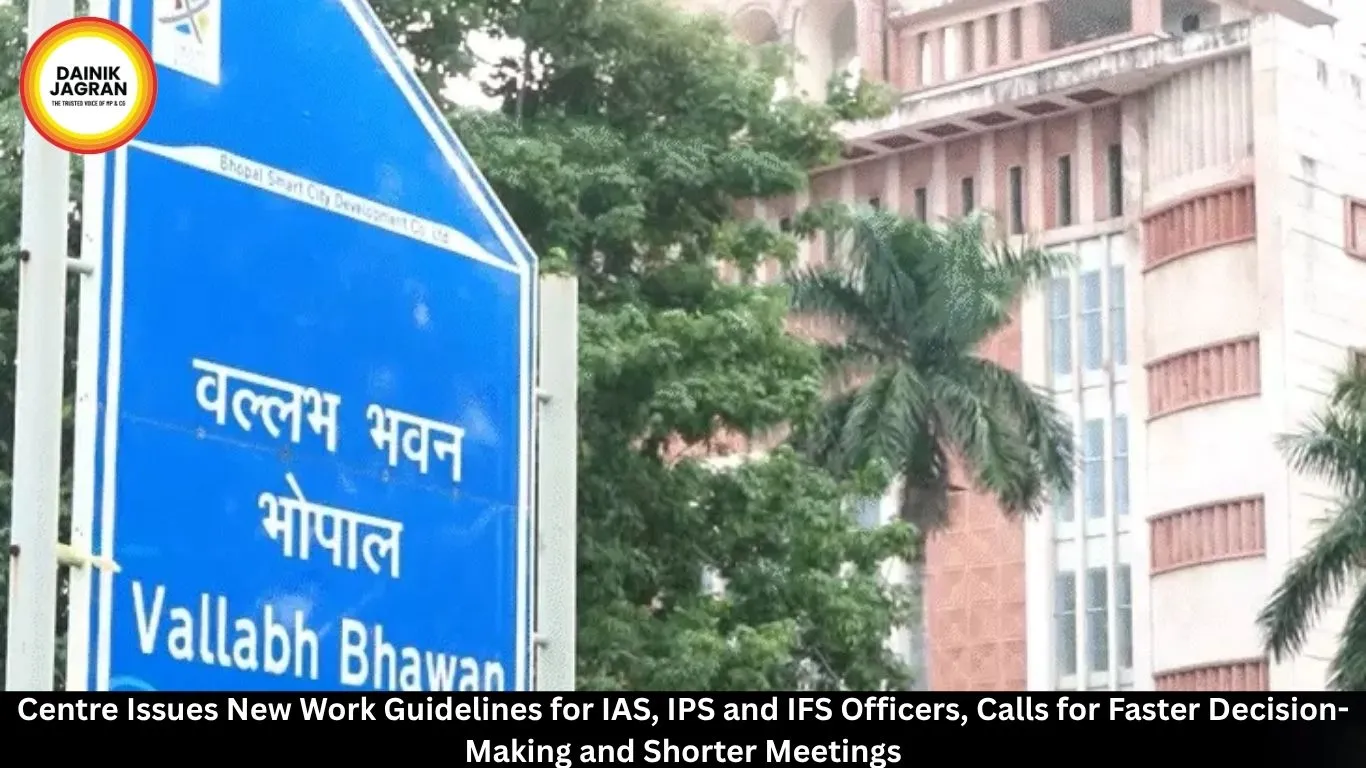
Centre Issues New Guidelines for IAS, IPS and IFS Officers to Improve Administrative Efficiency
Digital Desk
The Centre has advised IAS, IPS and IFS officers to improve administrative efficiency by reducing lengthy meetings, speeding up file movement and ensuring quicker decision-making across government departments.
The Centre has issued a fresh set of administrative guidelines aimed at improving the working style of senior civil servants, asking IAS, IPS and Indian Forest Service (IFS) officers to adopt faster decision-making, reduce lengthy meetings and ensure quicker movement of official files.
The advisory, issued by the Cabinet Secretariat, has been forwarded to all states and Union Territories. In Madhya Pradesh, the General Administration Department (GAD) has circulated the directions among senior officials, urging them to incorporate the suggested reforms into their daily administrative functioning.
Focus on Administrative Efficiency
In a letter addressed to Chief Secretaries and Directors General of State Administrative Training Institutes (ATIs), Cabinet Secretary Dr T.V. Somanathan said that small improvements in routine work practices could significantly enhance efficiency, stress management and the overall quality of governance.
The Centre noted that government meetings often begin late, continue longer than necessary and frequently end without clear decisions. Such delays, it said, affect governance and slow down the implementation of public welfare programmes.
Officials Asked to Avoid Old Work Habits
The advisory encourages officers to continuously evaluate and improve their work practices instead of relying on long-established routines.
It states that experienced officers should regularly assess whether they are becoming better administrators each year or simply repeating the same work patterns throughout their careers.
The communication also remarks that years of service do not automatically translate into improved administrative capability unless accompanied by continuous learning and adaptation.
New Guidelines for Official Meetings
As part of the reforms, the Centre has introduced detailed recommendations for conducting government meetings more effectively.
According to the guidelines:
-
Meetings should be convened only when necessary.
-
Issues that can be resolved through email, telephone or video conferencing should not require physical meetings.
-
The agenda must be circulated in advance to all participants.
-
Only officials directly connected with the subject should attend.
-
Meetings should conclude with clear decisions and defined responsibilities.
The advisory also directs departments to prepare Minutes of Meeting (MoM) immediately after discussions, clearly mentioning decisions taken, officers responsible for implementation, deadlines and the schedule for review.
Encouraging Better Participation
The Centre has also stressed the need to create an environment where officers at all levels, including junior officials, can express their views and offer constructive suggestions without hesitation.
Separate recommendations have also been issued for video conferencing, including prior technical checks, disciplined participation and equal opportunity for all attendees to contribute.
Objective Behind the Advisory
According to the Cabinet Secretariat, the new guidelines are intended to address common shortcomings observed in government functioning, including delayed meetings, unclear agendas, prolonged discussions, poor follow-up on decisions and delays in preparing official records.
The Centre believes that improving administrative processes will accelerate decision-making, enhance accountability and help ensure faster implementation of development projects and public services.
--------
🚨 Beat the News Rush – Join Now!
Get breaking alerts, hot exclusives, and game-changing stories instantly on your phone. No delays, no fluff – just the edge you need. ⚡
Tap to join:
🟢 WhatsApp Channel: Dainik Jagran MP CG
Crave more?
🅕 Facebook: Dainik Jagran MP CG English
🅧 Twitter (X): Dainik Jagran MP CG
🅘 Instagram: Dainik Jagran MP CG
Share the fire – keep your crew ahead! 🗞️🔥
Centre Issues New Guidelines for IAS, IPS and IFS Officers to Improve Administrative Efficiency
Digital Desk
The Centre has issued a fresh set of administrative guidelines aimed at improving the working style of senior civil servants, asking IAS, IPS and Indian Forest Service (IFS) officers to adopt faster decision-making, reduce lengthy meetings and ensure quicker movement of official files.
The advisory, issued by the Cabinet Secretariat, has been forwarded to all states and Union Territories. In Madhya Pradesh, the General Administration Department (GAD) has circulated the directions among senior officials, urging them to incorporate the suggested reforms into their daily administrative functioning.
Focus on Administrative Efficiency
In a letter addressed to Chief Secretaries and Directors General of State Administrative Training Institutes (ATIs), Cabinet Secretary Dr T.V. Somanathan said that small improvements in routine work practices could significantly enhance efficiency, stress management and the overall quality of governance.
The Centre noted that government meetings often begin late, continue longer than necessary and frequently end without clear decisions. Such delays, it said, affect governance and slow down the implementation of public welfare programmes.
Officials Asked to Avoid Old Work Habits
The advisory encourages officers to continuously evaluate and improve their work practices instead of relying on long-established routines.
It states that experienced officers should regularly assess whether they are becoming better administrators each year or simply repeating the same work patterns throughout their careers.
The communication also remarks that years of service do not automatically translate into improved administrative capability unless accompanied by continuous learning and adaptation.
New Guidelines for Official Meetings
As part of the reforms, the Centre has introduced detailed recommendations for conducting government meetings more effectively.
According to the guidelines:
-
Meetings should be convened only when necessary.
-
Issues that can be resolved through email, telephone or video conferencing should not require physical meetings.
-
The agenda must be circulated in advance to all participants.
-
Only officials directly connected with the subject should attend.
-
Meetings should conclude with clear decisions and defined responsibilities.
The advisory also directs departments to prepare Minutes of Meeting (MoM) immediately after discussions, clearly mentioning decisions taken, officers responsible for implementation, deadlines and the schedule for review.
Encouraging Better Participation
The Centre has also stressed the need to create an environment where officers at all levels, including junior officials, can express their views and offer constructive suggestions without hesitation.
Separate recommendations have also been issued for video conferencing, including prior technical checks, disciplined participation and equal opportunity for all attendees to contribute.
Objective Behind the Advisory
According to the Cabinet Secretariat, the new guidelines are intended to address common shortcomings observed in government functioning, including delayed meetings, unclear agendas, prolonged discussions, poor follow-up on decisions and delays in preparing official records.
The Centre believes that improving administrative processes will accelerate decision-making, enhance accountability and help ensure faster implementation of development projects and public services.