


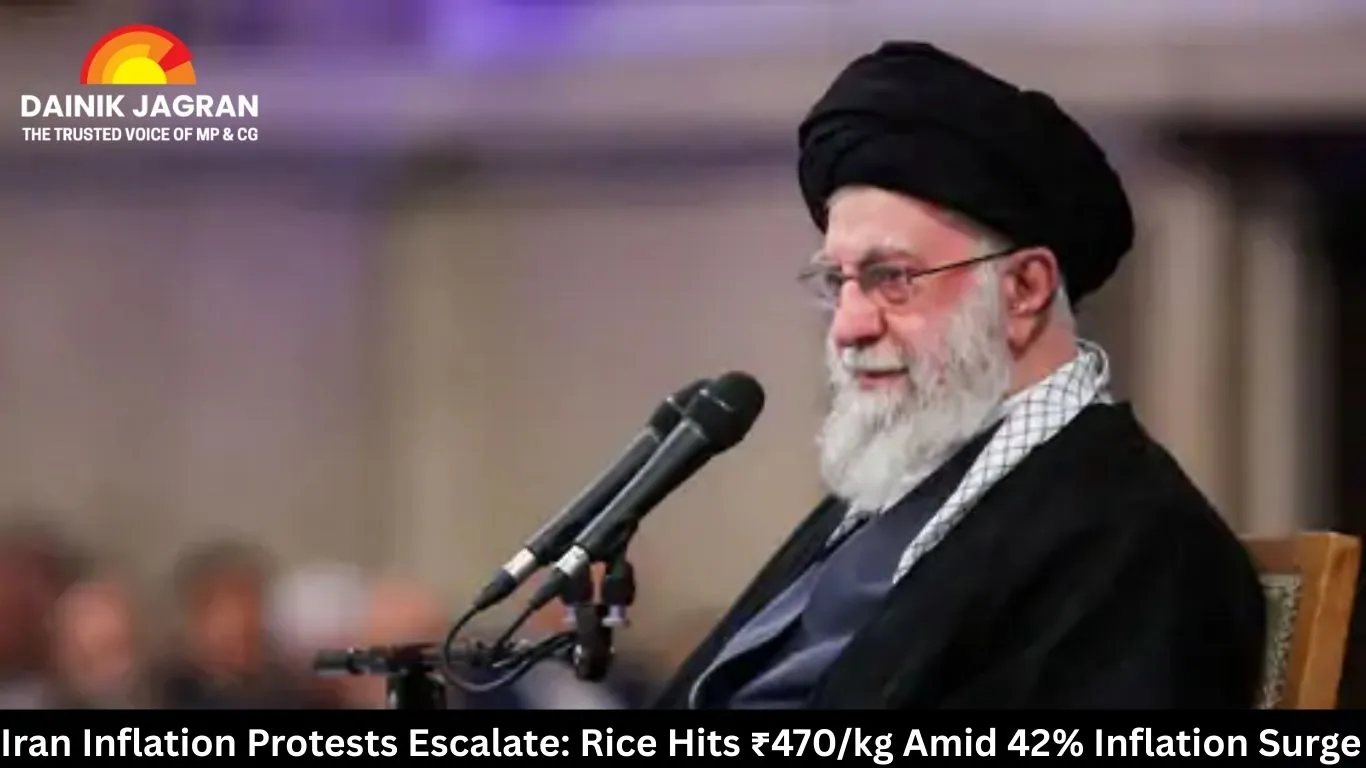
Iran Inflation Protests Escalate: Rice Hits ₹470/kg Amid 42% Inflation Surge
Digital Desk
In the heart of Tehran and beyond, Iran's streets are alive with chants against economic hardship as inflation soars to 42.4% in December 2025. Iran inflation protests, now entering their 12th day, highlight the dire reality for ordinary citizens: rice priced at a staggering ₹470 per kg and potatoes at ₹47 per kg. This surge in Iran food prices is not just numbers—it's a cry for survival amid a crumbling Iranian economy.
The Skyrocketing Cost of Basics
Everyday essentials have become luxuries in Iran. According to recent reports, Iranian rice has jumped 164% year-on-year, reaching about $5.23 per kg or 220,000 rials. Lemons aren't far behind, with a 272% hike to $3.56 per kg (₹320). These Iran food prices are crippling households, especially the middle class, who feel the pinch in their daily budgets.
- Rice: Up to ₹470/kg, a staple now out of reach for many.
- Potatoes: At ₹47/kg, even basic veggies strain wallets.
- Lemons: ₹320/kg, reflecting broader food inflation at 70%.
As one simulated expert from the National Council of Resistance of Iran notes, "These prices aren't inflation—they're a policy failure, pushing families to the brink."
Roots of the Economic Turmoil
The Iranian economy is reeling from multiple blows. The rial has plummeted 80% against the US dollar in the past year, now trading at 1.47 million rials per dollar. This currency collapse exacerbates import costs, driving up goods prices. Inflation has climbed steadily over the last 10 months, per Bank Markazi data, while GDP growth limps at 0.6% for 2025—down from 3.7% in 2024.
Unemployment adds fuel to the fire, rising to 9.2% in 2025 from 7.55% the previous year. Pre-COVID levels hit over 12%, signaling chronic mismanagement under the current regime. IMF projections paint a grim picture: single-digit growth against double-digit inflation.
Why now? Global trends like supply chain disruptions echo here, but local factors—sanctions, corruption, and poor governance—amplify the crisis. As protests intensify, including demonstrations in Berlin on January 3, 2026, the world watches Iran's internal strife spill over.
Government Response and Public Backlash
The government's $7 monthly stimulus feels like a drop in the ocean. Protesters demand real relief: subsidies, price controls, and accountability. Opposition groups rally globally, urging an end to repression.
Simulated economist Dr. Aria Mehrabi warns, "Without reforms, Iran inflation protests could evolve into a broader revolution. Stabilizing the rial and boosting jobs are key."
What It Means for Iranians—and the World
For readers, this underscores the fragility of economies in volatile regions. Practical takeaways: Diversify savings, monitor global currencies, and support advocacy for human rights. As Iran grapples with these challenges, the protests remind us that economic pain often ignites social change.
In 2026, Iran inflation protests aren't just local news—they're a global alert on inequality. With prices still rising, the path ahead remains uncertain, but the people's voice grows louder.

.jpg)




