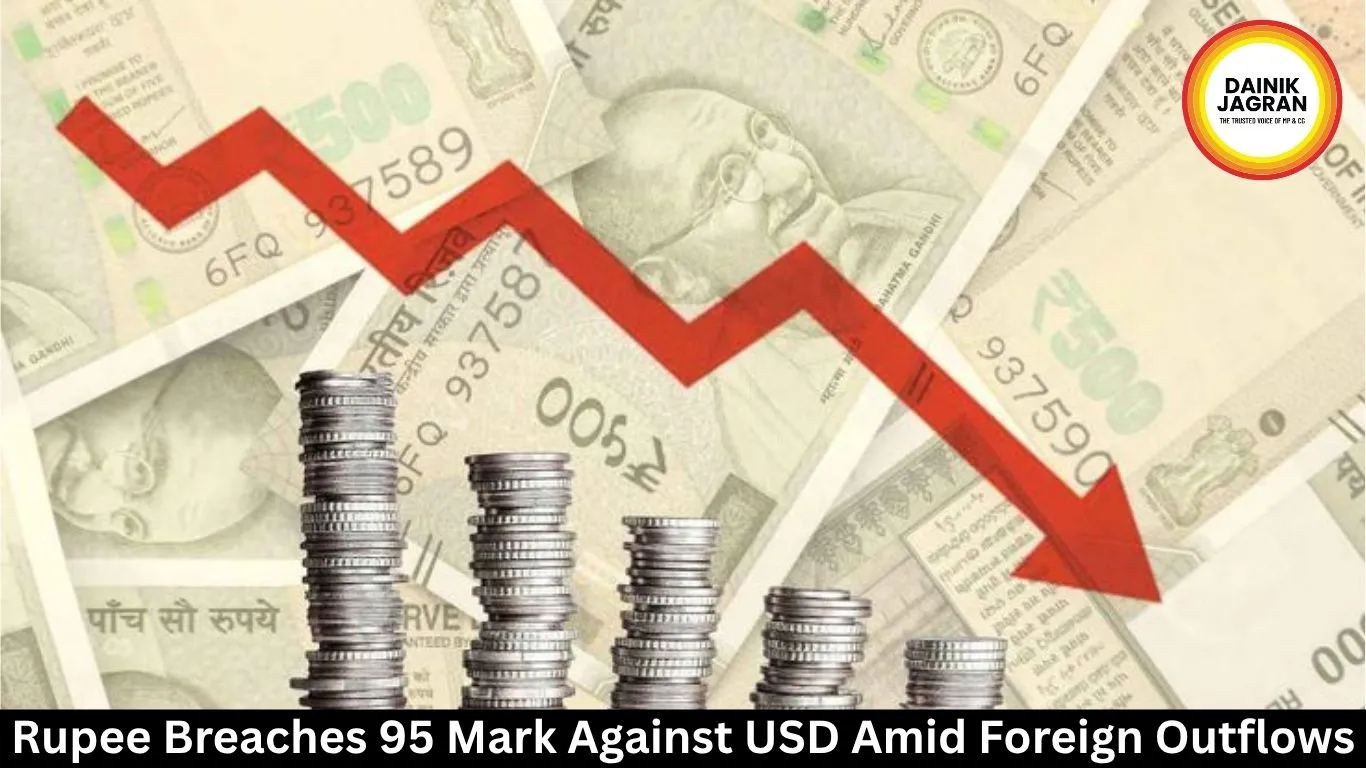
Rupee Breaches 95 Mark Against USD Amid Foreign Outflows
Digital Desk
The Indian rupee hit a record low of 95 against the US dollar on March 30, 2026. Read about RBI’s intervention and the impact of global trade disruptions.
Rupee breaches 95 mark against USD as capital outflows intensify
National currency hits historic low amid West Asia tensions and surging crude oil prices; RBI intervenes with fresh banking curbs.
The Indian rupee hit a significant psychological milestone on Monday, breaching the 95 mark against the US dollar for the first time in history. The currency’s slide comes on the back of sustained foreign capital outflows and geopolitical instability, marking a cumulative 37% depreciation in the rupee’s value since 2014.
Historic breach of 95
The trading session on March 30, 2026, saw the rupee plummet to an intra-day low of 95.02 before recovery efforts pushed the closing price to 94.78. Market analysts noted that while the rupee breaches 95 mark briefly, the level signifies deep-seated pressure from a strengthening "greenback" and domestic inflationary concerns.
Emergency RBI intervention
To arrest the freefall, the Reserve Bank of India (RBI) introduced stringent new restrictions on how much foreign currency commercial banks can hold overnight. By capping the overnight position at $100 million (approximately ₹940 crore), the central bank effectively forced lenders to offload dollar reserves, providing a temporary cushion to the local unit.
Morning session volatility
The impact of the RBI’s directive was visible during the morning session when the rupee staged a sharp 128-paise recovery to touch 93.57. However, the gains were short-lived as the broader structural demand for dollars by oil importers and the exit of foreign institutional investors (FIIs) overwhelmed the central bank’s regulatory maneuver.
Geopolitical trade disruptions
The primary catalyst for the current volatility remains the escalating conflict in West Asia, which has severely disrupted trade routes. With supply chains under strain, the cost of imports has surged, forcing India—a major energy consumer—to drain its forex reserves to meet rising dollar requirements for crude oil shipments.
Foreign capital flight
Equities mirrored the currency’s distress, with the Indian stock market witnessing a sharp sell-off in early trade. Statistics from the exchanges indicate that foreign investors have turned net sellers, offloading Indian stocks at an accelerated pace in favor of safer US treasury yields, further weakening the rupee’s support base.
Crude oil pressure
High global crude prices continue to be the Achilles' heel for the national economy. As prices remain elevated, the widening trade deficit exerts constant downward pressure on the currency. Experts suggest that while the RBI’s recent curbs offer a "temporary fix," they do little to address the fundamental imbalance caused by expensive energy imports.
Future market outlook
The road ahead for the rupee remains fraught with challenges as the US dollar maintains its global dominance. Market observers are now looking toward the next Monetary Policy Committee (MPC) meeting for signals on interest rate hikes. Unless global tensions ease, the rupee breaches 95 mark could become a recurring headline in the coming weeks.

--------
🚨 Beat the News Rush – Join Now!
Get breaking alerts, hot exclusives, and game-changing stories instantly on your phone. No delays, no fluff – just the edge you need. ⚡
Tap to join:
🟢 WhatsApp Channel: Dainik Jagran MP CG
Crave more?
🅕 Facebook: Dainik Jagran MP CG English
🅧 Twitter (X): Dainik Jagran MP CG
🅘 Instagram: Dainik Jagran MP CG
Share the fire – keep your crew ahead! 🗞️🔥
Rupee Breaches 95 Mark Against USD Amid Foreign Outflows
Digital Desk
Rupee breaches 95 mark against USD as capital outflows intensify
National currency hits historic low amid West Asia tensions and surging crude oil prices; RBI intervenes with fresh banking curbs.
The Indian rupee hit a significant psychological milestone on Monday, breaching the 95 mark against the US dollar for the first time in history. The currency’s slide comes on the back of sustained foreign capital outflows and geopolitical instability, marking a cumulative 37% depreciation in the rupee’s value since 2014.
Historic breach of 95
The trading session on March 30, 2026, saw the rupee plummet to an intra-day low of 95.02 before recovery efforts pushed the closing price to 94.78. Market analysts noted that while the rupee breaches 95 mark briefly, the level signifies deep-seated pressure from a strengthening "greenback" and domestic inflationary concerns.
Emergency RBI intervention
To arrest the freefall, the Reserve Bank of India (RBI) introduced stringent new restrictions on how much foreign currency commercial banks can hold overnight. By capping the overnight position at $100 million (approximately ₹940 crore), the central bank effectively forced lenders to offload dollar reserves, providing a temporary cushion to the local unit.
Morning session volatility
The impact of the RBI’s directive was visible during the morning session when the rupee staged a sharp 128-paise recovery to touch 93.57. However, the gains were short-lived as the broader structural demand for dollars by oil importers and the exit of foreign institutional investors (FIIs) overwhelmed the central bank’s regulatory maneuver.
Geopolitical trade disruptions
The primary catalyst for the current volatility remains the escalating conflict in West Asia, which has severely disrupted trade routes. With supply chains under strain, the cost of imports has surged, forcing India—a major energy consumer—to drain its forex reserves to meet rising dollar requirements for crude oil shipments.
Foreign capital flight
Equities mirrored the currency’s distress, with the Indian stock market witnessing a sharp sell-off in early trade. Statistics from the exchanges indicate that foreign investors have turned net sellers, offloading Indian stocks at an accelerated pace in favor of safer US treasury yields, further weakening the rupee’s support base.
Crude oil pressure
High global crude prices continue to be the Achilles' heel for the national economy. As prices remain elevated, the widening trade deficit exerts constant downward pressure on the currency. Experts suggest that while the RBI’s recent curbs offer a "temporary fix," they do little to address the fundamental imbalance caused by expensive energy imports.
Future market outlook
The road ahead for the rupee remains fraught with challenges as the US dollar maintains its global dominance. Market observers are now looking toward the next Monetary Policy Committee (MPC) meeting for signals on interest rate hikes. Unless global tensions ease, the rupee breaches 95 mark could become a recurring headline in the coming weeks.