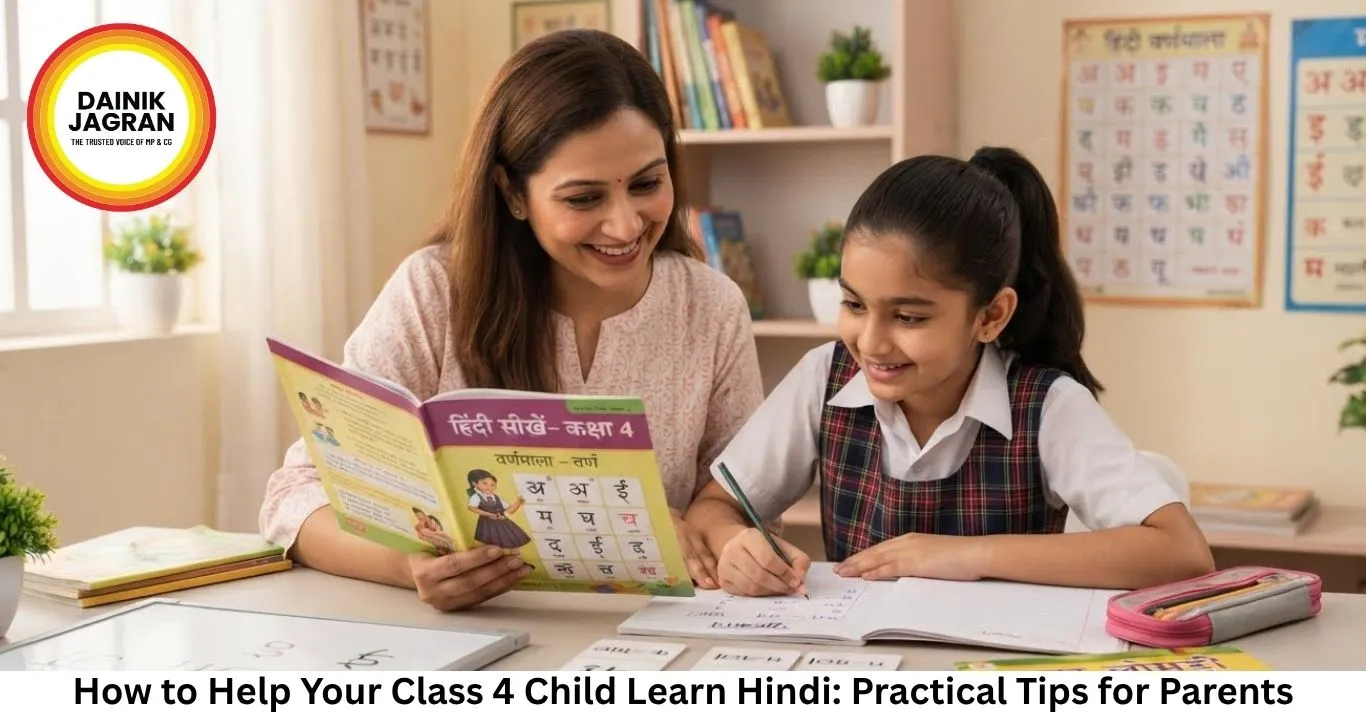
How to Help Your Class 4 Child Learn Hindi: Practical Tips for Parents
Digital desk
By Class 4, most schools expect children to move beyond basic Hindi alphabet recognition into proper reading comprehension, grammar and creative writing. For parents wanting to support that at home, here's what actually helps.
Build daily reading into the routine
Regular exposure to Hindi text — storybooks, simple articles, even the Rimjhim or Veena textbook stories most CBSE schools use — is the single most effective habit to build. Reading a variety of genres, not just textbook chapters, broadens vocabulary and keeps the language feeling less like homework.
Make writing a daily habit, not an occasional task
Just like reading, consistent practice matters more than long sessions. Encourage your child to write short paragraphs, simple diary entries, or descriptions of a picture in Hindi regularly. This reinforces spelling, sentence structure, and helps children get comfortable expressing their own thoughts rather than just copying text.
Read poems and stories aloud together
Reciting Hindi poems and reading stories out loud helps with pronunciation, fluency, and rhythm — skills that are harder to build through silent reading alone. Class 4 Hindi textbooks typically include a strong mix of poetry and prose specifically for this reason.
Weave grammar into stories rather than teaching it in isolation
Basic grammar — nouns, verbs, pronouns, adjectives — sticks better when children encounter it naturally within a story or poem rather than through standalone drilling. Point out grammar patterns as they come up during reading rather than treating grammar as a separate subject.
Use listening as a supporting tool
Hindi songs, audio stories, and podcasts help children absorb pronunciation, intonation and natural sentence rhythm in a low-pressure way. This works especially well for children who find reading Devanagari script slower going at first.
Practice the Devanagari script deliberately
For children still building confidence with reading, take time to reinforce the shapes and sounds of Devanagari letters directly — using a finger or pointer to track left-to-right while reading can help reduce backtracking and build steadier reading habits.
Get feedback, gently
Having a child share their Hindi writing — with a parent, teacher, or even a sibling — and receiving light, constructive feedback helps them improve faster than writing in isolation. The goal at this age is encouragement, not correction for its own sake.
Keep it consistent, not intense
As with any language-learning routine, short, regular sessions — 30 to 40 minutes spread across reading, a bit of writing, and some read-aloud practice — tend to work far better for a Class 4 child than occasional long, heavy sessions that feel like a chore.
The common thread, as with English, is the same: little and often beats occasional and exhausting. A steady mix of reading, writing and listening will do more for a Class 4 child's Hindi than any single intensive push.

--------
π¨ Beat the News Rush β Join Now!
Get breaking alerts, hot exclusives, and game-changing stories instantly on your phone. No delays, no fluff β just the edge you need. β‘
Tap to join:Β
π’ WhatsApp Channel: Dainik Jagran MP CG
Crave more?
π Facebook: Dainik Jagran MP CG English
π § Twitter (X): Dainik Jagran MP CG
π Instagram: Dainik Jagran MP CG
Share the fire β keep your crew ahead! ποΈπ₯
How to Help Your Class 4 Child Learn Hindi: Practical Tips for Parents
Digital desk
Build daily reading into the routine
Regular exposure to Hindi text — storybooks, simple articles, even the Rimjhim or Veena textbook stories most CBSE schools use — is the single most effective habit to build. Reading a variety of genres, not just textbook chapters, broadens vocabulary and keeps the language feeling less like homework.
Make writing a daily habit, not an occasional task
Just like reading, consistent practice matters more than long sessions. Encourage your child to write short paragraphs, simple diary entries, or descriptions of a picture in Hindi regularly. This reinforces spelling, sentence structure, and helps children get comfortable expressing their own thoughts rather than just copying text.
Read poems and stories aloud together
Reciting Hindi poems and reading stories out loud helps with pronunciation, fluency, and rhythm — skills that are harder to build through silent reading alone. Class 4 Hindi textbooks typically include a strong mix of poetry and prose specifically for this reason.
Weave grammar into stories rather than teaching it in isolation
Basic grammar — nouns, verbs, pronouns, adjectives — sticks better when children encounter it naturally within a story or poem rather than through standalone drilling. Point out grammar patterns as they come up during reading rather than treating grammar as a separate subject.
Use listening as a supporting tool
Hindi songs, audio stories, and podcasts help children absorb pronunciation, intonation and natural sentence rhythm in a low-pressure way. This works especially well for children who find reading Devanagari script slower going at first.
Practice the Devanagari script deliberately
For children still building confidence with reading, take time to reinforce the shapes and sounds of Devanagari letters directly — using a finger or pointer to track left-to-right while reading can help reduce backtracking and build steadier reading habits.
Get feedback, gently
Having a child share their Hindi writing — with a parent, teacher, or even a sibling — and receiving light, constructive feedback helps them improve faster than writing in isolation. The goal at this age is encouragement, not correction for its own sake.
Keep it consistent, not intense
As with any language-learning routine, short, regular sessions — 30 to 40 minutes spread across reading, a bit of writing, and some read-aloud practice — tend to work far better for a Class 4 child than occasional long, heavy sessions that feel like a chore.
The common thread, as with English, is the same: little and often beats occasional and exhausting. A steady mix of reading, writing and listening will do more for a Class 4 child's Hindi than any single intensive push.