India's Quiet Advantage in Nepal: Market, Not Money, Will Decide the Future
Editorial Desk
In South Asia's evolving geopolitical landscape, Nepal has once again become the focal point of strategic competition between India and China. Yet, unlike the past, Kathmandu's political leadership appears less driven by ideology and more by pragmatism. The question before Nepal is no longer whether to choose India or China, but whether to choose debt or opportunity.
The first week of June sent a powerful diplomatic signal. Nepal's Foreign Minister Shishir Khanal visited New Delhi for official talks, while Rastriya Swatantra Party (RSP) chairman Rabi Lamichhane—despite holding no government office—received high-level meetings with Prime Minister Narendra Modi, Home Minister Amit Shah, External Affairs Minister Dr. S. Jaishankar, National Security Adviser Ajit Doval, and Foreign Secretary Vikram Misri.
This was not diplomatic coincidence. It reflected India's mature understanding that engaging both the government and the emerging political leadership is essential for long-term stability in bilateral relations.
Nepal itself has entered a new political era. The emergence of Prime Minister Balen Shah and the RSP marks a shift away from the traditional anti-India rhetoric that dominated sections of Nepal's communist politics for decades. The new generation is neither pro-India nor pro-China—it is unapologetically pro-Nepal.
For India, this is a welcome change.
Geography already favours New Delhi. Nearly two-thirds of Nepal's trade is with India. The open border facilitates employment, commerce, family ties, pilgrimage, and cultural exchange that no infrastructure project can replace. Millions of Nepali citizens earn their livelihoods in India, contributing significantly to Nepal's economy.
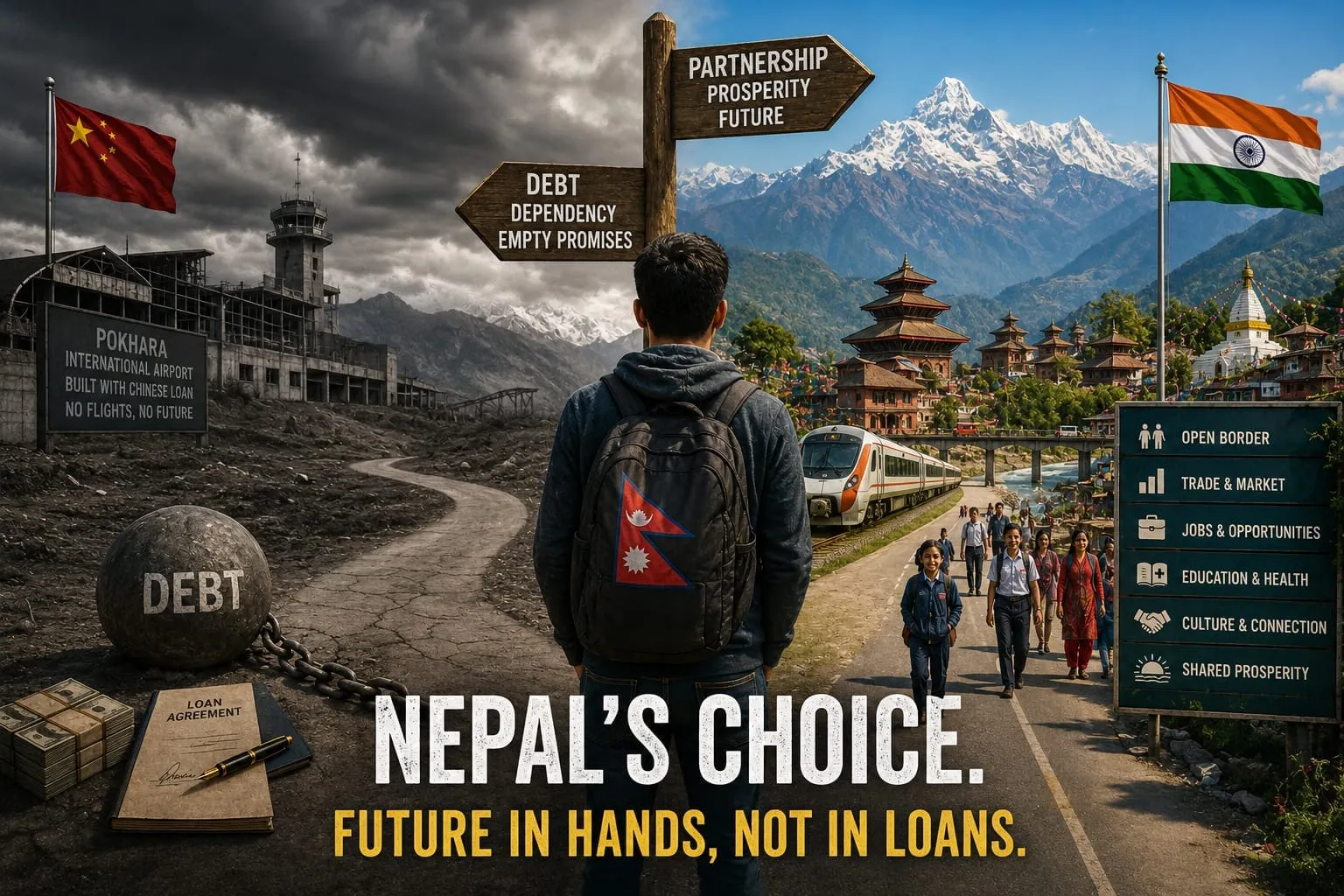
China, meanwhile, has invested heavily in infrastructure through loans. Pokhara International Airport stands as perhaps the most striking example. Built with Chinese financing, the airport remains severely underutilized—a reminder that impressive infrastructure alone cannot guarantee economic success.
Markets create prosperity. Empty airports do not.
India's comparative advantage lies elsewhere. It offers access to one of the world's fastest-growing markets, employment opportunities, educational exchanges, healthcare access, and centuries-old people-to-people relations. These are enduring strengths that cannot be replicated by financial loans alone.
Challenges certainly remain. The Kalapani boundary dispute continues to surface periodically, while memories of the 2015 border disruptions still influence public opinion in Nepal. However, both governments have wisely chosen dialogue over confrontation, ensuring that sensitive issues do not overshadow broader cooperation.
Going forward, India must convert goodwill into visible outcomes. Long-pending projects such as the Pancheshwar Hydropower Project, cross-border railway connectivity, expanded petroleum pipelines, improved air connectivity to Pokhara and Bhairahawa, and clarity on Gorkha recruitment deserve urgent attention.
Diplomacy ultimately succeeds through delivery—not declarations.
China can finance roads and airports. India can provide markets, mobility, employment, investment, and shared prosperity.
For Nepal's young generation, the choice will not be based on ideology. It will depend on which partnership creates jobs, strengthens livelihoods, and delivers tangible economic growth.
The door between India and Nepal is open once again. This is New Delhi's opportunity to build a partnership rooted not merely in history, but in the aspirations of the next generation.

--------
π¨ Beat the News Rush β Join Now!
Get breaking alerts, hot exclusives, and game-changing stories instantly on your phone. No delays, no fluff β just the edge you need. β‘
Tap to join:Β
π’ WhatsApp Channel: Dainik Jagran MP CG
Crave more?
π Facebook: Dainik Jagran MP CG English
π § Twitter (X): Dainik Jagran MP CG
π Instagram: Dainik Jagran MP CG
Share the fire β keep your crew ahead! ποΈπ₯
India's Quiet Advantage in Nepal: Market, Not Money, Will Decide the Future
Editorial Desk
In South Asia's evolving geopolitical landscape, Nepal has once again become the focal point of strategic competition between India and China. Yet, unlike the past, Kathmandu's political leadership appears less driven by ideology and more by pragmatism. The question before Nepal is no longer whether to choose India or China, but whether to choose debt or opportunity.
The first week of June sent a powerful diplomatic signal. Nepal's Foreign Minister Shishir Khanal visited New Delhi for official talks, while Rastriya Swatantra Party (RSP) chairman Rabi Lamichhane—despite holding no government office—received high-level meetings with Prime Minister Narendra Modi, Home Minister Amit Shah, External Affairs Minister Dr. S. Jaishankar, National Security Adviser Ajit Doval, and Foreign Secretary Vikram Misri.
This was not diplomatic coincidence. It reflected India's mature understanding that engaging both the government and the emerging political leadership is essential for long-term stability in bilateral relations.
Nepal itself has entered a new political era. The emergence of Prime Minister Balen Shah and the RSP marks a shift away from the traditional anti-India rhetoric that dominated sections of Nepal's communist politics for decades. The new generation is neither pro-India nor pro-China—it is unapologetically pro-Nepal.
For India, this is a welcome change.
Geography already favours New Delhi. Nearly two-thirds of Nepal's trade is with India. The open border facilitates employment, commerce, family ties, pilgrimage, and cultural exchange that no infrastructure project can replace. Millions of Nepali citizens earn their livelihoods in India, contributing significantly to Nepal's economy.
China, meanwhile, has invested heavily in infrastructure through loans. Pokhara International Airport stands as perhaps the most striking example. Built with Chinese financing, the airport remains severely underutilized—a reminder that impressive infrastructure alone cannot guarantee economic success.
Markets create prosperity. Empty airports do not.
India's comparative advantage lies elsewhere. It offers access to one of the world's fastest-growing markets, employment opportunities, educational exchanges, healthcare access, and centuries-old people-to-people relations. These are enduring strengths that cannot be replicated by financial loans alone.
Challenges certainly remain. The Kalapani boundary dispute continues to surface periodically, while memories of the 2015 border disruptions still influence public opinion in Nepal. However, both governments have wisely chosen dialogue over confrontation, ensuring that sensitive issues do not overshadow broader cooperation.
Going forward, India must convert goodwill into visible outcomes. Long-pending projects such as the Pancheshwar Hydropower Project, cross-border railway connectivity, expanded petroleum pipelines, improved air connectivity to Pokhara and Bhairahawa, and clarity on Gorkha recruitment deserve urgent attention.
Diplomacy ultimately succeeds through delivery—not declarations.
China can finance roads and airports. India can provide markets, mobility, employment, investment, and shared prosperity.
For Nepal's young generation, the choice will not be based on ideology. It will depend on which partnership creates jobs, strengthens livelihoods, and delivers tangible economic growth.
The door between India and Nepal is open once again. This is New Delhi's opportunity to build a partnership rooted not merely in history, but in the aspirations of the next generation.