"Educating the Mind, Uplifting the Community, Honouring the Soul"

Digital Desk

Senior Management Representative, Mumbai Educational Trust - On receiving the Women Power Impact Creator of the Year Award at the 11th Annual Women Power Summit & Awards 2026

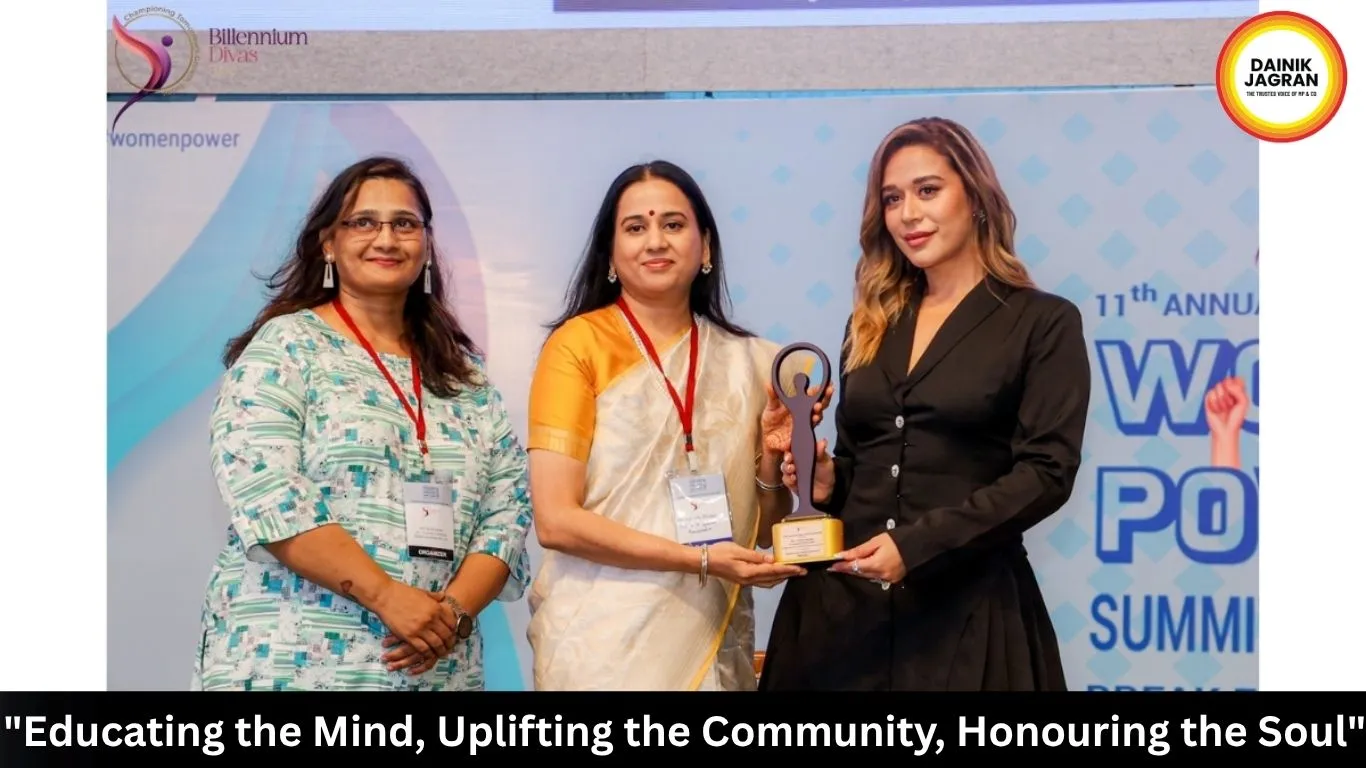
Vishakha Bhujbal, Senior Management Representative of the Mumbai Educational Trust (MET), was recently conferred with the Women Power Impact Creator of the Year Award at the 11th Annual Women Power Summit & Awards 2026, recognised under the Jury's Special Choice Category for her excellence in creating impact through education. Presented at the National Stock Exchange, BKC, Mumbai, the honour reflects a body of work that goes well beyond institutional boundaries: from building resilience among marginalised women in rural India, to championing the economic and artistic independence of indigenous Warli artistes. We spoke with Mrs. Bhujbal about her vision for education, her belief in grassroots empowerment, and what it means to lead with purpose.

Q: Congratulations on the award. What does this recognition mean to you personally?

A: Thank you. It's deeply humbling, honestly. This award isn't just for me - it belongs to every woman in rural Maharashtra who chose to stand up despite the odds, every Warli artist who trusted that her craft had a future, and every student at MET who dared to dream bigger. When a jury looks at quiet, unglamorous grassroots work and says this matters - that validation means the world.

Q: The award was given specifically for excellence in creating impact through education. How do you define that?

A: I think education is the most misunderstood word in our development vocabulary. We've reduced it to degrees and placements. But education, in its truest sense, is about equipping people to live with dignity and purpose. At MET, our philosophy has always been that you cannot separate the classroom from the community. If the communities around us are struggling, our institutional success is hollow. Real education uplifts the mind, yes - but it must also honour the soul.

Q: The award was presented at the National Stock Exchange. You made a striking observation about it, can you elaborate?

A: Standing at the NSE, surrounded by the imagery of market indices and economic growth, I kept thinking - India's real wealth isn't just on those screens. It's in the hands of a woman in a village who has learned to manage her own income. It's in a Warli painting that now sells internationally because the artist owns her livelihood. The NSE tracks one version of India's prosperity. I work with another version - and both need each other to thrive.

Q: Your work with marginalised women in rural India is central to this recognition. What is the core belief driving that work?

A: A simple one, actually - that when you invest in a woman, you don't just change one life. You change a household, a child's trajectory, sometimes an entire community. Women are multipliers of impact. And yet they remain the most under-resourced segment of our development ecosystem. My effort has been to close that gap, not with charity, but with capability-building that creates lasting independence.

Q: You've also been closely associated with supporting Warli artists. That feels like a departure from conventional educational work. How do you see it connecting?

A: Not a departure at all - it's the same philosophy applied differently. Cultural identity is education. When a young Warli woman learns that her ancestral art form can sustain her economically, she learns something no classroom can fully teach her - that her heritage has value, that she has value. Our work there has been deliberately focused on economic and artistic independence, not just preservation for preservation's sake. We want these traditions to live, not just survive in a museum.

Q: The summit this year positioned women leaders as contributors to India's 5 trillion dollar economy ambition. Do you see grassroots work as economic work?

A: Absolutely - and I'd go further. I'd say grassroots work is the foundation of that ambition. You cannot build a five trillion dollar economy on a base where half the population is economically excluded. The resilience, the inclusion, the community-level enterprise we're fostering - that's not soft work. That's infrastructure. Just a different kind.

Q: What's your message to women who are doing similar work, often without recognition?

A: Keep going. The recognition will come - or it won't - but the work is its own answer. I've spent years in spaces where impact is measured slowly, where there are no quarterly reports on how many lives shifted. But that's precisely where the most durable change happens. Break the barriers in front of you, bridge the gaps you can see, and trust that it adds up. As I said that evening - let's break free, and be the power.

--------

🚨 Beat the News Rush – Join Now!

Get breaking alerts, hot exclusives, and game-changing stories instantly on your phone. No delays, no fluff – just the edge you need. ⚡

Tap to join: 

🟢 WhatsApp Channel: Dainik Jagran MP CG

Crave more?

🅕 Facebook: Dainik Jagran MP CG English

🅧 Twitter (X): Dainik Jagran MP CG

🅘 Instagram: Dainik Jagran MP CG

Share the fire – keep your crew ahead! 🗞️🔥

english.dainikjagranmpcg.com
29 Jun 2026 By Danik Jagran English

"Educating the Mind, Uplifting the Community, Honouring the Soul"

Digital Desk

Vishakha Bhujbal, Senior Management Representative of the Mumbai Educational Trust (MET), was recently conferred with the Women Power Impact Creator of the Year Award at the 11th Annual Women Power Summit & Awards 2026, recognised under the Jury's Special Choice Category for her excellence in creating impact through education. Presented at the National Stock Exchange, BKC, Mumbai, the honour reflects a body of work that goes well beyond institutional boundaries: from building resilience among marginalised women in rural India, to championing the economic and artistic independence of indigenous Warli artistes. We spoke with Mrs. Bhujbal about her vision for education, her belief in grassroots empowerment, and what it means to lead with purpose.

Q: Congratulations on the award. What does this recognition mean to you personally?

A: Thank you. It's deeply humbling, honestly. This award isn't just for me - it belongs to every woman in rural Maharashtra who chose to stand up despite the odds, every Warli artist who trusted that her craft had a future, and every student at MET who dared to dream bigger. When a jury looks at quiet, unglamorous grassroots work and says this matters - that validation means the world.

Q: The award was given specifically for excellence in creating impact through education. How do you define that?

A: I think education is the most misunderstood word in our development vocabulary. We've reduced it to degrees and placements. But education, in its truest sense, is about equipping people to live with dignity and purpose. At MET, our philosophy has always been that you cannot separate the classroom from the community. If the communities around us are struggling, our institutional success is hollow. Real education uplifts the mind, yes - but it must also honour the soul.

Q: The award was presented at the National Stock Exchange. You made a striking observation about it, can you elaborate?

A: Standing at the NSE, surrounded by the imagery of market indices and economic growth, I kept thinking - India's real wealth isn't just on those screens. It's in the hands of a woman in a village who has learned to manage her own income. It's in a Warli painting that now sells internationally because the artist owns her livelihood. The NSE tracks one version of India's prosperity. I work with another version - and both need each other to thrive.

Q: Your work with marginalised women in rural India is central to this recognition. What is the core belief driving that work?

A: A simple one, actually - that when you invest in a woman, you don't just change one life. You change a household, a child's trajectory, sometimes an entire community. Women are multipliers of impact. And yet they remain the most under-resourced segment of our development ecosystem. My effort has been to close that gap, not with charity, but with capability-building that creates lasting independence.

Q: You've also been closely associated with supporting Warli artists. That feels like a departure from conventional educational work. How do you see it connecting?

A: Not a departure at all - it's the same philosophy applied differently. Cultural identity is education. When a young Warli woman learns that her ancestral art form can sustain her economically, she learns something no classroom can fully teach her - that her heritage has value, that she has value. Our work there has been deliberately focused on economic and artistic independence, not just preservation for preservation's sake. We want these traditions to live, not just survive in a museum.

Q: The summit this year positioned women leaders as contributors to India's 5 trillion dollar economy ambition. Do you see grassroots work as economic work?

A: Absolutely - and I'd go further. I'd say grassroots work is the foundation of that ambition. You cannot build a five trillion dollar economy on a base where half the population is economically excluded. The resilience, the inclusion, the community-level enterprise we're fostering - that's not soft work. That's infrastructure. Just a different kind.

Q: What's your message to women who are doing similar work, often without recognition?

A: Keep going. The recognition will come - or it won't - but the work is its own answer. I've spent years in spaces where impact is measured slowly, where there are no quarterly reports on how many lives shifted. But that's precisely where the most durable change happens. Break the barriers in front of you, bridge the gaps you can see, and trust that it adds up. As I said that evening - let's break free, and be the power.

https://english.dainikjagranmpcg.com/business/educating-the-mind-uplifting-the-community-honouring-the-soul/article-20755
Tags:

Latest News