Iran Begins Week-Long State Funeral for Ayatollah Khamenei Amid Regional Tensions
Digital Desk
Iran holds the state funeral of former Supreme Leader Ayatollah Ali Khamenei in Tehran as millions of mourners gather amid heightened regional tensions and ongoing diplomatic developments.
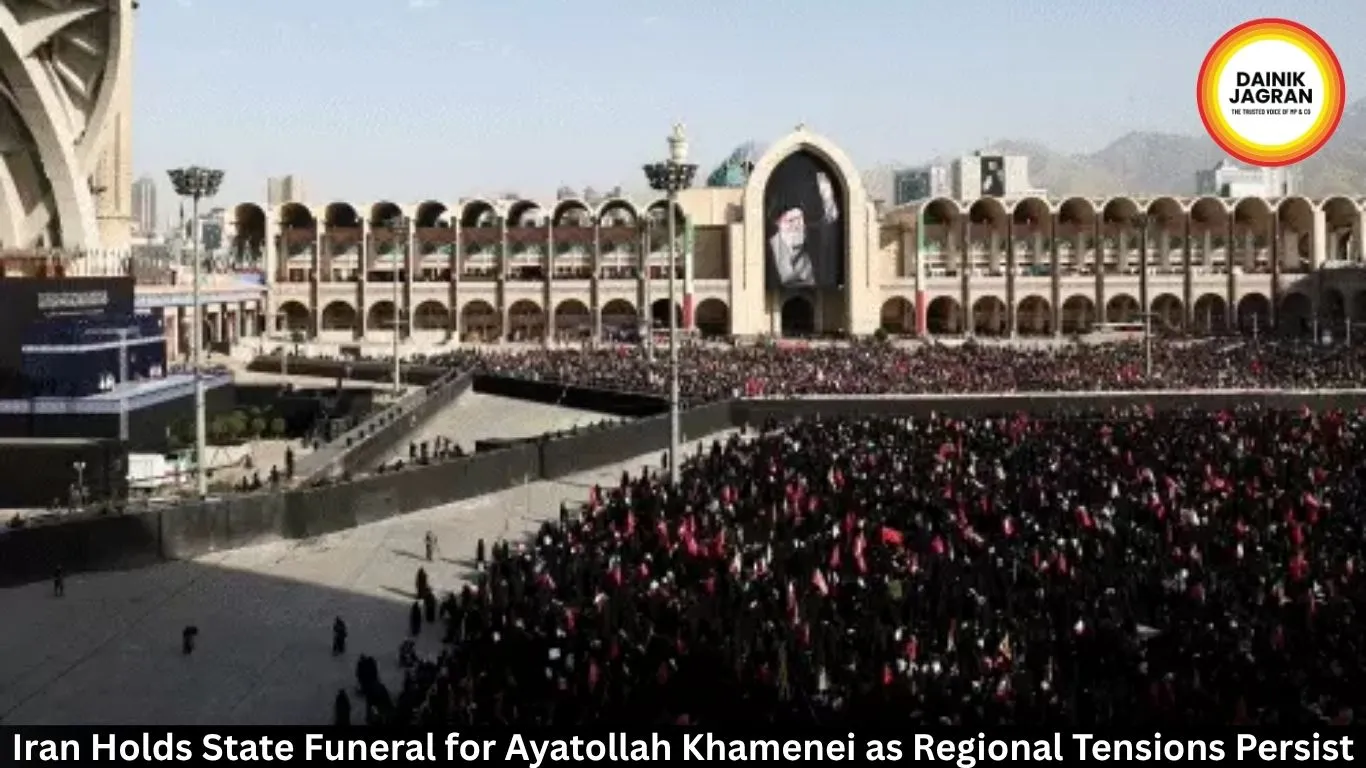
Iran began the official state funeral ceremonies for former Supreme Leader Ayatollah Ali Khamenei on Saturday, drawing massive crowds to Tehran's Grand Mosalla amid heightened regional tensions and continued uncertainty over the country's future diplomatic and security outlook.
The funeral, which commenced on July 3 and is scheduled to continue until July 9, has become one of the largest state ceremonies in Iran's recent history. Thousands of mourners dressed in black gathered at the Grand Mosalla, following Shia mourning traditions by beating their chests and chanting religious and political slogans. Many participants carried red flags, a symbol often associated in Shia tradition with martyrdom and calls for justice.
Iranian state officials, including President Masoud Pezeshkian, Chief Justice Gholam-Hossein Mohseni-Eje'i and Parliament Speaker Mohammad Bagher Ghalibaf, attended the memorial ceremony. Images broadcast by Iranian media showed emotional scenes as mourners paid tribute to the late leader.
The funeral has also attracted international delegations from more than 100 countries. However, several major powers, including Russia, China, India and Türkiye, opted to send lower-level representatives instead of their top leadership.
The ceremonies are taking place under extraordinary security arrangements. Iranian authorities have significantly increased security across Tehran, deploying advanced air defence systems, restricting drone and private aircraft operations, and expanding public transport services to accommodate millions of visitors. Hotels, schools, mosques and sports complexes have also been opened to host mourners arriving from across the country.
According to the announced schedule, Khamenei's funeral procession will move through several locations before concluding with his burial in Mashhad near the Imam Reza Shrine, fulfilling what Iranian media describe as his final wish.
Meanwhile, developments surrounding the funeral have coincided with renewed diplomatic rhetoric between Tehran and Washington. Speaking during an event in the United States, President Donald Trump claimed that the US had given Iran "a week off" to complete the funeral ceremonies on humanitarian grounds before expecting Tehran to return to negotiations. Iranian authorities have not officially responded to those remarks.
Iranian officials, however, maintained a firm stance during the funeral proceedings. The country's Intelligence Ministry vowed that those responsible for Khamenei's death would eventually be held accountable, while senior officials reiterated their opposition to increased Western military activity in the Strait of Hormuz.
Regional developments also continued alongside the funeral. Israeli military operations in Gaza and the occupied West Bank remained active, while humanitarian agencies reported rising casualties in the conflict. Lebanon's military confirmed it had dismantled unexploded ordnance in southern Lebanon, and France announced the deployment of specialised naval mine-clearing vessels to help secure commercial shipping through the Strait of Hormuz.
At the same time, reports suggested that maritime traffic through the strategically important waterway is gradually recovering following recent disruptions, although shipping analysts described the situation as fragile.
Observers note that beyond its religious significance, the week-long funeral also serves as a demonstration of Iran's political resilience following the loss of its long-serving leader. The large public turnout and participation of international delegations are widely being viewed as an effort by Tehran to project stability at a time of heightened geopolitical uncertainty.
With funeral ceremonies continuing until July 9, attention will remain focused on both Iran's internal transition and the broader regional developments that continue to shape West Asia's security landscape.
Meta Title:
Meta Description: Iran holds the state funeral of former Supreme Leader Ayatollah Ali Khamenei in Tehran as millions of mourners gather amid heightened regional tensions and ongoing diplomatic developments.
Focus Keywords: Ayatollah Ali Khamenei funeral, Iran state funeral, Tehran, Iran news, West Asia tensions
Tags: Iran, Ayatollah Ali Khamenei, Tehran, West Asia, Donald Trump, Middle East, Shia Islam, Regional Security, Diplomacy, International News
--------
🚨 Beat the News Rush – Join Now!
Get breaking alerts, hot exclusives, and game-changing stories instantly on your phone. No delays, no fluff – just the edge you need. ⚡
Tap to join:
🟢 WhatsApp Channel: Dainik Jagran MP CG
Crave more?
🅕 Facebook: Dainik Jagran MP CG English
🅧 Twitter (X): Dainik Jagran MP CG
🅘 Instagram: Dainik Jagran MP CG
Share the fire – keep your crew ahead! 🗞️🔥
Iran Begins Week-Long State Funeral for Ayatollah Khamenei Amid Regional Tensions
Digital Desk
Iran began the official state funeral ceremonies for former Supreme Leader Ayatollah Ali Khamenei on Saturday, drawing massive crowds to Tehran's Grand Mosalla amid heightened regional tensions and continued uncertainty over the country's future diplomatic and security outlook.
The funeral, which commenced on July 3 and is scheduled to continue until July 9, has become one of the largest state ceremonies in Iran's recent history. Thousands of mourners dressed in black gathered at the Grand Mosalla, following Shia mourning traditions by beating their chests and chanting religious and political slogans. Many participants carried red flags, a symbol often associated in Shia tradition with martyrdom and calls for justice.
Iranian state officials, including President Masoud Pezeshkian, Chief Justice Gholam-Hossein Mohseni-Eje'i and Parliament Speaker Mohammad Bagher Ghalibaf, attended the memorial ceremony. Images broadcast by Iranian media showed emotional scenes as mourners paid tribute to the late leader.
The funeral has also attracted international delegations from more than 100 countries. However, several major powers, including Russia, China, India and Türkiye, opted to send lower-level representatives instead of their top leadership.
The ceremonies are taking place under extraordinary security arrangements. Iranian authorities have significantly increased security across Tehran, deploying advanced air defence systems, restricting drone and private aircraft operations, and expanding public transport services to accommodate millions of visitors. Hotels, schools, mosques and sports complexes have also been opened to host mourners arriving from across the country.
According to the announced schedule, Khamenei's funeral procession will move through several locations before concluding with his burial in Mashhad near the Imam Reza Shrine, fulfilling what Iranian media describe as his final wish.
Meanwhile, developments surrounding the funeral have coincided with renewed diplomatic rhetoric between Tehran and Washington. Speaking during an event in the United States, President Donald Trump claimed that the US had given Iran "a week off" to complete the funeral ceremonies on humanitarian grounds before expecting Tehran to return to negotiations. Iranian authorities have not officially responded to those remarks.
Iranian officials, however, maintained a firm stance during the funeral proceedings. The country's Intelligence Ministry vowed that those responsible for Khamenei's death would eventually be held accountable, while senior officials reiterated their opposition to increased Western military activity in the Strait of Hormuz.
Regional developments also continued alongside the funeral. Israeli military operations in Gaza and the occupied West Bank remained active, while humanitarian agencies reported rising casualties in the conflict. Lebanon's military confirmed it had dismantled unexploded ordnance in southern Lebanon, and France announced the deployment of specialised naval mine-clearing vessels to help secure commercial shipping through the Strait of Hormuz.
At the same time, reports suggested that maritime traffic through the strategically important waterway is gradually recovering following recent disruptions, although shipping analysts described the situation as fragile.
Observers note that beyond its religious significance, the week-long funeral also serves as a demonstration of Iran's political resilience following the loss of its long-serving leader. The large public turnout and participation of international delegations are widely being viewed as an effort by Tehran to project stability at a time of heightened geopolitical uncertainty.
With funeral ceremonies continuing until July 9, attention will remain focused on both Iran's internal transition and the broader regional developments that continue to shape West Asia's security landscape.
Meta Title:
Meta Description: Iran holds the state funeral of former Supreme Leader Ayatollah Ali Khamenei in Tehran as millions of mourners gather amid heightened regional tensions and ongoing diplomatic developments.
Focus Keywords: Ayatollah Ali Khamenei funeral, Iran state funeral, Tehran, Iran news, West Asia tensions
Tags: Iran, Ayatollah Ali Khamenei, Tehran, West Asia, Donald Trump, Middle East, Shia Islam, Regional Security, Diplomacy, International News